

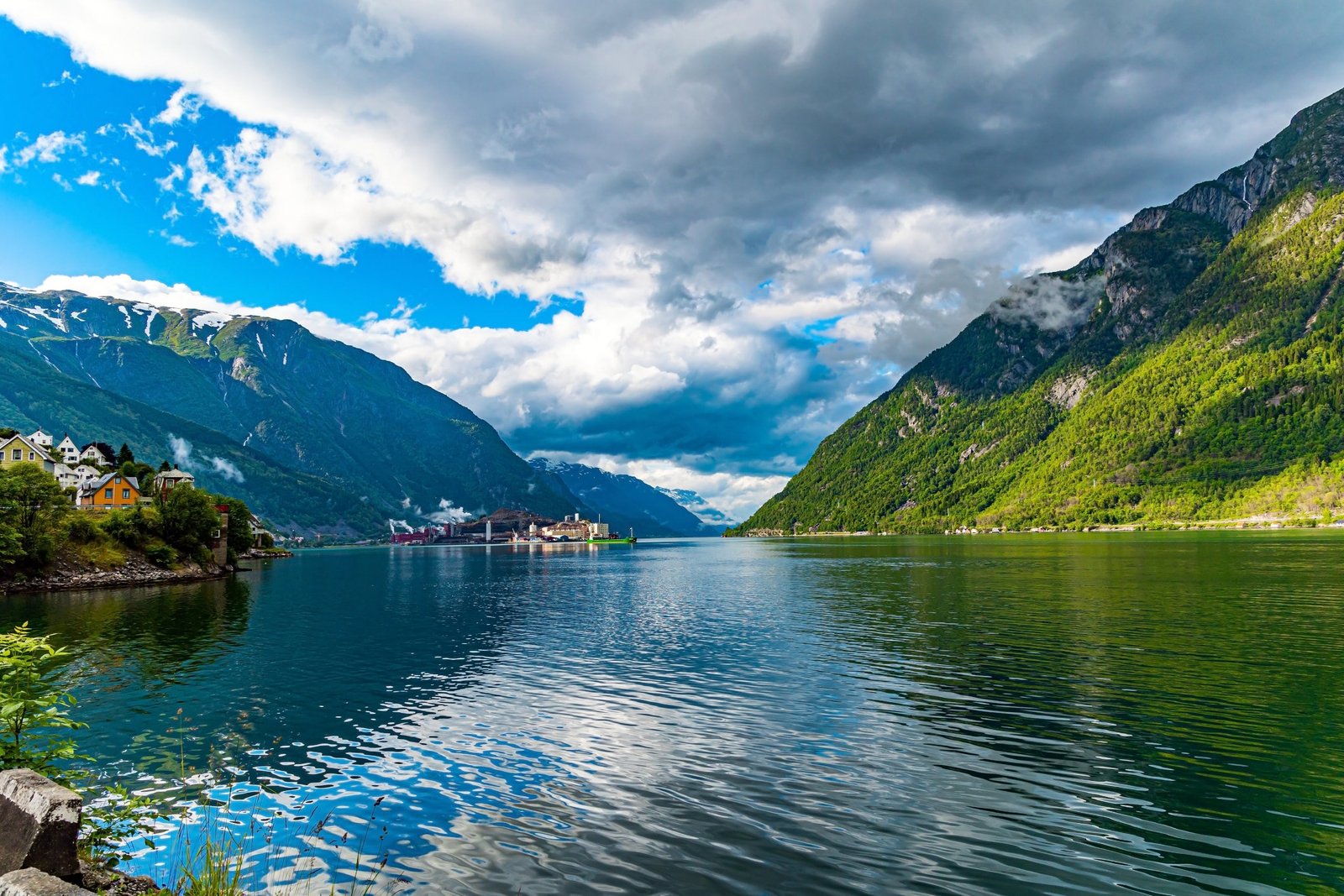
There’s something about Norway that feels almost unreal. You can be standing beside a quiet blue fjord in the morning, driving past snow-covered mountains a few hours later, and then end the day in a small coastal town where everything feels wonderfully calm.
What Makes Norway Special?
Norway is a Scandinavian country in Northern Europe, known for its dramatic scenery, clean cities, long coastline, and strong connection with nature. It shares borders with Sweden, Finland, and Russia and stretches far into the Arctic region.
The country is especially famous for its fjords. These deep, narrow waterways are surrounded by steep mountains and were shaped by glaciers over thousands of years. Places such as Geirangerfjord and Nærøyfjord attract visitors who want to experience Norway’s landscapes up close.
But the scenery isn’t the only reason people are drawn here. There’s also a slower, more outdoors-focused lifestyle that many visitors find refreshing.
Norwegian Nature and Landscapes
Fjords, Mountains, and Waterfalls
The fjords are probably the first thing most people associate with the country. Their combination of mountains, forests, waterfalls, and clear water creates views that are hard to forget.
Western Norway is particularly well known for these landscapes. A road trip through the region can be just as memorable as visiting the major tourist attractions. You don’t always need a famous viewpoint; sometimes pulling over beside a quiet road is enough.
The Northern Lights
Northern Norway is one of the world’s popular destinations for seeing the aurora borealis. During the darker months, travelers head toward places such as Tromsø and the Lofoten Islands hoping to catch the lights moving across the night sky.
Of course, nature doesn’t follow a schedule. Clouds, weather, and solar activity all matter. That’s part of the experience, though. You might wait for hours and see nothing, then suddenly the sky comes alive.
Midnight Sun
Summer brings the opposite experience in northern parts of the country. During the midnight sun season, the sun can remain visible late into the night, creating long golden evenings and unusual light.
It can take some getting used to if you’re accustomed to regular day-and-night cycles.
Cities and Norwegian Culture
Oslo
Oslo, the capital, offers a very different experience from the country’s remote landscapes. It combines modern architecture, museums, parks, restaurants, and easy access to nature.
One thing that stands out is how close the outdoors can feel. You don’t necessarily have to travel far from the city to find forests, walking trails, or water.
Bergen
Bergen is another popular destination, particularly because of its historic waterfront and location near some of the country’s famous fjords.
The city is known for its colorful wooden buildings around Bryggen, a historic area that gives Bergen plenty of character. It also has a reputation for rainy weather, so packing a decent waterproof jacket is a smart move.
Everyday Life in Norway
Norwegian culture places a strong value on spending time outdoors. Hiking, skiing, cycling, fishing, and simply enjoying nature are common parts of life.
There’s even a well-known concept called friluftsliv, which roughly refers to an outdoor-oriented way of living. It isn’t necessarily about extreme adventure. Sometimes it’s just taking a walk in the woods, sitting beside a lake, or spending a quiet weekend outside.
Work-life balance is also an important part of the country’s reputation. People often value personal time, family, and leisure rather than treating work as the center of everything.
Food You Should Try
Norwegian food has a strong connection to the sea and the country’s natural resources. Salmon is one of the best-known foods, but there’s much more to explore.
Visitors may come across dishes featuring cod, herring, lamb, potatoes, berries, and brown cheese. Seafood is especially popular along the coast.
And don’t be surprised if food prices feel high compared with what you’re used to. Norway is an expensive country for many travelers, so planning a daily budget before arriving can make the trip much easier.
Best Time to Visit
The best time depends heavily on what you want to experience.
Summer
Summer is ideal for hiking, road trips, fjord cruises, and exploring northern areas under the midnight sun. The days are long, and many outdoor attractions are easier to access.
Winter
Winter is better suited to skiing, snowy landscapes, and northern lights trips. Northern Norway can be particularly appealing during this season.
Spring and autumn can be quieter, but weather conditions can change quickly. If you’re traveling outside the busiest months, check local conditions before planning outdoor activities.
Practical Travel Tips
Norway is generally straightforward to explore, but a little preparation goes a long way.
- Pack layers because weather can change quickly.
- Bring waterproof clothing if you’re visiting coastal or mountainous areas.
- Budget carefully, especially for restaurants and accommodation.
- Public transportation is useful in larger cities and many tourist areas.
- Renting a car can make rural travel more flexible.
- Don’t underestimate travel times between mountain and fjord regions.
- If you’re chasing the northern lights, give yourself several nights rather than relying on one evening.
One of the best things you can do is avoid trying to see everything. Norway is long, and distances can be surprisingly large. Pick a region and actually spend time there.
Why Travelers Remember Norway
What makes Norway memorable isn’t just one landmark. It’s the combination of dramatic nature and everyday calm.
You might spend one day hiking beside a glacier and the next sitting quietly in a café in Bergen. There are busy tourist spots, sure, but there are also countless places where you can simply slow down and enjoy the surroundings.
For travelers who love mountains, water, photography, hiking, or peaceful scenery, Norway has plenty to offer.
Final Thoughts
Norway isn’t really a place you rush through. Its biggest attractions are often the landscapes between destinations—the quiet roads, small villages, mountains, waterfalls, and stretches of coastline.
That’s probably what makes the country so appealing. You don’t always need a packed itinerary. Sometimes the best part of a trip is simply finding a beautiful place, stopping for a while, and taking it all in.
FAQs
Is Norway expensive to visit?
Yes, Norway can be expensive compared with many other European destinations. Accommodation, dining, transportation, and activities can add up quickly, so having a realistic budget is important.
What is Norway famous for?
Norway is best known for its fjords, mountains, northern lights, Viking history, scenic coastline, skiing, and strong outdoor culture.
When is the best time to see the northern lights?
The northern lights are generally visible during the darker months, particularly in northern areas. Clear skies and suitable solar activity are also necessary.
Is Norway good for a road trip?
Yes. Road trips can be an excellent way to explore fjords, mountain roads, villages, and scenic viewpoints. However, distances and driving conditions should be considered when planning your route.
What should I pack for Norway?
Layers, comfortable walking shoes, a waterproof jacket, and weather-appropriate clothing are useful. Your packing list should change depending on the season and region.
Learn About: California
