

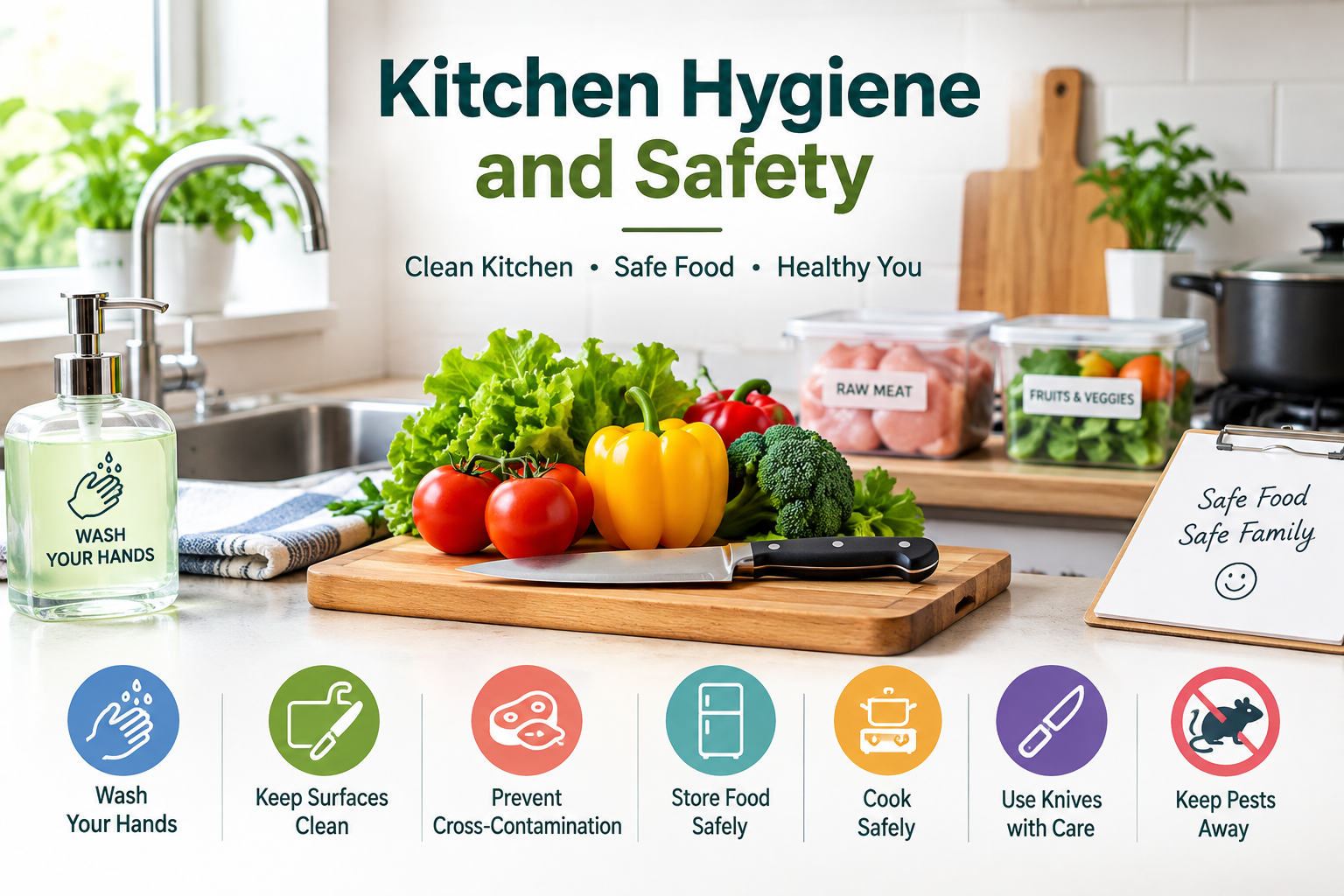
A clean kitchen is more than just a pleasant place to prepare meals. Good kitchen hygiene and safety practices help reduce the risk of food contamination, prevent accidents, and keep cooking areas healthier for everyone. From washing your hands and storing food correctly to cleaning countertops and handling knives safely, a few simple habits can make a significant difference.
Whether you cook every day or prepare occasional meals, understanding basic kitchen hygiene and safety can help you maintain a cleaner workspace and handle food with greater care.
What Is Kitchen Hygiene and Safety?
Kitchen hygiene and safety refers to the practices used to keep food preparation areas clean while reducing the risk of contamination, foodborne illness, burns, cuts, falls, and other common kitchen accidents.
Kitchen hygiene focuses primarily on cleanliness and food handling. Kitchen safety also includes using appliances, knives, cookware, cleaning products, and other equipment properly.
Both areas work together. A kitchen can look spotless but still have unsafe food-handling practices, while a kitchen with careful cooking habits may still create problems if surfaces and utensils are not cleaned properly.
Why Kitchen Hygiene Matters
Food can become contaminated at different stages of preparation. Bacteria and other contaminants can be transferred from hands, utensils, cutting boards, countertops, raw ingredients, or improperly stored food.
Simple habits can help minimize these risks:
- Wash hands before preparing or eating food.
- Clean preparation surfaces regularly.
- Keep raw and ready-to-eat foods separate.
- Store perishable foods appropriately.
- Wash fresh produce before eating or preparing it.
- Clean utensils after handling raw ingredients.
- Follow safe cooking and reheating practices.
- Clean up spills promptly to prevent slips.
Good hygiene should be part of your normal cooking routine rather than something you do only after a problem occurs.
Wash Your Hands Before Handling Food
Handwashing is one of the simplest ways to maintain kitchen hygiene. Hands can pick up germs from phones, door handles, packaging, pets, waste bins, and other surfaces.
Wash your hands thoroughly with soap and running water before preparing food and after activities that may contaminate them, such as handling raw meat or using the bathroom.
Pay attention to the backs of your hands, between your fingers, and around your fingernails. Dry your hands with a clean towel or another hygienic method.
It is also useful to avoid touching your face, hair, phone, or other potentially contaminated objects while preparing food. If you do, wash your hands again before continuing.
Keep Work Surfaces and Utensils Clean
Countertops, cutting boards, knives, plates, and cooking utensils should be cleaned regularly, particularly after contact with raw ingredients.
Start by removing food scraps and visible dirt. Wash items using appropriate dishwashing methods and allow them to dry properly.
Cutting boards deserve particular attention because they come into direct contact with food. Consider using separate boards for raw animal products and foods that are ready to eat. This can help reduce the possibility of transferring contaminants between foods.
Do not simply wipe a visibly dirty surface and assume it is clean. Use suitable cleaning methods for the type of surface and food preparation involved.
Prevent Cross-Contamination
Cross-contamination happens when contaminants are transferred from one food, surface, or object to another. It can occur through hands, knives, cutting boards, plates, utensils, or countertops.
For example, using the same cutting board for raw chicken and salad ingredients without properly cleaning it in between can create a contamination risk.
To reduce this risk:
- Keep raw foods separate from ready-to-eat foods.
- Use clean utensils when serving cooked food.
- Avoid placing cooked food on a plate that previously held raw meat unless the plate has been thoroughly cleaned.
- Wash hands after handling raw animal products.
- Clean surfaces and equipment between different food-preparation tasks.
These habits are particularly important when preparing meals for children, older adults, or people who may be more vulnerable to foodborne illness.
Store Food Safely
Proper storage helps protect food from contamination and unnecessary spoilage.
Keep perishable foods refrigerated according to appropriate food-storage guidance, and avoid leaving foods that require refrigeration at room temperature for extended periods.
Store raw meat and similar foods in sealed containers or securely wrapped packages. Place them where they cannot leak onto other foods.
Your refrigerator should also be kept clean. Check stored foods regularly and remove items that are spoiled or no longer suitable for consumption.
When storing leftovers, use clean containers and label them when helpful so you can keep track of what was prepared and when.
Handle Raw Meat, Eggs, and Produce Carefully
Raw meat, poultry, seafood, and eggs require careful handling because they can carry harmful microorganisms.
Keep raw animal products separate from foods that will be eaten without further cooking. Wash your hands and clean utensils after handling them.
Fresh fruits and vegetables should also be handled carefully. Rinse produce under running water before eating or preparing it, even when you plan to peel it. This helps remove dirt and other surface contaminants.
Avoid washing raw meat or poultry in the sink simply to clean it. Splashing water can spread contaminants around nearby surfaces.
Practice Safe Cooking Habits
Cooking involves heat, steam, hot oil, sharp tools, and electrical appliances, so paying attention can help prevent injuries.
Keep pot handles turned away from the edge of the stove where practical. Use appropriate oven mitts or heat-resistant protection when handling hot cookware.
Never leave cooking unattended when doing so could create a fire or other hazard. Keep flammable materials away from cooking surfaces.
When cooking foods that require a specific internal temperature for safety, use a food thermometer rather than relying only on appearance. This is particularly useful for meat, poultry, and other foods where the center may not be fully cooked even when the outside looks done.
Use Knives and Kitchen Equipment Safely
Knives are among the most useful kitchen tools, but they should always be handled carefully.
Use a stable cutting board and keep your fingers away from the blade. A sharp, properly maintained knife can be easier to control than a damaged or unsuitable one.
When carrying a knife, keep the blade pointed downward and close to your body. Never leave a knife hidden under food, water, or other objects in a sink.
Kitchen appliances should also be used according to their instructions. Keep electrical appliances and cords away from water, and unplug equipment when appropriate after use.
Keep the Kitchen Free From Pests
Food crumbs, uncovered ingredients, standing water, and overflowing garbage can attract insects and rodents.
Keep food stored in suitable sealed containers and clean spills and crumbs promptly. Empty waste bins regularly and keep the surrounding area clean.
Check cupboards and storage areas occasionally for signs of pests. If you notice an infestation, address it promptly using an appropriate and safe method.
Cleaning alone may not solve a serious pest problem, so persistent infestations may require professional assistance.
Kitchen Hygiene and Safety Checklist
A simple checklist can make daily kitchen routines easier:
| Task | Recommended Habit |
| Hand hygiene | Wash hands before and during food preparation when necessary |
| Countertops | Clean after food preparation |
| Cutting boards | Clean thoroughly between different food types |
| Raw foods | Keep separate from ready-to-eat foods |
| Refrigerator | Keep clean and store foods appropriately |
| Leftovers | Store promptly in suitable containers |
| Knives | Handle carefully and store safely |
| Spills | Clean immediately to reduce slip hazards |
| Appliances | Use according to manufacturer instructions |
| Waste | Empty bins regularly |
Frequently Asked Questions
How can I maintain good kitchen hygiene every day?
Start with basic habits: wash your hands, clean food-contact surfaces, separate raw and ready-to-eat foods, store perishable ingredients appropriately, and clean utensils after use.
What is the most important kitchen safety rule?
Awareness is one of the most important principles. Pay attention while cooking, use equipment correctly, and avoid leaving potentially hazardous cooking activities unattended.
Should I use separate cutting boards for raw meat and vegetables?
Using separate cutting boards can help reduce the risk of cross-contamination. If you use one board for multiple foods, clean it thoroughly between tasks.
How often should kitchen countertops be cleaned?
Countertops should be cleaned regularly and after food preparation, especially after handling raw meat, poultry, seafood, or other ingredients that could contaminate the surface.
How should leftovers be stored?
Place leftovers in clean, suitable containers and refrigerate them promptly when refrigeration is required. Follow appropriate food-storage guidance rather than keeping perishable food at room temperature for long periods.
Is it safe to wash raw meat before cooking?
Washing raw meat or poultry is generally unnecessary and can spread contaminants through splashing water. Proper cooking is a more appropriate way to make these foods safe.
Why is handwashing important in the kitchen?
Hands can transfer contaminants to food, utensils, and surfaces. Washing them properly before food preparation and after handling potentially contaminated items helps reduce this risk.
Conclusion
Good kitchen hygiene and safety does not require complicated routines. Consistent habits such as washing your hands, keeping surfaces clean, separating raw and ready-to-eat foods, storing ingredients properly, and using kitchen equipment carefully can make food preparation cleaner and safer.
The goal is to make these practices part of everyday cooking. A few extra moments spent cleaning, organizing, and handling food carefully can help create a kitchen that is both hygienic and safe to use.
Learn More About: Vida, Saúde e Receitas
