

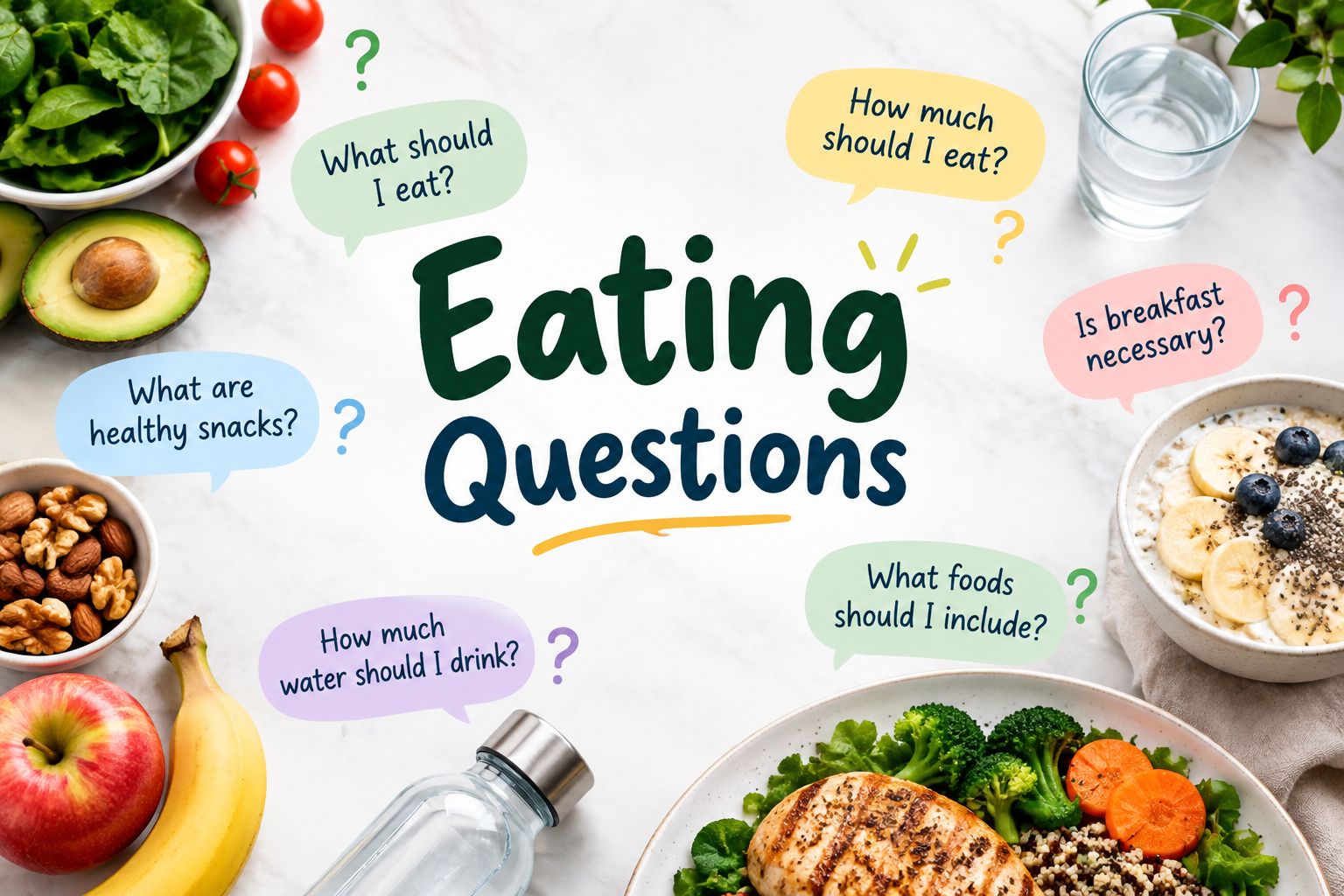
Eating questions are some of the most common questions people ask when they want to understand food, improve their meals, or make better everyday choices. They can range from simple questions such as what to eat for breakfast to more specific concerns about meal timing, portion sizes, snacks, and balanced nutrition.
This guide answers common eating questions in a simple, practical way so you can make informed food choices without making eating unnecessarily complicated.
What Are Eating Questions?
Eating questions cover almost anything related to food and daily eating habits. People may ask what foods are nutritious, when they should eat, how much they should eat, or how to build healthier meals.
The right answer can depend on age, activity level, health needs, food preferences, culture, and lifestyle. Because of this, there is rarely one eating plan that works perfectly for everyone.
A useful approach is to focus on variety, balance, appropriate portions, and foods that fit your individual needs.
What Should You Eat for a Balanced Meal?
A balanced meal generally includes several types of food rather than relying heavily on one ingredient or food group.
A simple plate can include:
- Vegetables or fruit: Add color, fiber, vitamins, and minerals.
- Protein: Foods such as eggs, beans, lentils, fish, chicken, yogurt, or other protein-rich choices.
- Whole grains or other carbohydrates: Options include oats, whole-grain bread, brown rice, potatoes, or other grains.
- Healthy fats: Nuts, seeds, olive oil, avocado, and similar foods can contribute useful fats.
You do not need to make every meal perfect. Looking at your overall eating pattern is often more practical than worrying about whether one individual meal contains everything.
How Often Should You Eat?
There is no universal number of meals that everyone must eat each day.
Some people prefer three main meals, while others naturally eat smaller meals or include snacks. Your schedule, hunger levels, lifestyle, and nutritional needs can all influence your eating pattern.
Instead of following a strict eating schedule simply because it works for someone else, pay attention to your hunger and fullness signals and choose a routine that is practical for you.
What Is a Healthy Portion Size?
Portion size refers to how much food you actually put on your plate, while serving size is a standardized amount used on nutrition information or in dietary guidance.
A practical way to manage portions is to build meals around vegetables, include an appropriate source of protein, and choose a reasonable amount of grains or other carbohydrate foods.
Eating slowly can also make it easier to notice when you are becoming comfortably full.
Portion needs vary considerably between people. Someone who is highly active may require more food than someone with a sedentary lifestyle.
What Should You Eat When You Are Hungry Between Meals?
A snack can be useful when you are genuinely hungry between meals.
Simple options include:
- Fresh fruit
- Yogurt
- Nuts or seeds
- Boiled eggs
- Vegetables with a suitable dip
- Whole-grain toast
- Milk
- A small sandwich
The best choice depends on your preferences and nutritional needs. Snacks do not have to be complicated or marketed as special “diet foods.”
If you regularly feel extremely hungry between meals, it may also be worth looking at whether your main meals contain enough protein, fiber, and overall food.
Is Breakfast Necessary?
Breakfast can be a nutritious part of the day, but there is no single breakfast pattern that everyone has to follow.
Some people enjoy eating soon after waking, while others prefer to eat later. What matters is whether your overall eating pattern provides enough nutrients and fits your lifestyle.
A balanced breakfast might include eggs with whole-grain toast, oatmeal with fruit and nuts, yogurt with fruit, or another combination that provides useful nutrients.
Rather than focusing only on whether breakfast is “necessary,” consider the quality and consistency of your overall diet.
How Much Water Should You Drink?
Fluid needs vary from person to person. Factors such as weather, physical activity, body size, diet, and individual circumstances can affect how much fluid you need.
Water is an easy everyday choice for staying hydrated. Other drinks and foods can also contribute to overall fluid intake.
In hot weather or during physical activity, your fluid requirements may increase. Paying attention to thirst and maintaining regular fluid intake can help support normal hydration.
People with specific medical conditions or fluid restrictions should follow advice from their healthcare professional.
What Foods Should You Include Regularly?
A varied diet can make it easier to obtain different nutrients. Depending on your dietary preferences, regularly including foods from several categories can be helpful.
Fruits and Vegetables
Fruits and vegetables provide fiber and a range of vitamins, minerals, and other naturally occurring compounds. Try to include different colors and varieties rather than eating the same few choices every day.
Protein-Rich Foods
Protein supports many important functions in the body. Sources include eggs, poultry, fish, dairy products, beans, lentils, peas, nuts, seeds, and other protein-containing foods.
Whole Grains
Whole grains can provide carbohydrates, fiber, and other nutrients. Oats, whole-grain breads, and brown rice are common examples.
Healthy Sources of Fat
Fats are an important part of the diet. Nuts, seeds, olive oil, avocado, and some fish provide sources of unsaturated fats.
Dairy or Suitable Alternatives
Milk, yogurt, cheese, and fortified alternatives can provide important nutrients. The best option depends on individual dietary preferences and requirements.
Common Eating Questions and Answers
Should You Avoid Carbohydrates?
Not necessarily. Carbohydrates are found in many nutritious foods, including fruits, vegetables, grains, beans, and potatoes. The type and overall amount of carbohydrate can matter more than simply avoiding the entire category.
Is Eating Late at Night Bad?
Eating at night is not automatically harmful. What matters is your overall eating pattern, food choices, portion sizes, and individual circumstances. Large meals immediately before sleeping may be uncomfortable for some people.
Are Snacks Unhealthy?
Snacks are not inherently unhealthy. A snack can be part of a balanced eating pattern, especially when you are genuinely hungry between meals. The nutritional quality and portion can matter more than the fact that the food is a snack.
Should You Stop Eating Your Favorite Foods?
You do not necessarily need to eliminate favorite foods. A sustainable eating pattern can include foods you enjoy while still emphasizing nutritious foods most of the time.
Is Homemade Food Always Healthier?
Homemade meals can make it easier to control ingredients and portions, but homemade food is not automatically nutritious. A homemade meal can still contain large amounts of added sugar, salt, or saturated fat depending on the ingredients and preparation method.
How Can You Improve Your Eating Habits?
Start with small changes. You might add more vegetables to one meal, choose water more often, include a protein source, or replace some refined grains with whole-grain options.
Small changes that you can maintain are often more practical than trying to completely change your diet overnight.
FAQs About Eating Questions
What are the most common eating questions?
Common questions include what to eat, how much to eat, when to eat, whether snacks are healthy, how much water to drink, and how to create balanced meals.
How can I eat a more balanced diet?
Include a variety of vegetables, fruits, protein-rich foods, grains or other carbohydrate sources, and healthy fats. Variety across the week can help provide a broader range of nutrients.
How many meals should I eat each day?
There is no single number that works for everyone. Your meal frequency can depend on hunger, lifestyle, schedule, preferences, and nutritional needs.
Is it okay to eat snacks every day?
Yes. Snacks can fit into a balanced diet when they are appropriate for your hunger and overall nutritional needs.
What is the easiest way to improve my meals?
A simple starting point is to add more vegetables or fruit, include a protein source, choose suitable portions, and drink water regularly.
Should everyone follow the same diet?
No. Eating needs and preferences differ between individuals. Age, activity, culture, food availability, allergies, medical needs, and personal preferences can all influence dietary choices.
What should I do if I have specific dietary concerns?
For medical conditions, allergies, significant dietary restrictions, or concerns about your nutritional needs, consult a qualified healthcare professional or registered dietitian for individualized advice.
Conclusion
Eating questions do not always have complicated answers. A practical approach is to focus on variety, balanced meals, sensible portions, regular hydration, and foods that fit your lifestyle and nutritional needs.
Rather than searching for one perfect diet or strict set of rules, build eating habits that are nutritious, enjoyable, and realistic enough to maintain over time.
Learn More About: Types of Diets
