

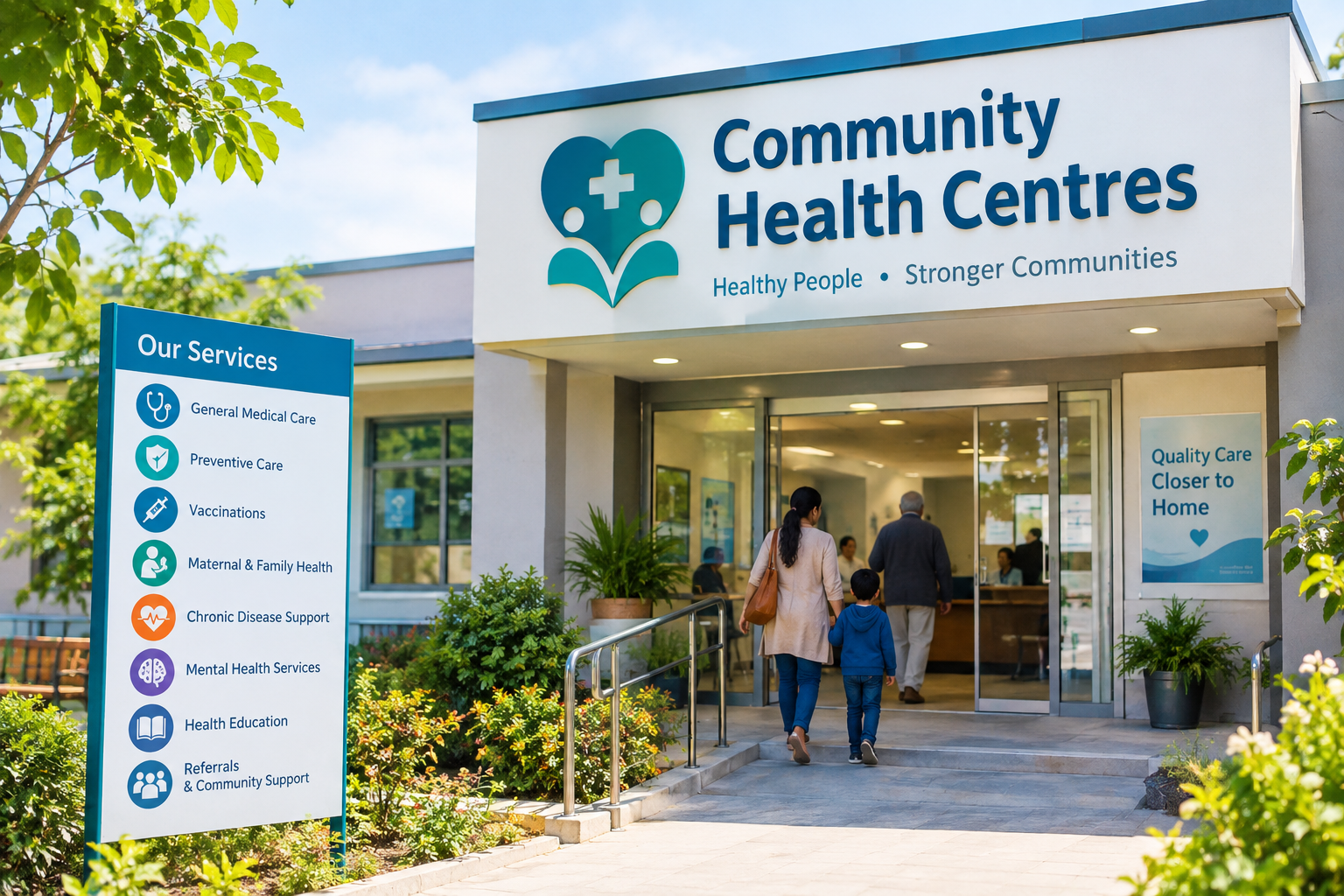
Community health centres are local healthcare facilities designed to make essential medical services easier to access. They often serve individuals and families who may face financial, geographic, or other barriers to traditional healthcare. Depending on the centre and location, services can include primary care, preventive care, health education, screening, and support for managing ongoing health needs.
For many communities, these centres provide an important connection between people and the wider healthcare system. They focus not only on treating illness but also on prevention, early support, and helping people maintain better overall health.
What Are Community Health Centres?
Community health centres are healthcare facilities that provide medical and related services to people in a specific community. Their exact services, funding models, eligibility requirements, and operating structures vary by country and organization.
Unlike specialist facilities that focus on particular conditions, community health centres commonly provide primary and preventive healthcare. They may also connect patients with specialists, hospitals, pharmacies, social services, or other community resources when additional support is needed.
The main goal is to bring essential healthcare closer to the people who need it.
What Services Do Community Health Centres Provide?
The services available depend on the individual centre, but many offer a broad range of basic healthcare options.
Primary Medical Care
Primary care is often at the heart of a community health centre. Patients may visit for common illnesses, minor health concerns, routine checkups, and general medical advice.
Regular primary care can also help healthcare professionals identify potential problems earlier and determine when further testing or specialist care may be appropriate.
Preventive Healthcare
Prevention is another important part of community-based healthcare. Services may include routine health checks, screening programs, vaccinations, and health education.
Preventive care can help people understand their health risks and take action before certain problems become more serious.
Maternal and Family Health
Some community health centres provide services related to pregnancy, reproductive health, children’s healthcare, and family planning.
The availability of these services differs between centres, so patients should check with their local facility to understand what is offered.
Chronic Disease Support
People living with long-term conditions may need regular monitoring and ongoing support. Community health centres can sometimes provide follow-up appointments, medication management, lifestyle guidance, and referrals.
Consistent primary care can make it easier to monitor changes and coordinate treatment when additional medical services are required.
Mental Health and Social Support
Some centres provide mental health services directly or connect patients with appropriate professionals and community organizations.
Social support may also be available for issues that affect a person’s ability to access healthcare, such as transportation, housing, food security, or financial difficulties.
Why Are Community Health Centres Important?
Access to healthcare can be affected by many factors, including location, cost, transportation, availability of providers, and a person’s individual circumstances.
Community health centres can help address some of these barriers by providing healthcare within local communities.
They can also support continuity of care. Instead of visiting different facilities for every basic health concern, patients may be able to receive several types of services through one local healthcare organization.
Another important benefit is health education. When people understand how to prevent illness, manage existing conditions, and recognize when professional care is needed, they can make more informed decisions about their health.
Who Can Use a Community Health Centre?
Eligibility varies significantly depending on the country, centre, and healthcare system.
Some community health centres are open to a broad section of the population, while others are designed to serve particular groups or areas. Certain centres may have specific programs for children, older adults, low-income households, newcomers, or people who experience difficulties accessing conventional healthcare.
Before visiting, it is useful to check the centre’s requirements, available services, appointment system, and payment arrangements.
Community Health Centres vs. Hospitals
Community health centres and hospitals have different roles within healthcare systems.
| Community Health Centres | Hospitals |
| Focus mainly on primary and preventive care | Provide more advanced and specialized medical care |
| Usually serve local communities | Often serve patients from wider areas |
| Handle routine and ongoing healthcare needs | Treat serious injuries, emergencies, and complex conditions |
| May provide health education and community programs | Provide specialist departments and inpatient services |
| Often refer patients when specialist care is needed | Receive referrals for advanced diagnosis and treatment |
A community health centre is generally not a replacement for emergency hospital care. Someone experiencing a medical emergency should seek appropriate emergency services rather than waiting for a routine appointment.
How to Find the Right Community Health Centre
Finding a suitable centre begins with identifying the services you need.
Consider these factors:
- Location: Choose a facility that is reasonably accessible.
- Services: Confirm that the centre provides the type of care you require.
- Appointments: Check whether appointments are required or walk-ins are accepted.
- Costs: Ask about consultation fees, insurance, subsidies, or other payment arrangements.
- Opening hours: Make sure the centre’s schedule works for you.
- Language and accessibility: Consider communication needs and physical accessibility.
- Referrals: Find out whether the centre can connect you with specialists or other healthcare services.
Official government health directories, local health authorities, and the centre’s own information channels can be useful starting points.
What to Expect During a Visit
A first visit may involve registration, a discussion about your health concerns, and collection of basic medical information.
A healthcare professional may ask about symptoms, medical history, medications, lifestyle factors, or previous treatment. Depending on the reason for the visit, they may perform an examination, recommend tests, provide treatment, or arrange a follow-up appointment.
If specialist care is needed, the centre may provide a referral or help coordinate the next step.
It is helpful to bring relevant medical documents, a list of current medications, identification or insurance information when required, and any questions you want to discuss.
The Role of Community Health Centres in Preventive Care
Healthcare is not only about treating illness after symptoms appear. Preventive care can help people identify risks and maintain healthier habits over time.
Community health centres may support prevention through routine checkups, screening, vaccination programs, health education, and advice about nutrition, physical activity, and other aspects of wellbeing.
The specific programs available depend on local healthcare priorities and the resources of each centre.
Common Challenges Faced by Community Health Centres
Although community health centres can improve access to care, they may also face challenges.
High demand can result in limited appointment availability. Some centres may have fewer healthcare professionals or resources than larger medical facilities. Funding, staffing, transportation, and differences in local healthcare systems can also affect the services available.
For this reason, community health centres often work alongside hospitals, specialist providers, pharmacies, public health agencies, and social-service organizations rather than operating independently from the wider healthcare system.
Frequently Asked Questions
What is the main purpose of a community health centre?
Its main purpose is to provide accessible healthcare and related services to people in a local community, with an emphasis on primary and preventive care.
Are community health centres free?
Not always. Costs and payment arrangements vary by country, healthcare system, and individual centre. Some services may be publicly funded or subsidized, while others may involve fees.
Can I see a doctor at a community health centre?
Many community health centres provide access to primary healthcare professionals. The exact types of doctors and other professionals available depend on the facility.
Do community health centres treat emergencies?
They are generally designed for primary and routine healthcare rather than serious emergencies. In an emergency, appropriate emergency medical services or a hospital should be used.
Can community health centres provide specialist care?
Some centres have specialist services, while others refer patients to specialists elsewhere when necessary.
Can children receive care at community health centres?
Some centres provide children’s healthcare, while others have more limited services. It is best to check with the specific centre.
Do I need an appointment?
Requirements vary. Some facilities offer scheduled appointments, while others may provide walk-in services for certain needs.
How can I find a community health centre near me?
You can check local or national health-service directories, contact your local health authority, or search for community healthcare providers in your area.
Conclusion
Community health centres play an important role in connecting people with accessible primary and preventive healthcare. They can provide routine medical services, health education, ongoing support, and referrals while helping communities address barriers to care.
Because services and eligibility differ between facilities, checking the specific centre’s available programs, costs, appointment requirements, and operating hours is an important first step. For many people, a community health centre can serve as a practical starting point for managing everyday healthcare needs and accessing additional services when necessary.
Learn More About: Health Public Health
