

Japan is often associated with sushi and ramen, but its food culture goes far beyond these internationally popular dishes. Exploring Japan by food means discovering the country through its local ingredients, cooking traditions, regional specialties, markets, restaurants, and seasonal dishes.
From seafood-rich meals in northern Japan to distinctive dishes in Okinawa, every area has something different to offer. Geography plays an important role, too. Mountains, coastlines, farming regions, and climate all influence what people traditionally eat.
For travelers, food can be an enjoyable way to understand the character of different Japanese destinations. A trip to Japan can become a culinary journey where each city introduces new flavors and preparation styles.
Famous Japanese Foods to Try
Several Japanese dishes have become popular around the world. They are a natural starting point for anyone discovering Japanese cuisine.
Sushi
Sushi is one of Japan’s best-known foods. It generally combines vinegared rice with ingredients such as seafood, vegetables, or egg. There are many forms of sushi, including nigiri, maki, and temaki.
The quality and style can vary depending on the restaurant and region, so trying sushi in Japan can provide a much broader experience than simply eating familiar rolls.
Ramen
Ramen consists of noodles served in a flavorful broth with toppings that may include sliced meat, green onions, bamboo shoots, eggs, or seaweed. Different areas of Japan have developed their own ramen traditions.
Popular styles include miso ramen, shoyu ramen, shio ramen, and tonkotsu ramen. The broth, noodles, and toppings can create a completely different experience from one bowl to another.
Tempura
Tempura features seafood or vegetables coated in a light batter and fried until crisp. It is commonly served with dipping sauce and other accompaniments.
The simplicity of tempura allows the ingredients themselves to remain an important part of the dish.
Udon and Soba
Udon noodles are thick and chewy, while soba noodles are traditionally made primarily from buckwheat. Both can be served hot in broth or cold with a dipping sauce.
They are convenient choices for travelers because they are available in restaurants across Japan and can be prepared in numerous regional and seasonal styles.
Okonomiyaki
Okonomiyaki is a savory Japanese pancake made with ingredients such as cabbage and a batter, with additional toppings depending on the style. Osaka and Hiroshima are particularly associated with different approaches to preparing the dish.
It is often cooked on a hot surface and finished with toppings and sauces.
Exploring Japan Through Regional Cuisine
One of the most interesting parts of Japan by food is discovering how dramatically cuisine changes from one region to another.
| Region | Foods and Ingredients to Explore |
| Hokkaido | Seafood, dairy products, miso ramen |
| Tohoku | Rice dishes, regional vegetables, seafood |
| Tokyo | Sushi, soba, monjayaki |
| Osaka | Takoyaki, okonomiyaki, kushikatsu |
| Kyoto | Kaiseki, tofu dishes, traditional sweets |
| Hiroshima | Hiroshima-style okonomiyaki, oysters |
| Kyushu | Tonkotsu ramen, mentaiko, regional dishes |
| Okinawa | Okinawa soba, goya dishes, tropical ingredients |
Hokkaido
Hokkaido is known for its seafood and agricultural products. Visitors can encounter fresh crab, scallops, salmon, sea urchin, and other seafood depending on the season.
The region is also associated with dairy products and its distinctive miso ramen.
Osaka
Osaka has a strong reputation for casual and flavorful food. Takoyaki, small batter-based balls containing octopus, is one of the city’s most recognizable foods.
Okonomiyaki is another major specialty, while kushikatsu consists of breaded and fried skewered ingredients.
Kyoto
Kyoto offers a different side of Japanese cuisine, with strong connections to traditional cooking and seasonal presentation. Kaiseki cuisine is particularly associated with Kyoto and focuses on carefully prepared courses using seasonal ingredients.
Tofu and yuba are also important parts of the city’s culinary traditions.
Hiroshima
Hiroshima is particularly known for its style of okonomiyaki, in which ingredients are layered rather than mixed in the same way as the Osaka style.
The region is also well known for oysters, making seafood another important part of its food identity.
Okinawa
Okinawan cuisine has distinctive ingredients and traditions that differ from those found in mainland Japan. Okinawa soba, bitter melon dishes, pork preparations, and locally grown produce are examples of foods travelers can encounter.
Japanese Street Food
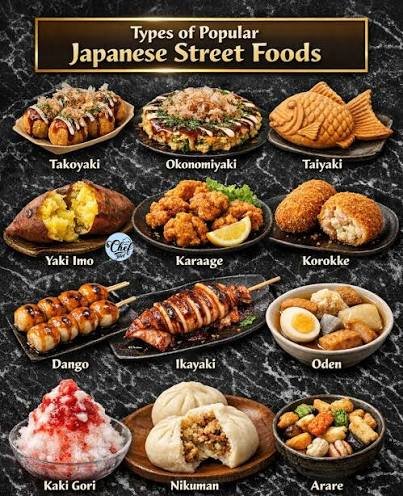
Street food is another enjoyable way to experience Japan by food, particularly at festivals, markets, and busy tourist areas.
Some foods to look for include:
- Takoyaki: Batter-based balls filled with octopus and commonly topped with sauce and other garnishes.
- Taiyaki: Fish-shaped cakes traditionally filled with sweet red bean paste, with other fillings also available.
- Yakitori: Grilled skewers, commonly made with chicken and seasoned with sauce or salt.
- Yakisoba: Stir-fried noodles served with vegetables and other ingredients.
- Dango: Chewy rice dumplings served on skewers, often with sweet sauces or toppings.
- Imagawayaki: Round cakes filled with sweet fillings such as red bean paste or custard.
Food festivals can be especially interesting because they bring together local specialties in a lively setting.
Traditional Japanese Meals
Japanese food culture also includes carefully balanced everyday meals. A traditional meal may include rice, soup, a main dish, and several smaller side dishes.
Miso soup is a familiar example. It is prepared using dashi and miso, with ingredients such as tofu, seaweed, or vegetables.
Another important concept is washoku, the traditional dietary culture of Japan. Washoku emphasizes seasonal ingredients, balance, presentation, and a connection between food and the natural environment.
Japanese Desserts and Sweet Treats
Japanese cuisine is not limited to savory foods. Traditional and modern desserts offer plenty of variety.
Mochi is made from glutinous rice and has a soft, chewy texture. It can be enjoyed plain or filled with sweet ingredients.
Matcha is another familiar flavor, appearing in sweets such as cakes, ice cream, cookies, and traditional Japanese confections.
Visitors may also encounter wagashi, traditional Japanese sweets often served alongside tea. Their shapes, colors, and ingredients can change with the seasons.
Seasonal Food in Japan
Seasonality is an important part of Japanese food culture. Ingredients are often enjoyed when they are at their seasonal best.
Spring can bring dishes featuring young vegetables and seasonal seafood, while summer menus may emphasize lighter preparations. Autumn is associated with ingredients such as mushrooms, sweet potatoes, and certain fish. Winter brings hearty dishes, hot pots, and seasonal seafood.
This focus on seasonality means the food experience can change depending on when you visit Japan.
Tips for Exploring Japanese Cuisine
You do not need to visit expensive restaurants to experience Japanese food. Convenience stores, local noodle shops, markets, department-store food halls, izakayas, and small neighborhood restaurants can all provide different experiences.
A few simple tips can make your food journey easier:
- Try regional specialties rather than ordering only familiar international dishes.
- Visit local markets to see ingredients and prepared foods.
- Check seasonal menus when choosing restaurants.
- Be open to different textures and preparation styles.
- Learn a few basic Japanese food terms before traveling.
- Try both traditional dishes and modern interpretations of Japanese cuisine.
Most importantly, allow some flexibility. A memorable meal may come from a small restaurant or market that was not part of the original itinerary.
Frequently Asked Questions
What is meant by Japan by food?
Japan by food refers to exploring the country through its cuisine, including famous dishes, regional specialties, ingredients, cooking methods, food traditions, and seasonal eating.
What food is Japan most famous for?
Japan is especially famous for sushi, ramen, tempura, udon, soba, and other traditional dishes. Regional specialties add even more variety.
Which Japanese city is famous for street food?
Osaka is particularly well known for casual foods such as takoyaki and okonomiyaki, although street food can be found throughout Japan.
What should I eat in Tokyo?
Tokyo offers an enormous range of Japanese cuisine, including sushi, ramen, soba, tempura, monjayaki, and many regional foods from across the country.
What food is Kyoto known for?
Kyoto is associated with traditional cuisine such as kaiseki, tofu-based dishes, yuba, and seasonal Japanese sweets.
Is Japanese food always seafood?
No. Japanese cuisine includes seafood as well as rice, noodles, vegetables, tofu, meat, eggs, and many other ingredients.
What is washoku?
Washoku is the traditional dietary culture of Japan. It places importance on seasonal ingredients, balance, presentation, and respect for nature.
What is a good way to explore Japanese food?
Trying local specialties in different regions is one of the best ways to explore Japanese cuisine. Markets, neighborhood restaurants, food halls, festivals, and traditional dining establishments can all offer different experiences.
Conclusion
Exploring Japan by food reveals a country with remarkable culinary diversity. Sushi, ramen, tempura, and noodles may be the dishes most familiar internationally, but regional foods, seasonal ingredients, street snacks, traditional meals, and local cooking traditions tell a much bigger story.
Whether you explore the seafood of Hokkaido, the casual specialties of Osaka, the traditional cuisine of Kyoto, or the distinctive flavors of Okinawa, Japanese food provides a delicious way to experience the country’s regions and culture.
Learn About: Foods International Market
