

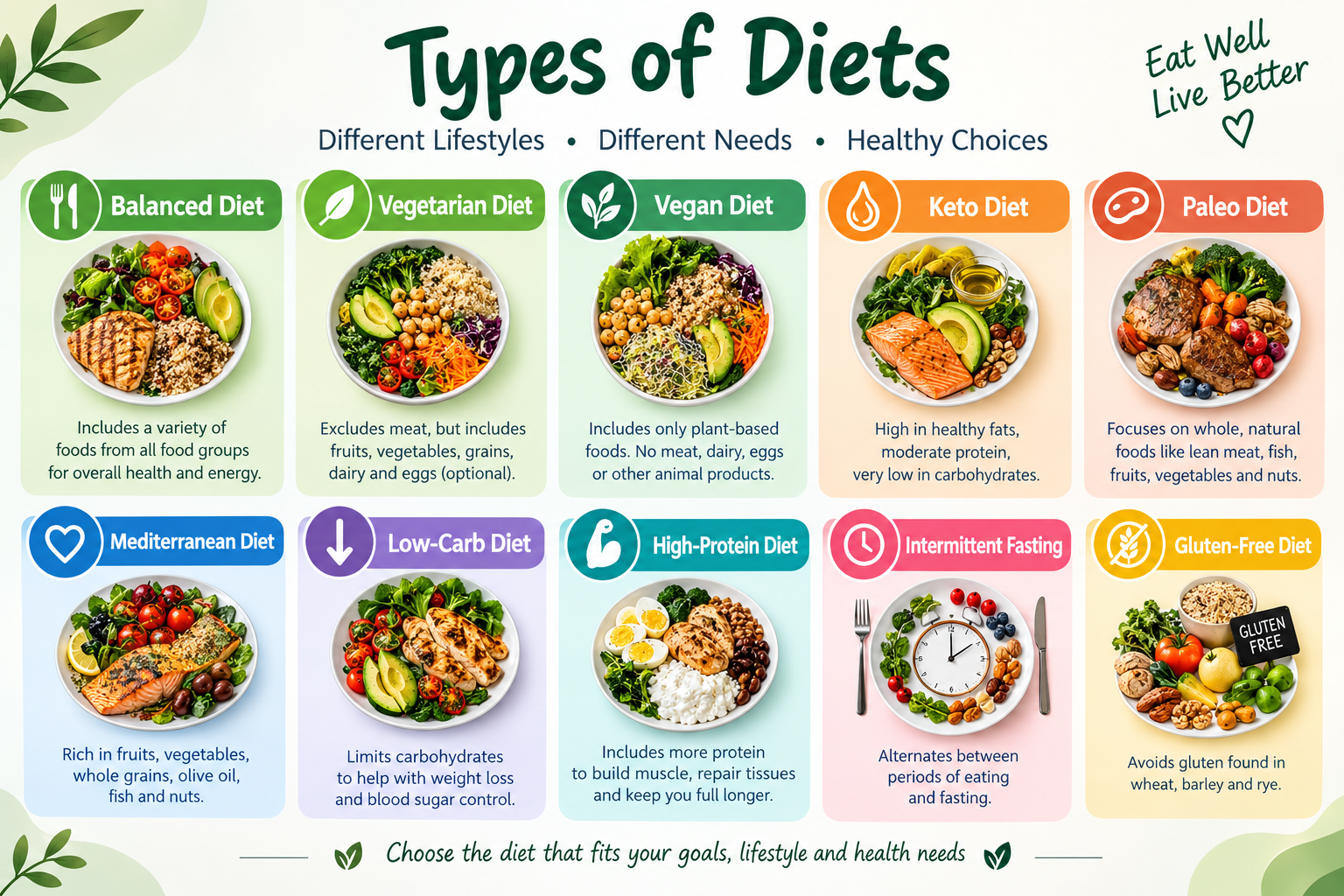
Choosing a diet can feel confusing because there are many eating patterns, each with different rules and goals. Some focus on reducing carbohydrates, while others emphasize vegetables, whole grains, plant foods, or portion control. Some are designed around specific health needs, whereas others are primarily used for weight management or personal preferences.
A diet is more than a list of foods you can or cannot eat. It is a pattern of eating and drinking over time. Current U.S. Dietary Guidelines emphasize nutrient-dense foods, including vegetables, fruits, whole grains, protein foods, dairy or suitable alternatives, and healthy fats, while recommending limits on highly processed foods, added sugars, excess sodium, and unhealthy fats.
This guide explains the most common types of diets, what they include, how they differ, and what to consider before choosing one.
What Is a Diet?
A diet is a person’s usual pattern of eating and drinking. It does not necessarily mean a temporary weight-loss plan.
Dietary patterns can be adapted to different nutritional needs, cultural preferences, budgets, lifestyles, and health goals. A healthy eating pattern is generally flexible rather than a rigid set of rules.
12 Common Types of Diets
1. Mediterranean Diet
The Mediterranean diet is based largely on foods traditionally eaten in countries surrounding the Mediterranean Sea.
It commonly emphasizes:
- Vegetables and fruits
- Whole grains
- Beans and other legumes
- Nuts and seeds
- Olive oil
- Fish and seafood
- Moderate amounts of poultry and dairy
Red and processed meats, highly processed foods, and foods high in added sugar are generally eaten less often.
The Mediterranean-style pattern is one example of a healthy eating pattern recognized in dietary guidance.
2. DASH Diet
DASH stands for Dietary Approaches to Stop Hypertension. It was developed as an eating pattern that supports blood-pressure management.
The DASH pattern emphasizes vegetables, fruits, whole grains, low-fat or fat-free dairy, fish, poultry, beans, nuts, and seeds. It also limits sodium, sweets, sugary drinks, and foods high in saturated fat.
People with high blood pressure or other medical conditions should discuss dietary changes with a healthcare professional.
3. Vegetarian Diet
A vegetarian diet excludes meat, poultry, and seafood, although specific vegetarian patterns differ.
Many vegetarians eat:
- Vegetables
- Fruits
- Whole grains
- Beans and lentils
- Nuts and seeds
- Eggs
- Dairy products
A well-planned vegetarian diet can provide a wide range of nutrients, but food choices should be varied enough to meet nutritional needs.
4. Vegan Diet
A vegan diet excludes animal-derived foods. This usually means avoiding meat, poultry, seafood, eggs, dairy, and other animal products.
Common foods include:
- Beans and lentils
- Tofu and other soy foods
- Vegetables
- Fruits
- Whole grains
- Nuts and seeds
Because some nutrients can be harder to obtain from a strictly vegan diet, careful meal planning is important.
5. Flexitarian Diet
Flexitarian eating is primarily plant-based but does not completely exclude animal foods.
Someone following this approach might eat vegetables, legumes, grains, nuts, and seeds most of the time while occasionally including meat, poultry, fish, eggs, or dairy.
Its flexibility can make it easier for some people to follow than a diet with strict exclusions.
6. Ketogenic Diet
The ketogenic, or keto, diet is a very low-carbohydrate, high-fat eating pattern. It substantially reduces carbohydrates and increases dietary fat, with protein intake generally kept moderate.
Foods commonly associated with keto include:
- Eggs
- Meat and fish
- Non-starchy vegetables
- Nuts and seeds
- Avocado
- Oils and fats
Because carbohydrate intake is restricted considerably, this diet can be difficult to follow and may not be appropriate for everyone. People with medical conditions or those taking medications should seek professional guidance before making major dietary changes.
7. Low-Carbohydrate Diet
A low-carbohydrate diet reduces carbohydrate intake compared with a person’s usual diet. The exact amount of carbohydrate can vary considerably between different versions.
Foods may include:
- Eggs
- Fish
- Meat
- Vegetables
- Nuts
- Seeds
- Dairy
- Lower-carbohydrate fruits
Unlike the ketogenic diet, a low-carb diet does not necessarily require carbohydrate intake to be extremely low.
8. Low-Fat Diet
Low-fat diets reduce the amount of fat consumed, particularly foods high in saturated fat.
A balanced low-fat pattern can include:
- Fruits
- Vegetables
- Whole grains
- Beans
- Lean protein
- Low-fat dairy
Reducing fat does not mean eliminating all dietary fat. Foods containing unsaturated fats, such as nuts, seeds, fish, and certain plant oils, can be part of a healthy eating pattern.
9. High-Protein Diet
A high-protein diet emphasizes protein-rich foods such as eggs, fish, poultry, dairy, beans, lentils, soy foods, nuts, and seeds.
Protein can contribute to satiety and is important for maintaining and building body tissues. However, increasing protein should not come at the expense of vegetables, fruits, whole grains, fiber, or other essential nutrients.
10. Paleo Diet
The paleo diet focuses on foods associated with the idea of eating patterns from prehistoric hunter-gatherer societies.
Typical choices may include:
- Meat
- Fish
- Eggs
- Vegetables
- Fruits
- Nuts
- Seeds
Many versions exclude grains, legumes, and dairy products. Because these restrictions can remove nutritious foods, careful planning is important.
11. Plant-Based Diet
A plant-based diet emphasizes foods that come from plants. It does not necessarily mean becoming vegan.
A plant-forward eating pattern may include:
- Vegetables
- Fruits
- Beans
- Lentils
- Whole grains
- Nuts
- Seeds
- Soy foods
Some people also include eggs, dairy, fish, or meat in smaller amounts.
12. Intermittent Fasting
Intermittent fasting focuses primarily on when a person eats rather than specifying a particular list of foods.
Common approaches include limiting eating to a particular daily time window or alternating periods of eating with periods of fasting.
It is different from most diets because the main feature is meal timing. People who are pregnant, have certain medical conditions, have a history of eating disorders, or take medications affected by food intake should seek medical advice before fasting.
Types of Diets at a Glance
| Diet | Main Focus | Common Foods |
|---|---|---|
| Mediterranean | Whole foods and plant-rich eating | Vegetables, fish, grains, olive oil |
| DASH | Heart-healthy eating and lower sodium | Fruits, vegetables, whole grains |
| Vegetarian | No meat, poultry, or seafood | Plants, eggs, dairy |
| Vegan | Avoids animal products | Plants, legumes, soy |
| Flexitarian | Mostly plant-based with flexibility | Plants plus occasional animal foods |
| Keto | Very low carbohydrate | Eggs, meat, fish, low-carb vegetables |
| Low-carb | Reduced carbohydrate intake | Protein foods, vegetables, nuts |
| Low-fat | Reduced dietary fat | Fruits, vegetables, grains, lean protein |
| High-protein | Higher protein intake | Eggs, fish, dairy, legumes |
| Paleo | Minimally processed foods with exclusions | Meat, fish, vegetables, fruits |
| Plant-based | Emphasis on plant foods | Vegetables, fruits, grains, legumes |
| Intermittent fasting | Meal timing | Varies according to eating window |
How to Choose a Diet
There is no single eating pattern that is automatically appropriate for every person. The right approach depends on nutritional needs, health status, lifestyle, food availability, preferences, and personal goals.
Consider these questions:
- Can you follow it long term?
A sustainable eating pattern is generally more practical than an extremely restrictive plan. - Does it provide enough nutrients?
Your meals should provide adequate protein, fiber, vitamins, minerals, and other essential nutrients. - Does it fit your lifestyle?
Consider your work schedule, cooking habits, budget, family meals, and cultural food preferences. - Does it support your health needs?
People with diabetes, high blood pressure, kidney disease, food allergies, or other medical conditions may require individualized dietary guidance. - Is it unnecessarily restrictive?
Removing entire food groups without a nutritional reason can make it harder to meet nutrient needs.
Healthy Eating Tips for Any Diet
Regardless of the eating pattern you choose, several principles can improve overall diet quality.
- Eat a variety of vegetables and fruits.
- Choose whole grains regularly.
- Include nutritious protein sources.
- Use healthy sources of dietary fat.
- Pay attention to portion sizes.
- Limit excess added sugars and sodium.
- Reduce reliance on highly processed foods.
- Drink adequate fluids.
- Make meals enjoyable and culturally appropriate.
Current U.S. dietary guidance emphasizes whole, nutrient-dense foods and reducing highly processed foods, refined carbohydrates, added sugars, excess sodium, and unhealthy fats.
Key Takeaways
- There are many different types of diets, and they have different structures and goals.
- Mediterranean and DASH are examples of established healthy eating patterns.
- Vegetarian and vegan diets focus on reducing or eliminating animal foods.
- Keto and low-carb diets restrict carbohydrate intake to different degrees.
- Plant-based diets emphasize foods from plants without necessarily eliminating animal foods.
- Intermittent fasting focuses mainly on meal timing.
- A healthy diet should provide adequate nutrients and fit your individual needs.
- People with medical conditions should seek individualized advice before making major dietary changes.
FAQs
What are the main types of diets?
Common types include Mediterranean, DASH, vegetarian, vegan, flexitarian, ketogenic, low-carbohydrate, low-fat, high-protein, paleo, plant-based, and intermittent fasting approaches.
Which diet is healthiest?
There is no single diet that is healthiest for every person. Healthy eating patterns generally emphasize nutrient-dense foods, variety, appropriate portions, and limited added sugars, excess sodium, saturated fat, and highly processed foods.
What is the difference between vegan and vegetarian diets?
Vegetarian diets generally exclude meat, poultry, and seafood but may include eggs and dairy. Vegan diets avoid animal-derived foods more broadly.
Is the Mediterranean diet a healthy diet?
The Mediterranean-style eating pattern is recognized as one example of a healthy eating pattern and emphasizes foods such as vegetables, fruits, whole grains, seafood, legumes, nuts, and healthy fats.
What is the difference between keto and low-carb diets?
Both reduce carbohydrate intake, but keto is much more restrictive and is designed to keep carbohydrate intake low enough to promote nutritional ketosis. Low-carb diets can allow considerably more carbohydrates.
Can a vegetarian diet provide enough protein?
Yes. Protein can come from foods such as beans, lentils, soy foods, eggs, dairy products, nuts, and seeds. A varied diet can help meet protein needs.
Is intermittent fasting suitable for everyone?
No. Fasting may not be appropriate for some people, particularly those with certain medical conditions, medication requirements, pregnancy, or a history of eating disorders. Professional guidance can help determine whether it is suitable.
Conclusion
The different types of diets offer many ways to structure daily eating. Some emphasize plant foods, others focus on carbohydrate or fat intake, and some concentrate on meal timing. The most useful approach is one that provides adequate nutrition, fits your lifestyle, and can be maintained over time.
Rather than focusing only on restrictive rules, consider the overall quality of your eating pattern. A varied diet built around nutrient-dense foods—including vegetables, fruits, whole grains, protein foods, and healthy fats—can provide a strong foundation for healthy eating.
Learn About: Pravi Celer
