

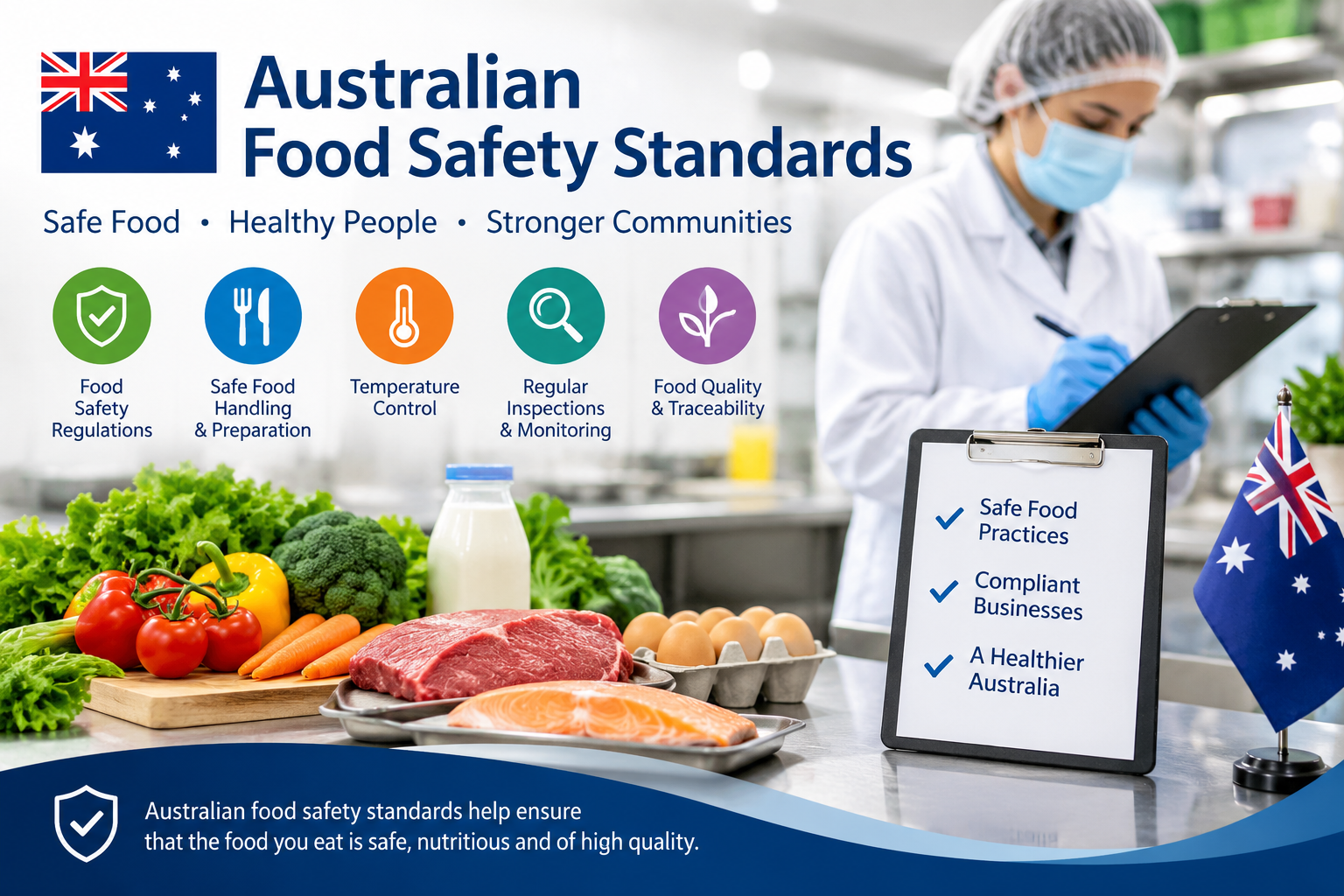
Food safety is a legal and practical responsibility for businesses that prepare, handle, store, transport, or sell food in Australia. From restaurants and cafés to supermarkets, caterers, food vans, manufacturers, and some home-based businesses, operators need to understand the rules that apply to their activities.
The Australian food safety standards are primarily contained in Chapter 3 of the Australia New Zealand Food Standards Code. These standards are designed to reduce foodborne illness and establish requirements for food businesses and food handlers.
Understanding the standards is important not only for legal compliance but also for protecting customers, maintaining good hygiene practices, and preventing contamination.
What Are Australian Food Safety Standards?
Australian food safety standards are legally enforceable requirements within the Food Standards Code that apply to food businesses operating in Australia.
Food Standards Australia New Zealand (FSANZ) develops and administers the Food Standards Code, while food regulatory authorities at the state and territory level are responsible for implementing and enforcing food laws.
The standards address important areas such as:
- Safe food handling
- Personal hygiene
- Food contamination prevention
- Temperature control
- Cleaning and sanitising
- Food premises and equipment
- Food safety programs
- Food safety training
- Food safety supervisors
The aim is to ensure food remains safe and suitable throughout handling and preparation.
Who Must Follow Food Safety Standards?
Food safety requirements apply broadly to businesses involved in handling food for sale or selling food in Australia.
This can include:
- Restaurants and cafés
- Takeaway businesses
- Catering companies
- Supermarkets and delis
- Pubs and clubs
- Food manufacturers
- Food vans and mobile businesses
- Some home-based food businesses
- Temporary food businesses and events
Businesses starting or changing their food operations generally need to notify the relevant local food regulatory agency. This requirement applies regardless of the size of the business, including certain home-based and mobile operations.
Specific exemptions or additional requirements can apply depending on the business type, food handled, and jurisdiction.
Key Australian Food Safety Standards
Chapter 3 of the Food Standards Code contains food safety standards that apply specifically in Australia. FSANZ currently lists the following standards:
| Standard | Main purpose |
|---|---|
| 3.1.1 | Interpretation and application |
| 3.2.1 | Food safety programs |
| 3.2.2 | Food safety practices and general requirements |
| 3.2.2A | Food safety management tools |
| 3.2.3 | Food premises and equipment |
| 3.3.1 | Food safety programs for food service to vulnerable persons |
| 3.4.1 | Food safety requirements for processing cell-cultured food |
These standards work together to establish food safety obligations for relevant Australian food businesses.
Standard 3.2.2: Food Safety Practices
Standard 3.2.2 sets out practical food safety requirements for businesses and food handlers.
It covers areas including:
Receiving Food
Businesses need to take reasonable measures to ensure potentially hazardous food is received safely. Temperature and transportation conditions can be important factors.
Storage
Potentially hazardous food needs appropriate temperature control to prevent harmful bacteria from growing.
Food Preparation
Food handlers should prevent contamination during preparation by following appropriate hygiene and handling procedures.
Cleaning and Sanitising
Food premises, equipment, utensils, and food-contact surfaces need to be maintained in a hygienic condition.
Personal Hygiene
Food businesses have responsibilities to prevent food handlers and other people on the premises from contaminating food. Requirements also cover handwashing facilities and communicating health and hygiene responsibilities to food handlers.
Standard 3.2.2A and Food Safety Management Tools
One of the significant developments in Australian food safety requirements is Standard 3.2.2A.
This standard became enforceable in December 2023 and applies to food service, catering, and related retail businesses that handle unpackaged, potentially hazardous, ready-to-eat food. Examples include restaurants, cafés, caterers, takeaway shops, supermarkets, delis, pubs, and food vans.
Depending on their activities, businesses are classified as Category One or Category Two.
Category One Businesses
Higher-risk Category One businesses must implement three food safety management tools:
- A food safety supervisor
- Food handler training
- Substantiation of critical food safety controls
Businesses must be able to demonstrate or record that important food safety controls are being followed.
Category Two Businesses
Category Two businesses generally need:
- A food safety supervisor
- Trained food handlers
The exact classification depends on the type of food handling undertaken by the business.
Food Hygiene and Temperature Control
Temperature control is an important part of Australian food safety requirements.
Potentially hazardous foods can support the growth of bacteria or the formation of toxins if they are not stored or handled correctly. Standard 3.2.2 establishes requirements for temperature control, cooling, and reheating.
Businesses should have appropriate procedures for:
- Receiving food
- Refrigerated storage
- Hot holding
- Cooling cooked food
- Reheating food
- Displaying food
- Transporting food
For example, when receiving potentially hazardous food, businesses generally need to take practicable measures to ensure it is received at 5°C or below, or 60°C or above, unless an approved alternative time-based arrangement demonstrates that food safety has not been adversely affected.
Businesses should always check the applicable standard and current guidance rather than relying on a single temperature rule for every situation.
Food Premises and Equipment Requirements
Standard 3.2.3 deals with food premises and equipment.
The design and condition of a food premises should support safe food handling and reduce the likelihood of contamination.
Important considerations include:
- Suitable food preparation areas
- Appropriate handwashing facilities
- Cleanable surfaces
- Suitable equipment
- Proper maintenance
- Adequate storage
- Protection against contamination
- Effective cleaning and sanitising procedures
The requirements can vary depending on the nature and scale of the food business.
Food Safety Programs
A food safety program identifies food safety hazards associated with a business’s food handling activities and explains how those hazards will be monitored and controlled.
Standard 3.2.1 provides the framework for food safety programs and allows states and territories to require certain businesses to implement them. Some businesses also have food safety program obligations under other standards or state and territory legislation.
Businesses should therefore check requirements with their local food regulatory authority.
State and Territory Requirements
Although FSANZ develops the Food Standards Code, compliance does not depend on federal standards alone.
State and territory authorities are involved in enforcing food safety legislation, and additional requirements may apply depending on where a business operates.
For this reason, a business should:
- Identify its local food regulatory authority.
- Notify the authority when required.
- Determine which Food Standards Code requirements apply.
- Check state or territory legislation.
- Maintain appropriate food safety procedures and records.
- Keep staff training current.
- Review procedures when the business changes.
FSANZ provides contact information for food enforcement agencies to help businesses identify the appropriate authority.
How to Maintain Compliance
Following a structured food safety system can make compliance easier.
1. Train Food Handlers
Make sure employees understand safe food handling, contamination prevention, personal hygiene, and cleaning and sanitising procedures.
2. Monitor Critical Controls
Where required, monitor food temperatures, storage, cooking, cooling, cleaning, and other important controls.
3. Keep Records
Businesses subject to Standard 3.2.2A may need to keep records or otherwise demonstrate that prescribed food safety controls are being met.
4. Maintain the Premises
Regularly inspect equipment, food preparation areas, storage spaces, sinks, refrigeration, and other facilities.
5. Review Procedures
Food safety procedures should be reviewed when there are changes to products, equipment, premises, suppliers, staff responsibilities, or food preparation processes.
6. Check Local Requirements
Because state and territory requirements can differ, businesses should confirm their obligations with their relevant food regulatory authority.
Key Takeaways
- Australian food safety standards are contained primarily in Chapter 3 of the Food Standards Code.
- The standards apply to food businesses operating in Australia.
- Standard 3.2.2 covers important food safety practices and general requirements.
- Standard 3.2.2A introduces food safety management tools for certain food service, catering, and retail businesses.
- Some businesses need a qualified food safety supervisor and trained food handlers.
- Temperature control is important for potentially hazardous foods.
- Food premises and equipment must support safe food handling.
- State and territory authorities may impose additional requirements.
- Businesses should check current legislation and guidance before making compliance decisions.
FAQs
1. What are Australian food safety standards?
Australian food safety standards are requirements in the Food Standards Code that help businesses produce, handle, store, and sell food safely. Chapter 3 specifically covers food safety standards applicable in Australia.
2. What is Standard 3.2.2?
Standard 3.2.2 is the Food Safety Practices and General Requirements standard. It covers areas such as food handling, hygiene, contamination prevention, and temperature control.
3. What is Standard 3.2.2A?
Standard 3.2.2A is a food safety management standard for certain Australian food service, catering, and related retail businesses handling unpackaged, potentially hazardous, ready-to-eat food.
4. Do Australian food businesses need a food safety supervisor?
Certain businesses covered by Standard 3.2.2A must have a food safety supervisor. Category One and Category Two businesses have different requirements, so businesses should determine their classification and check the applicable rules.
5. What temperature should potentially hazardous food be kept at?
Australian food safety requirements include temperature controls for potentially hazardous foods. Standard 3.2.2 contains specific requirements for receiving, storing, cooling, reheating, and holding these foods.
6. Do food safety standards apply to home-based food businesses?
Food safety requirements can apply to home-based food businesses. FSANZ states that businesses should notify the relevant food regulatory agency when starting a food business, including home-based operations.
7. Who enforces food safety requirements in Australia?
Food safety enforcement involves state, territory, and local regulatory authorities. Businesses should contact the relevant authority for their location to confirm their specific obligations.
Conclusion
Understanding Australian food safety standards is essential for businesses that prepare, handle, store, transport, or sell food. The Food Standards Code establishes national requirements covering food safety practices, hygiene, premises, equipment, food safety programs, and management tools.
Standard 3.2.2A has also introduced additional food safety management requirements for certain food service, catering, and retail businesses. Because requirements can depend on the business activity and jurisdiction, operators should use current FSANZ guidance and confirm local obligations with their relevant food authority.
Learn About: Foods in Spanish Language
