

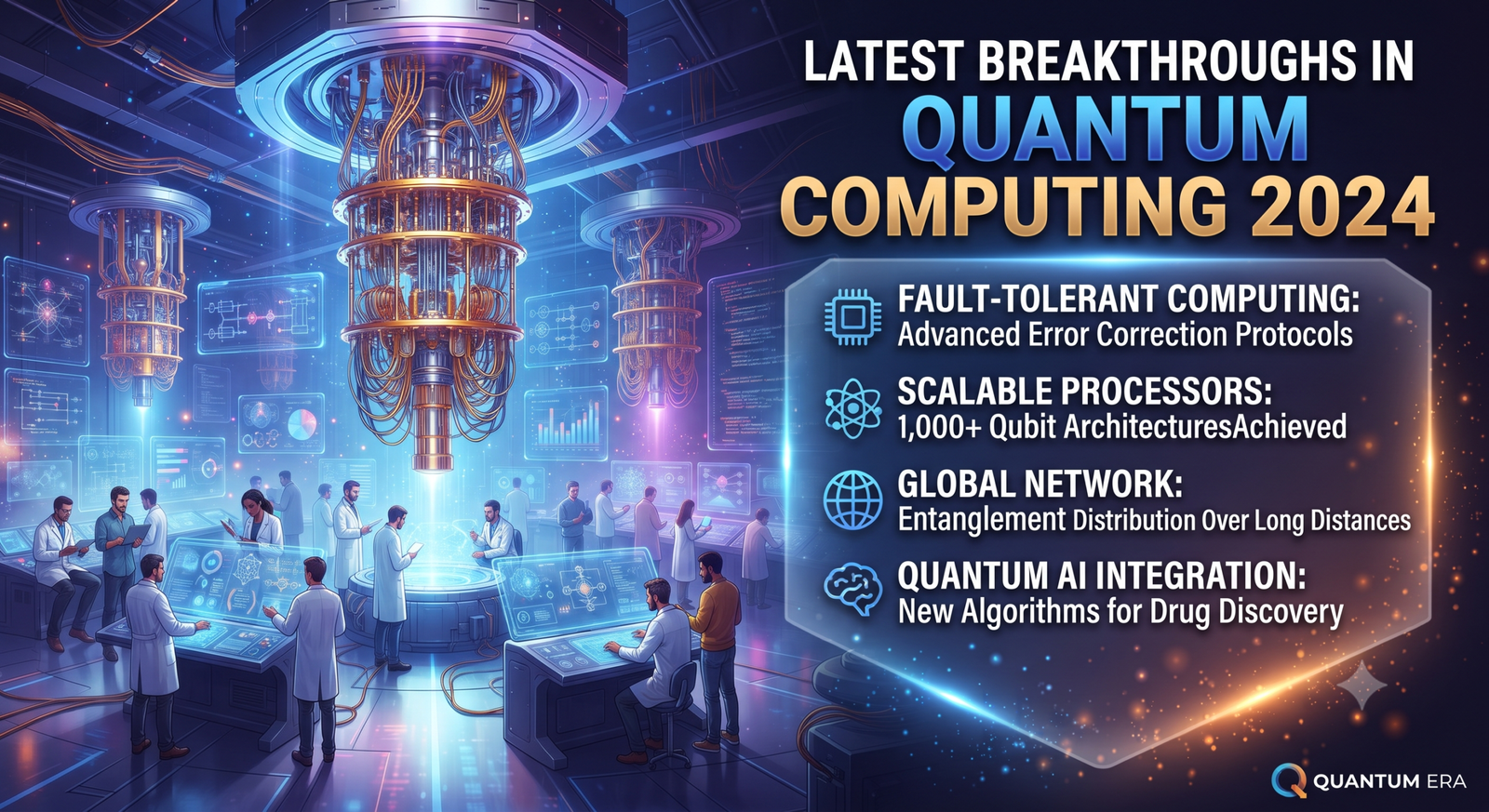
A few years ago, quantum computing sounded like something that belonged only in science fiction movies. The idea of machines solving problems that are impossible for normal computers felt almost unreal. But 2024 changed the conversation. Researchers, technology companies, and universities made several important advances that brought quantum computers a little closer to practical use.
The latest breakthroughs in quantum computing 2024 show that this technology is moving beyond basic experiments. From improving quantum hardware to reducing errors and creating more powerful systems, scientists are finding new ways to make quantum machines more reliable.
Still, quantum computing isn’t a finished product. There are huge challenges ahead. But the progress made this year gives researchers more confidence that quantum technology could eventually transform industries like medicine, cybersecurity, finance, and climate research.
What Makes Quantum Computing Different?
Traditional computers process information using bits, which represent data as either 0 or 1. Quantum computers work with quantum bits, also called qubits, which can exist in multiple states at the same time through a concept called superposition.
Another important feature is quantum entanglement. This allows qubits to become connected in a way that helps quantum systems perform complex calculations much faster for certain tasks.
The goal isn’t to replace everyday laptops or smartphones. Instead, quantum computers are designed to solve extremely complicated problems that current machines struggle with.
Major Progress in Quantum Hardware Development
One of the biggest challenges in quantum computing has always been creating stable qubits. They are extremely sensitive to outside interference, and even tiny disturbances can create errors.
In 2024, researchers focused heavily on improving quantum processors by developing better designs, increasing qubit quality, and creating systems that can operate more consistently.
Companies working on quantum processors introduced new approaches to scaling quantum systems. Instead of only increasing the number of qubits, the focus shifted toward making qubits more accurate and useful.
This change is important because a smaller but more reliable quantum computer can be more valuable than a larger system filled with unstable qubits.
Improvements in Quantum Error Correction
Quantum error correction has been one of the biggest obstacles holding back the technology. Unlike classical computers, quantum machines cannot simply copy information to fix mistakes because of the unique rules of quantum physics.
Scientists made progress in 2024 by testing new error correction methods that help protect quantum information for longer periods.
Why Quantum Error Correction Matters
A future practical quantum computer will need thousands or even millions of reliable qubits. Without strong error correction, calculations can easily fail.
Researchers are now exploring logical qubits, which combine multiple physical qubits to create a more stable unit of information. This approach could become a key step toward building useful quantum computers.
Advances from Major Quantum Computing Companies
Several technology companies continued pushing quantum research forward in 2024.
Organizations like IBM, Google, and other quantum-focused companies worked on improving processors, software platforms, and developer tools.
IBM expanded its quantum ecosystem by focusing on modular quantum systems and practical applications. Google continued researching quantum processors and methods for improving performance.
The competition between companies has helped accelerate innovation. Each new improvement brings researchers closer to solving real-world problems with quantum technology.
Quantum Computing Applications Becoming More Realistic
The excitement around quantum computing is not only about faster calculations. The real value comes from solving problems that could have a major impact on society.
Healthcare and Drug Discovery
One promising area is healthcare. Quantum computers could help researchers analyze complex molecular structures and speed up the process of discovering new medicines.
Today, developing a new drug can take years of testing and research. Quantum simulations may eventually help scientists understand chemical interactions more efficiently.
Climate Research
Climate models involve massive amounts of data and complicated calculations. Quantum computing could support scientists in creating more advanced simulations to understand environmental changes.
Financial Services
Banks and financial companies are also exploring quantum technology. Possible applications include improving risk analysis, optimizing investment strategies, and detecting unusual patterns in financial data.
The Growth of Quantum Software and Algorithms
Hardware gets most of the attention, but software development is equally important.
In 2024, researchers continued creating better quantum algorithms and programming tools that allow developers to experiment with quantum systems more easily.
Quantum software platforms are becoming more accessible, allowing universities, startups, and researchers to test ideas without needing their own expensive quantum machines.
This shift matters because innovation often happens when more people can work with a technology.
Challenges Still Facing Quantum Computing
Even with impressive progress, quantum computing still has a long road ahead.
Some major challenges include:
- Building large-scale stable quantum systems
- Reducing hardware costs
- Improving qubit reliability
- Creating practical applications with real benefits
- Developing skilled quantum computing professionals
It’s easy to get excited about quantum technology, but expectations need to stay realistic. A breakthrough in a laboratory doesn’t always become a commercial product overnight.
Why 2024 Was an Important Year for Quantum Technology
The latest breakthroughs in quantum computing 2024 were not about creating a perfect quantum computer. Instead, they were about solving smaller but critical problems that move the industry forward.
Better hardware, stronger error correction, and improved software tools showed that quantum research is becoming more practical. The field is slowly moving from theory into real experimentation and early applications.
And that’s probably the most interesting part. Quantum computing isn’t just a future idea anymore. It’s a technology being actively shaped today by scientists, engineers, and businesses around the world.
Final Thoughts
Quantum computing has reached an exciting stage. The developments of 2024 prove that researchers are making steady progress, even though many challenges remain.
The journey toward practical quantum technology won’t happen overnight. It will require patience, investment, and continued innovation. But each improvement brings us closer to a future where quantum computers can help solve some of the world’s most difficult problems.
For now, the field is still evolving, and that’s what makes it so fascinating to watch. The next few years could reveal just how powerful quantum technology can truly become.
Frequently Asked Questions (FAQs)
What are the biggest quantum computing breakthroughs in 2024?
The biggest breakthroughs include improvements in quantum processors, better error correction techniques, more reliable qubits, and advancements in quantum software development.
Is quantum computing available for everyday use?
Not yet. Quantum computers are mainly used by researchers, universities, and companies for experiments and specialized projects. They are not designed to replace personal computers.
How will quantum computing change industries?
Quantum technology could improve areas such as medicine discovery, cybersecurity, financial modeling, logistics, and scientific research by solving complex problems faster.
Are quantum computers faster than normal computers?
Quantum computers are not faster for every task. They are designed to handle specific complex problems where traditional computers may struggle.
What is the future of quantum computing?
The future depends on overcoming challenges like error correction and scalability. If researchers continue making progress, quantum computers could become valuable tools for solving advanced problems.
Learn About: Legal and General Global Technology Index
