

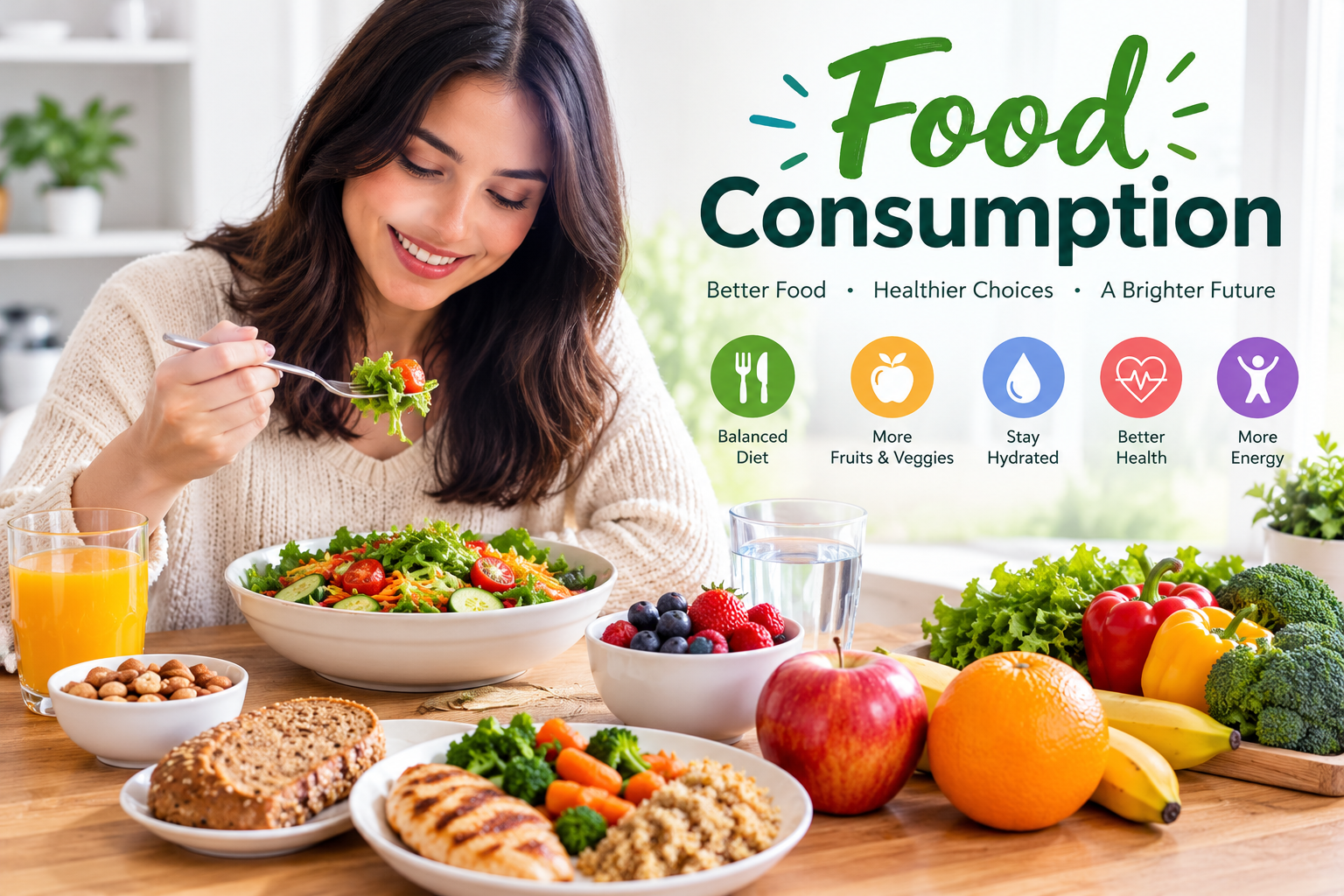
Food consumption is an essential part of everyday life. It provides the energy and nutrients the body needs to grow, repair tissues, maintain vital functions, and support overall health. However, food consumption involves more than simply eating meals. It also includes the decisions people make about what they eat, how much they consume, and how frequently they eat.
Food choices differ between individuals, families, communities, and countries. Some people prioritise convenience, while others focus on nutrition, affordability, taste, or cultural traditions. These differences influence dietary patterns and can affect both individual health and the wider food system.
Understanding food consumption helps people develop healthier eating habits, reduce food waste, and make informed decisions about their diets. It also helps researchers, policymakers, and businesses understand changing dietary preferences and their effects on public health and the environment.
This article explores the meaning of food consumption, its importance, the factors that influence it, common dietary patterns, and practical ways to improve everyday food choices.
What Is Food Consumption?
Food consumption refers to the process through which individuals and populations select, obtain, prepare, and eat food. It includes the types of foods people choose, the quantities they consume, their eating frequency, and their overall dietary habits.
Food consumption is shaped by personal needs and external circumstances. For example, an athlete may consume more energy and protein to support training, while someone with a limited food budget may prioritise affordable ingredients that provide essential nutrients.
Food consumption can be studied at two main levels:
- Individual food consumption: The eating habits and dietary choices of a single person.
- Population food consumption: The types and quantities of food consumed by groups, communities, or entire countries.
Researchers analyse these patterns to understand nutritional needs, food security, consumer preferences, and public health trends.
Why Is Food Consumption Important?
Food consumption directly affects nutrition, energy levels, physical development, and long-term health. The quality and quantity of food people eat can influence their wellbeing throughout life.
1. Provides Energy and Essential Nutrients
The body needs energy to perform everyday activities, including walking, working, studying, and maintaining body temperature. Carbohydrates, fats, and proteins supply energy, while vitamins and minerals support numerous bodily functions.
A varied diet helps people obtain essential nutrients from sources such as vegetables, fruit, whole grains, dairy products or fortified alternatives, legumes, eggs, fish, and other protein-rich foods.
2. Supports Growth and Development
Children and teenagers require sufficient energy, protein, vitamins, and minerals to support physical growth and cognitive development. Adults also need adequate nutrition to maintain muscle, support tissue repair, and preserve normal body functions.
Poor dietary quality or insufficient food intake can contribute to nutritional deficiencies and impaired development.
3. Helps Maintain Overall Health
Healthy dietary patterns can help reduce the risk of several noncommunicable diseases, including cardiovascular disease and type 2 diabetes. Eating a variety of nutrient-rich foods also supports digestive health and helps maintain a balanced nutritional intake.
No single food guarantees good health. Overall dietary patterns, portion sizes, physical activity, sleep, and other lifestyle factors all contribute to wellbeing.
4. Influences the Economy and Society
Food consumption affects household spending, agricultural production, food manufacturing, retail businesses, and international trade. Changes in consumer demand can influence which crops farmers grow and which products businesses manufacture.
At the community level, access to affordable and nutritious food is important for reducing food insecurity and improving public health.
Factors That Influence Food Consumption
People do not make food choices based on nutrition alone. Several interconnected factors shape what they eat and how frequently they eat it.
Economic Factors
Income and food prices strongly influence dietary choices. Households with limited budgets may find it difficult to afford certain fresh foods, while convenient packaged foods may sometimes appear cheaper or easier to obtain.
Budget-friendly options include beans, lentils, seasonal vegetables, oats, eggs, and other locally available ingredients.
Cultural and Religious Influences
Culture influences traditional meals, cooking techniques, ingredients, and eating occasions. Religious practices may also determine which foods people consume or avoid.
For example, rice-based dishes are common in many Asian cuisines, while bread, potatoes, maize, or other staples feature prominently in different regions.
Lifestyle and Time Availability
Busy schedules can encourage people to choose takeaway meals, packaged snacks, or ready-made foods. People who have more time to plan and prepare meals may find it easier to include a variety of nutritious ingredients.
Meal planning and preparing ingredients in advance can make balanced eating more convenient.
Psychological and Social Factors
Stress, emotions, habits, advertising, and social situations can influence food choices. Some people eat more when stressed, while others experience reduced appetite.
Family routines and peer preferences can also affect what people eat, particularly during childhood and adolescence.
Food Availability and Accessibility
Local markets, supermarkets, transport options, storage facilities, and access to clean water all influence food consumption.
People living in areas with limited access to affordable nutritious foods may have fewer practical choices, even when they understand the benefits of a balanced diet.
Common Food Consumption Patterns
Food consumption patterns describe the types of foods people regularly eat and how those foods fit into their overall diets.
| Food consumption pattern | Common characteristics | Potential considerations |
|---|---|---|
| Balanced dietary pattern | Variety of vegetables, fruit, whole grains, and protein sources | Supports nutritional adequacy |
| Plant-rich pattern | Greater emphasis on legumes, vegetables, fruit, nuts, and whole grains | Can provide fibre and many essential nutrients |
| Highly processed-food-heavy pattern | Frequent consumption of packaged snacks, sugary drinks, and some fast foods | May provide excessive salt, added sugars, or energy |
| Traditional dietary pattern | Foods and meals associated with a particular culture or region | Nutritional quality depends on ingredients and preparation |
| Convenience-based pattern | Frequent use of ready-made meals and takeaway foods | Nutritional quality varies considerably by product |
These categories are not mutually exclusive. Someone may follow a traditional diet, eat many plant-based foods, and occasionally choose convenience meals.
The most useful approach is to assess the overall diet rather than judge individual foods in isolation.
The Relationship Between Food Consumption and Health
Food consumption can influence both immediate wellbeing and long-term health. The effects depend on dietary quality, portion sizes, frequency, nutritional requirements, and individual circumstances.
Healthy Food Consumption
A balanced eating pattern generally includes:
- Fruits and vegetables in a variety of colours.
- Whole grains, such as oats, brown rice, and whole-wheat bread.
- Protein sources, including beans, lentils, eggs, fish, poultry, nuts, and seeds.
- Healthy fats from foods such as nuts, seeds, and suitable vegetable oils.
- Water and other appropriate unsweetened drinks.
People can adapt these choices to their cultural preferences, budgets, allergies, and nutritional needs.
Unhealthy Food Consumption
Dietary patterns that frequently rely on foods high in salt, free sugars, and unhealthy fats may make it harder to meet nutritional needs. Excessive consumption of sugary drinks and energy-dense foods can also contribute to excessive energy intake.
However, a single meal or occasional treat does not determine a person’s overall health. Consistency over time matters more than achieving a perfect diet every day.
Food Consumption and Portion Sizes
Even nutritious foods contribute energy, so portion sizes should reflect individual needs, appetite, and activity levels. Eating slowly, recognising hunger and fullness cues, and serving appropriate portions can help people develop a healthier relationship with food.
People with specific medical or nutritional needs should seek individual guidance from a qualified healthcare professional or registered dietitian.
Food Consumption and the Environment
Food consumption also affects the environment through agricultural production, land use, water use, transportation, packaging, and waste.
Different foods have different environmental impacts. In general, diets that include more plant-based foods and fewer resource-intensive animal products can reduce certain environmental pressures, although the impact depends on how foods are produced and transported.
Consumers can make practical changes without completely changing their diets.
Ways to Reduce the Environmental Impact of Food Consumption
- Reduce food waste: Plan meals and use leftovers safely.
- Choose seasonal foods: Buy locally available seasonal produce when practical.
- Include more plant-based meals: Use beans, lentils, and other plant proteins regularly.
- Store food correctly: Follow storage instructions to help food remain safe for longer.
- Buy appropriate quantities: Purchase amounts that your household can realistically use.
These habits can help households manage food costs while reducing avoidable waste.
How to Improve Food Consumption Habits
Improving food consumption does not require expensive ingredients or a complicated diet. Small, consistent changes can make everyday eating more balanced.
Step 1: Plan Meals in Advance
Create a simple weekly meal plan based on your budget, schedule, and food preferences. Include a mixture of vegetables, fruit, whole grains, and protein sources.
Planning also helps reduce unnecessary purchases and makes grocery shopping more organised.
Step 2: Read Food Labels
Nutrition labels can help you compare packaged products. Check serving sizes and consider the amounts of sodium, added sugars, saturated fat, fibre, and other relevant nutrients.
Compare similar products rather than relying only on marketing claims such as “natural” or “healthy.”
Step 3: Increase Fruit and Vegetable Intake
Add vegetables to lunch and dinner, include fruit as a snack, or combine vegetables with eggs, lentils, rice, or whole grains.
Fresh, frozen, and appropriately stored canned produce can all contribute to a nutritious diet.
Step 4: Drink Enough Water
Water supports normal bodily functions and helps maintain hydration. Keep water accessible throughout the day and choose it regularly instead of sugary drinks.
Individual fluid needs vary depending on activity, climate, diet, and health.
Step 5: Practise Mindful Eating
Eat without unnecessary distractions when possible. Pay attention to hunger, fullness, taste, and satisfaction rather than eating automatically.
Mindful eating may help people recognise their eating patterns and make more considered choices.
Step 6: Make Gradual Changes
Avoid trying to change every eating habit at once. Start with achievable goals, such as adding one serving of vegetables to a meal, preparing lunch at home, or replacing a sugary drink with water.
Track your progress and adjust your routine as needed.
Challenges in Maintaining Healthy Food Consumption
Although balanced eating offers many benefits, maintaining healthy food consumption can be difficult.
Common challenges include:
- High food prices: Nutritious ingredients may be unaffordable for some households.
- Limited time: Work, study, and family responsibilities can make meal preparation difficult.
- Conflicting nutrition information: Misleading online advice can make food choices confusing.
- Limited access: Some communities have fewer shops selling affordable fresh foods.
- Established habits: Familiar routines can be difficult to change.
Practical solutions include choosing affordable seasonal produce, cooking larger portions for later meals, using reliable nutrition guidance, and setting realistic goals.
Public policies that improve food access, nutrition education, school meals, and food affordability can also support healthier consumption patterns.
Frequently Asked Questions (FAQs)
1. What is food consumption in simple words?
Food consumption is the process of choosing, preparing, and eating food to meet the body’s energy and nutritional needs. It includes what people eat, how much they eat, and how often they consume different foods.
2. What are the main factors affecting food consumption?
The main factors include income, food prices, culture, religion, personal preferences, lifestyle, emotions, advertising, food availability, and health requirements. These factors can influence both food quality and quantity.
3. Why is food consumption important?
Food consumption provides energy and essential nutrients needed for growth, tissue repair, and normal bodily functions. Healthy dietary patterns can also help reduce the risk of certain chronic diseases and support overall wellbeing.
4. What is the difference between food consumption and food intake?
The terms are closely related. Food intake usually refers to the amount or type of food an individual actually eats or drinks. Food consumption can have a broader meaning, covering food choices, eating habits, quantities, and consumption patterns at individual or population levels.
5. How can I improve my food consumption habits?
You can improve your habits by planning balanced meals, eating a variety of vegetables and fruits, choosing whole grains, including suitable protein sources, drinking water, reading nutrition labels, and limiting frequent consumption of foods high in salt and added sugars.
6. How does food consumption affect the environment?
Food consumption influences the resources required to produce, transport, package, and dispose of food. Reducing food waste, eating more plant-based meals, and purchasing appropriate quantities can help lower some environmental impacts.
7. What is sustainable food consumption?
Sustainable food consumption involves making food choices that support nutritional needs while considering environmental effects, affordability, and social wellbeing. Examples include reducing food waste, using seasonal produce, and incorporating a variety of plant-based foods.
8. How does income affect food consumption?
Income affects how much people can spend on food and which products they can access. Higher food costs and limited household budgets may restrict dietary variety, making affordable nutritious options and effective food assistance important.
Conclusion
Food consumption plays a central role in individual health, family budgets, society, and environmental sustainability. The foods people choose and the quantities they consume are shaped by economic circumstances, culture, lifestyle, personal preferences, and food availability.
Developing healthier consumption habits begins with practical decisions. Planning meals, eating a variety of nutrient-rich foods, drinking enough water, understanding food labels, and reducing food waste can make a meaningful difference over time.
There is no single eating pattern that suits everyone. The most effective approach is to choose balanced, affordable, and culturally appropriate foods that meet individual nutritional needs. By making informed decisions and adopting realistic habits, people can improve their diets and contribute to a healthier and more sustainable food system.
Learn About: Food Preparation
