

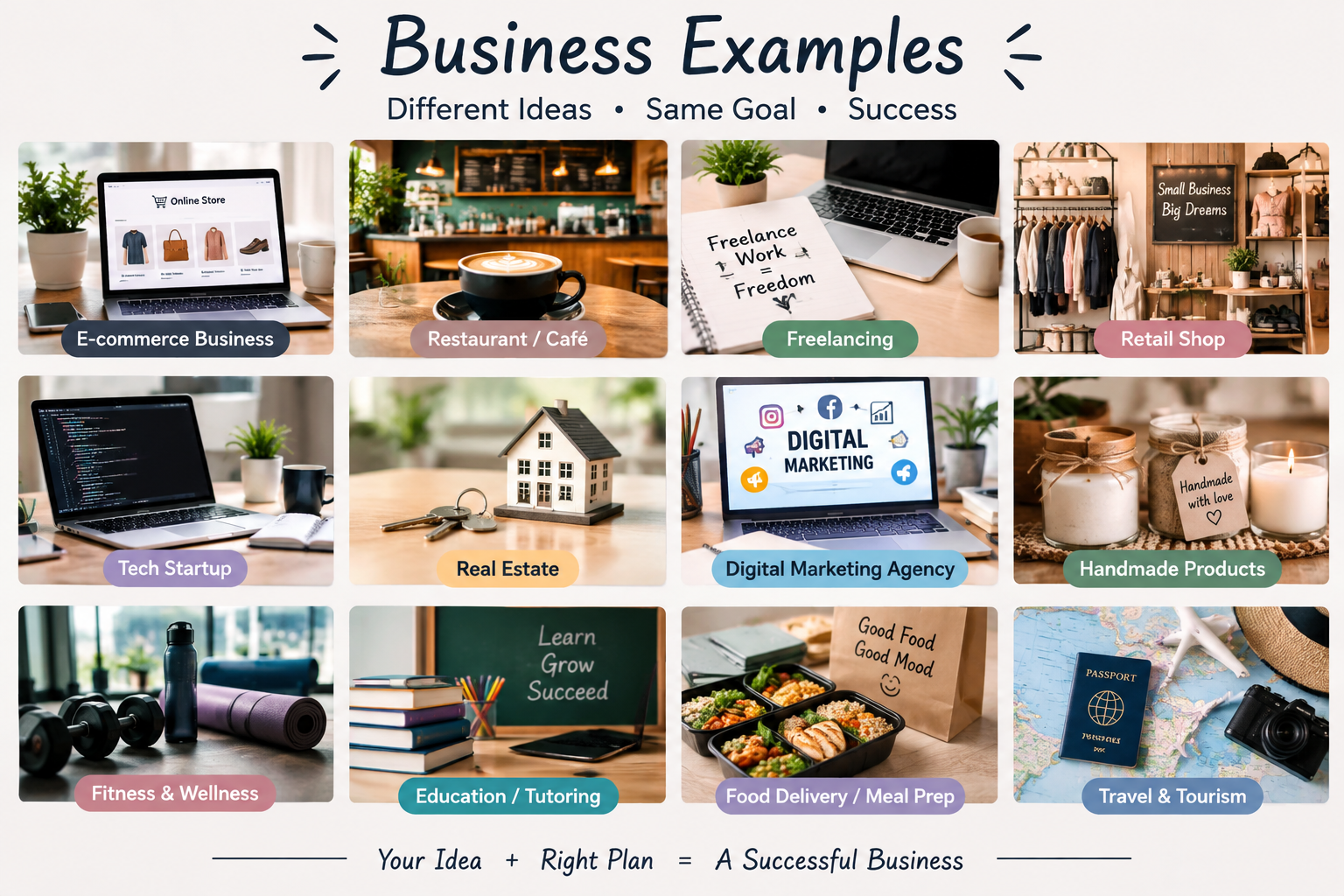
Looking at business examples can make it easier to understand how different companies operate, what they sell, who they serve, and how they generate revenue. Whether you are researching business ideas, studying entrepreneurship, choosing a business structure, or simply trying to understand the marketplace, real-world examples provide a useful starting point. Businesses can be grouped by industry, size, ownership, target market, and business model, and each category has its own advantages and challenges.
What Are Business Examples?
Business examples are practical examples of companies or business ideas that provide products or services to customers in exchange for revenue. They can range from a local bakery or cleaning company to an online software platform or manufacturing company. Studying different examples helps explain how businesses identify customer needs, develop products or services, set prices, market themselves, and create sustainable revenue.
A business can also be classified in several ways. For example, a company may be a small business based on its size, an online business based on how it operates, or a service business based on what it sells. Understanding these categories is useful because two businesses in completely different industries can still use similar business models.
Small Business Examples
Small businesses are often independently owned and serve a specific local or niche market. They can be started with relatively limited resources compared with large corporations, although the amount of investment required varies considerably by industry.
Examples of small businesses include:
- Local clothing boutiques
- Bakeries and specialty food shops
- Hair salons and barbershops
- Cleaning companies
- Landscaping services
- Photography businesses
- Tutoring services
- Pet-care businesses
- Repair shops
- Small consulting firms
A small business can operate from a physical location, from home, online, or through a combination of these methods. Many entrepreneurs start small and expand as they build a customer base.
Online Business Examples
The internet has created many opportunities for businesses that can operate primarily through digital channels. Some online businesses sell physical products, while others provide digital products, subscriptions, information, or services.
Common online business examples include:
- E-commerce stores
- Online education platforms
- Software-as-a-service companies
- Digital marketing services
- Freelance businesses
- Web design companies
- Online consulting
- Membership websites
- Digital product stores
- Content-based businesses
For example, an e-commerce business may sell clothing directly through its website, while a software company may charge customers a recurring subscription to use its application.
Service-Based Business Examples
Service businesses sell expertise, assistance, labor, or specialized solutions rather than primarily selling physical products. They exist in almost every industry and can range from one-person operations to large professional firms.
Examples include:
| Business Type | Typical Service |
| Accounting firm | Accounting and financial reporting |
| Marketing agency | Marketing and promotional services |
| Cleaning company | Residential or commercial cleaning |
| IT support company | Technical assistance |
| Consulting firm | Professional advice |
| Plumbing business | Plumbing installation and repairs |
| Legal practice | Legal services |
| Fitness business | Training and wellness services |
The success of a service business often depends on expertise, customer relationships, reliability, pricing, and the quality of the service provided.
Retail Business Examples
Retail businesses sell products directly to consumers. They can operate through physical stores, online stores, marketplaces, or multiple sales channels.
Examples of retail businesses include:
- Grocery stores
- Furniture stores
- Electronics retailers
- Clothing stores
- Beauty and cosmetics shops
- Sporting-goods stores
- Bookstores
- Jewelry stores
- Home improvement stores
- Specialty food shops
A retail business may purchase products from manufacturers or wholesalers and then sell them to consumers at a higher price. Some retailers also develop their own private-label products.
Technology Business Examples
Technology businesses develop or provide products and services based on software, hardware, digital infrastructure, or other technologies. This category includes some of the fastest-changing business models.
Examples include:
- Software companies
- Mobile app developers
- Cybersecurity companies
- Cloud computing providers
- Artificial intelligence companies
- IT consulting firms
- Web hosting companies
- Data analytics businesses
- Technology hardware manufacturers
- Online communication platforms
A technology business may earn revenue through subscriptions, licensing, product sales, advertising, usage-based pricing, or professional services.
Food and Hospitality Business Examples
Food and hospitality businesses focus on serving meals, beverages, accommodation, entertainment, or related customer experiences. They include both independent businesses and large chains.
Examples include:
- Restaurants
- Cafés
- Bakeries
- Food trucks
- Catering companies
- Hotels
- Guesthouses
- Event venues
- Travel accommodation businesses
- Meal-preparation services
These businesses generally depend heavily on customer experience, location or reach, service quality, pricing, reputation, and operational efficiency.
Professional Business Examples
Professional businesses provide specialized knowledge or expertise. Customers typically pay for advice, analysis, representation, planning, or other professional work.
Examples include:
- Accounting firms
- Law firms
- Architecture firms
- Engineering firms
- Consulting companies
- Recruitment firms
- Financial advisory businesses
- Real estate firms
- Public relations companies
- Business coaching services
Professional businesses often build their reputation through expertise, trust, communication, and consistent results.
Manufacturing Business Examples
Manufacturing businesses create physical products from raw materials, components, or other manufactured goods. Their customers may be individual consumers, retailers, distributors, or other businesses.
Examples include:
- Furniture manufacturers
- Clothing manufacturers
- Automobile manufacturers
- Food-processing companies
- Electronics manufacturers
- Packaging companies
- Construction-material manufacturers
- Medical equipment manufacturers
Manufacturing businesses usually require more complex operations than many service businesses because they may need equipment, production facilities, inventory management, quality control, and distribution systems.
B2B Business Examples
Business-to-business, or B2B, companies sell products or services primarily to other businesses rather than individual consumers.
Examples include:
- Wholesale suppliers
- Business software providers
- Corporate training companies
- Industrial equipment suppliers
- Office supply distributors
- IT service providers
- Business consulting firms
- Commercial cleaning companies
- Payroll service providers
- Logistics companies
For example, a payroll software company may sell subscriptions to businesses that need help managing employee payroll and related administrative tasks.
B2C Business Examples
Business-to-consumer, or B2C, businesses sell directly to individual customers. This is one of the most familiar business models because consumers interact with B2C companies every day.
Examples include:
- Clothing retailers
- Restaurants
- Streaming services
- Online stores
- Fitness centers
- Beauty salons
- Grocery stores
- Travel companies
- Consumer electronics retailers
B2C businesses often focus strongly on convenience, pricing, customer experience, branding, and product quality.
How to Choose the Right Business Idea
Choosing a business idea requires more than selecting an industry that appears profitable. A strong idea should connect a genuine customer need with something the business can realistically provide.
Consider these factors before starting:
- Customer demand: Determine whether people actually need or want the product or service.
- Skills and experience: Consider what knowledge or abilities you already have.
- Startup requirements: Estimate equipment, technology, inventory, staffing, and other initial costs.
- Competition: Research similar businesses and identify how your offering could be different.
- Revenue model: Understand how the business will make money.
- Growth potential: Consider whether the business can expand beyond its initial customer base.
- Operating model: Decide whether the business will be online, physical, mobile, or a combination.
The best business idea is not necessarily the most complicated one. A simple business that solves a clear problem for a specific group of customers can have a strong foundation.
Frequently Asked Questions
What are some common examples of businesses?
Common examples include restaurants, retail stores, consulting firms, cleaning companies, online stores, software companies, construction businesses, salons, accounting firms, and manufacturing companies.
What is an example of a small business?
A local bakery, photography service, cleaning company, tutoring service, or independent clothing store can be an example of a small business.
What are examples of online businesses?
Online stores, software businesses, digital marketing services, online education platforms, freelance services, consulting businesses, and membership websites are common examples of online businesses.
What is an example of a service business?
An accounting firm, cleaning company, marketing service, plumbing business, consulting firm, or IT support provider is a service business because it primarily sells services rather than physical products.
What is a B2B business example?
A business software provider is a common B2B example because it sells its product or service to other companies. Wholesalers, commercial cleaning providers, and business consultants are other examples.
What is a B2C business example?
A clothing store, restaurant, grocery store, fitness center, or consumer electronics retailer can be a B2C business because it sells directly to individual customers.
Can a business be both online and physical?
Yes. Many businesses use both physical and digital channels. For example, a clothing retailer may have physical stores while also selling products through its website.
Conclusion
Exploring different business examples is a useful way to understand how companies serve customers and generate revenue. From small local services and retail stores to online platforms, professional firms, technology companies, and manufacturers, businesses can operate in many different ways. The right model depends on customer demand, available resources, skills, competition, and long-term goals. By studying different business types and understanding how they work, entrepreneurs can identify practical opportunities and make better-informed decisions when developing their own business ideas.
Learn More About: Business Cycle
