

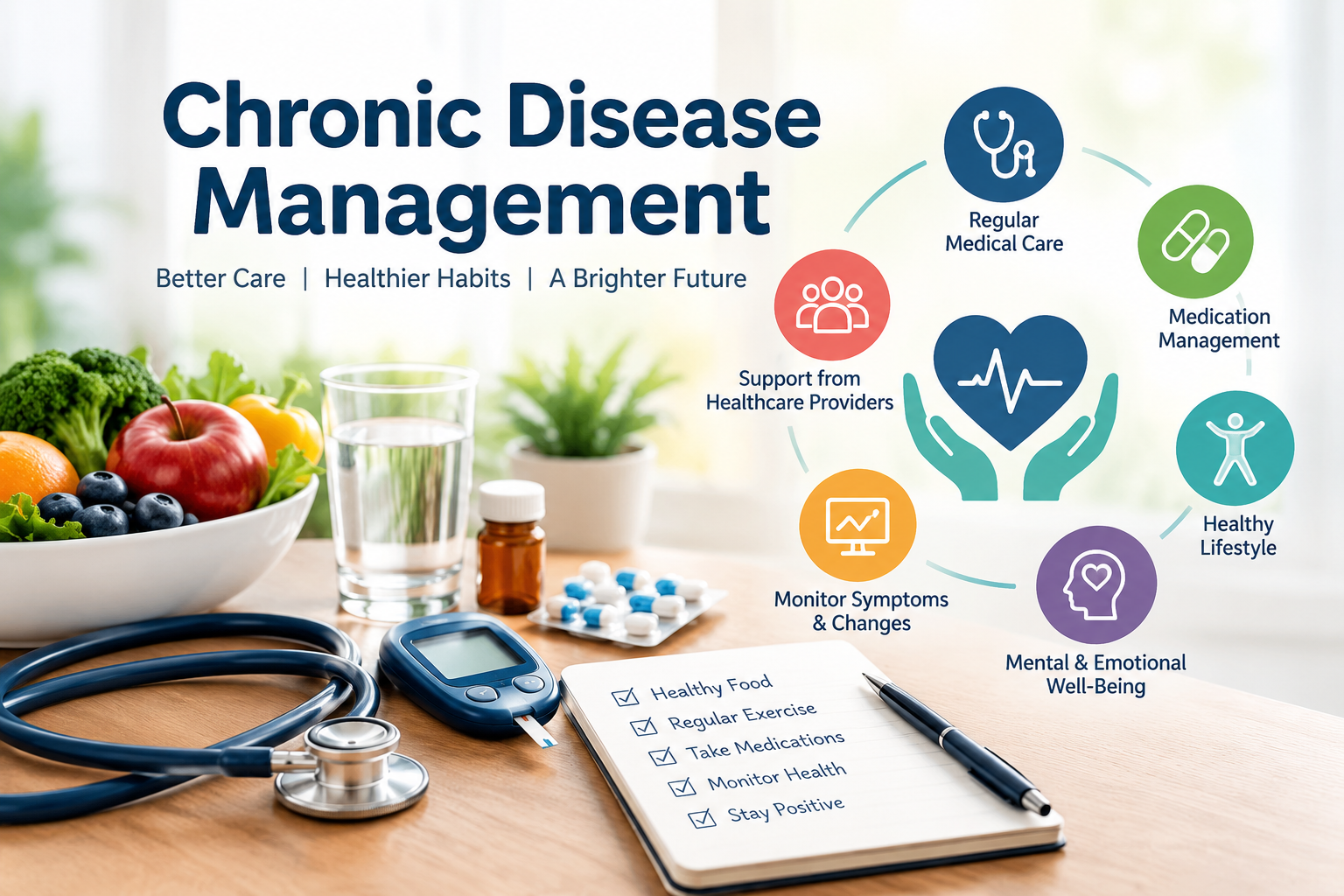
Living with a long-term health condition can affect many parts of everyday life, but the right approach can make it easier to stay healthy and maintain independence. Chronic disease management focuses on controlling symptoms, following appropriate treatment, building healthy habits, and keeping regular contact with healthcare professionals. With consistent care and a practical routine, people can better manage their condition and support their overall well-being.
What Is Chronic Disease Management?
Chronic disease management is the ongoing process of controlling a long-term health condition and reducing its effect on daily life. Unlike short-term illnesses that may resolve after treatment, chronic conditions often require regular monitoring, lifestyle changes, medications, and continued communication with healthcare professionals.
Conditions such as diabetes, asthma, heart disease, arthritis, and chronic kidney disease may need long-term care. The goal is not simply to treat symptoms when they appear. Good management focuses on maintaining health, preventing complications, and helping people remain active and independent.
A successful approach usually combines medical treatment with practical daily habits. Patients, doctors, nurses, pharmacists, and other healthcare professionals may all contribute to the care plan.
Why Managing Chronic Conditions Matters
Living with a chronic condition does not necessarily mean giving up normal activities or quality of life. Consistent management can help people understand their condition, recognize changes early, and follow an appropriate treatment plan.
Poorly controlled chronic conditions can sometimes lead to additional health problems. Regular care can help identify potential complications and provide opportunities to adjust treatment when needed.
Chronic disease management can also make everyday health decisions easier. Knowing what symptoms to watch for, when to take medication, how to maintain healthy routines, and when to contact a healthcare provider gives patients a more active role in their care.
Common Chronic Diseases
Many different conditions require long-term management. Some common examples include:
- Diabetes: Requires monitoring blood glucose, following treatment recommendations, and maintaining healthy habits.
- Heart disease: May involve medication, physical activity, dietary changes, and regular medical monitoring.
- Asthma: Often requires identifying triggers, using prescribed medicines correctly, and monitoring breathing symptoms.
- Arthritis: Management may include appropriate exercise, medications, physical therapy, and strategies for reducing discomfort.
- Chronic kidney disease: Usually requires ongoing medical monitoring and management of factors that can affect kidney function.
- Chronic obstructive pulmonary disease (COPD): May require medications, breathing strategies, physical activity, and avoidance of respiratory irritants.
Each condition is different, so management should be based on an individual’s diagnosis, symptoms, treatment plan, and overall health.
Key Parts of Effective Disease Management
There is no single routine that works for everyone. However, several important elements are commonly part of long-term condition management.
Regular Medical Care
Regular appointments allow healthcare professionals to evaluate how a condition is progressing and determine whether treatment needs to change.
Patients should share relevant symptoms, medication concerns, side effects, and changes in their daily health. Keeping a simple record of symptoms or measurements can make these conversations more useful.
Following the Treatment Plan
A treatment plan may include medication, physical activity, dietary recommendations, monitoring, therapy, or other forms of care.
Taking medicines exactly as prescribed is particularly important. If a medication causes problems or is difficult to take consistently, patients should discuss the issue with their healthcare provider rather than changing the dose or stopping treatment independently.
Understanding the Condition
Learning about a chronic condition can make management easier. Patients can ask their healthcare team questions about:
- What symptoms should be monitored?
- What changes require medical attention?
- Which lifestyle habits are helpful?
- How should medications be taken?
- What tests or appointments are needed?
- What should be done if symptoms become worse?
Reliable information can help patients make informed decisions about their health.
Building Healthy Daily Habits
Lifestyle habits can play an important role in chronic disease management, although the appropriate changes depend on the condition.
Eat a Balanced Diet
A nutritious eating pattern can support overall health. Depending on the condition, a healthcare professional may recommend specific changes involving salt, sugar, fats, carbohydrates, or other nutrients.
Instead of making extreme dietary changes, it is generally more practical to build sustainable habits that fit the individual’s medical needs and lifestyle.
Stay Physically Active
Regular physical activity can support cardiovascular health, strength, mobility, and general well-being. However, people with chronic conditions should choose activities that are appropriate for their health and abilities.
Someone who has been inactive or has a medical condition should discuss suitable exercise with a healthcare professional before starting a demanding routine.
Maintain Healthy Sleep Habits
Sleep is another important part of overall health. A consistent sleep schedule and a comfortable sleeping environment can support daily energy and well-being.
If a chronic condition or medication is interfering with sleep, discussing the problem with a healthcare professional may help identify possible solutions.
The Role of Healthcare Providers
Chronic disease management works best when patients and healthcare professionals communicate openly.
A primary care provider may coordinate general care, while specialists can provide expertise for specific conditions. Pharmacists can help patients understand medications, and dietitians, physical therapists, nurses, or other professionals may contribute depending on individual needs.
Patients should feel comfortable asking questions and explaining when a treatment plan is difficult to follow. Healthcare providers can often adjust recommendations when they understand the practical challenges a person is experiencing.
Managing Medications Safely
Medication management is an important part of many chronic conditions. Taking medicines at the correct dose and schedule can help treatment work as intended.
Helpful habits may include:
- Keeping an up-to-date medication list.
- Following the prescribed instructions.
- Using reminders when needed.
- Checking before combining medicines with new medications or supplements.
- Reporting concerning side effects to a healthcare professional.
- Asking questions when instructions are unclear.
Do not stop or change prescribed medication without discussing it with the appropriate healthcare professional.
Monitoring Symptoms and Health Changes
Monitoring can help people recognize changes in their condition. Depending on the illness, this might involve checking blood pressure, blood glucose, breathing symptoms, weight, pain, or other health measures.
Keeping a simple record can help identify patterns and provide useful information during appointments.
It is also important to understand personal warning signs. A healthcare provider can explain which symptoms require routine follow-up and which may require urgent attention.
Supporting Mental and Emotional Well-Being
Living with a long-term condition can affect more than physical health. Ongoing symptoms, medical appointments, lifestyle changes, or concerns about the future can sometimes become emotionally difficult.
Maintaining social connections, staying involved in enjoyable activities, and discussing emotional concerns with a healthcare professional can be valuable.
If feelings of anxiety, sadness, stress, or hopelessness are interfering with everyday life, seeking professional support is an important part of comprehensive care.
When to Seek Medical Help
People with chronic conditions should know when symptoms require medical attention. The appropriate response depends on the specific condition and the person’s individual care plan.
Contact a healthcare professional when symptoms are changing, becoming more frequent, or interfering with normal activities. Seek urgent medical care for severe or rapidly worsening symptoms, especially when they may indicate a serious complication.
A personal action plan from a healthcare provider can make it easier to know what to do when symptoms change.
Frequently Asked Questions
What is chronic disease management?
Chronic disease management is the long-term process of controlling a chronic health condition through medical care, medication when prescribed, lifestyle habits, monitoring, and regular communication with healthcare professionals.
Can chronic diseases be cured?
Some chronic conditions can be controlled effectively, while others may require lifelong management. Whether a condition can be cured depends on its specific cause and type.
Why are regular checkups important?
Regular checkups allow healthcare professionals to monitor the condition, review treatment, identify potential problems, and make changes when appropriate.
What lifestyle changes can help with chronic disease?
Depending on the condition, helpful habits may include balanced nutrition, appropriate physical activity, sufficient sleep, avoiding tobacco, managing stress, and following the recommended treatment plan.
Should I stop taking medication if I feel better?
Not unless your healthcare professional tells you to do so. Feeling better does not always mean that a chronic condition no longer requires treatment.
How can I remember my medications?
Medication lists, alarms, pill organizers, and linking medication times to established daily routines can help. A pharmacist can also provide practical advice.
Can chronic disease management improve quality of life?
Effective management can help people control symptoms, maintain daily activities, reduce the risk of complications, and participate more actively in their health care.
How can I become more involved in my own care?
Learn about your condition from reliable sources, keep track of symptoms and medications, attend recommended appointments, ask questions, and communicate openly with your healthcare team.
Conclusion
Chronic disease management is an ongoing process rather than a one-time treatment. Regular medical care, appropriate medication use, healthy daily habits, symptom monitoring, and open communication can all contribute to better long-term care.
The right approach varies from person to person and depends on the specific condition. Working closely with qualified healthcare professionals can help create a practical management plan that supports both health and everyday life.
Learn More About: Aetna CVS Health
