

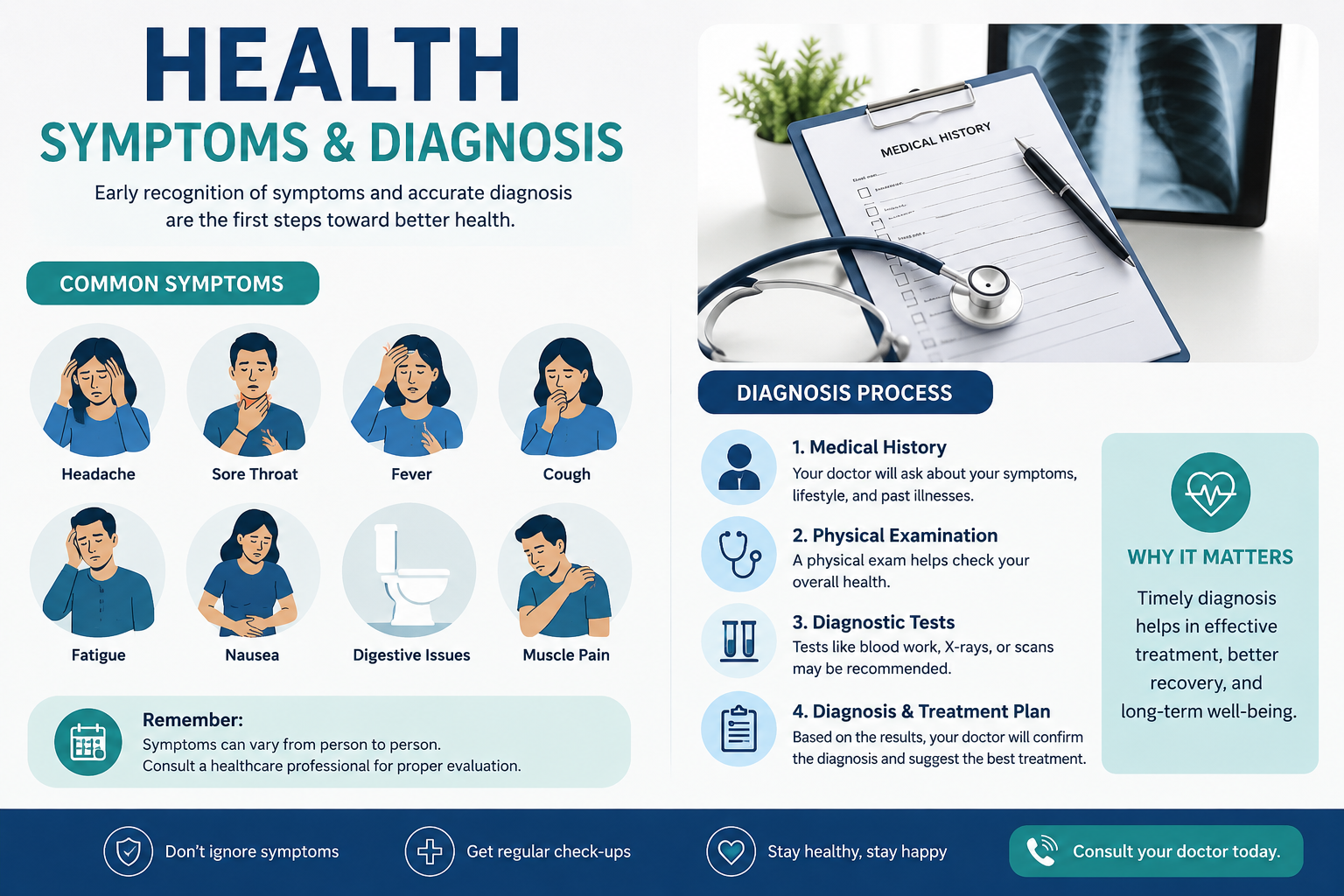
Noticing a new symptom can be worrying, especially when you don’t know what it means. A headache, unusual tiredness, stomach discomfort, skin change, fever, dizziness, or persistent cough can have many possible causes. Some symptoms are temporary and harmless, while others may need medical attention.
Understanding health symptoms and diagnosis can help you make better decisions about your health without jumping to conclusions. A symptom is not automatically a diagnosis. The same symptom can occur with several different conditions, which is why healthcare professionals look at the whole picture before reaching a conclusion.
This guide explains how symptoms are evaluated, how diagnosis works, what information you should share with a healthcare professional, and when a symptom may require prompt medical care.
What Are Health Symptoms?
Health symptoms are changes that a person notices in their body, emotions, or general wellbeing. They can develop suddenly or gradually and may be mild, moderate, or severe.
Common examples include:
- Headaches or body aches
- Fever or chills
- Persistent tiredness
- Nausea or changes in appetite
- Coughing or difficulty breathing
- Abdominal discomfort
- Skin rashes or unusual changes
- Dizziness or weakness
- Changes in sleep
- Mood or concentration changes
A symptom provides a clue, but it doesn’t necessarily reveal its cause. For example, tiredness may be related to poor sleep, stress, an infection, certain medications, or another health issue.
The important factors are often how long the symptom has lasted, how severe it is, what other symptoms occur with it, and whether it is getting better or worse.
How Does Diagnosis Work?
Diagnosis is a structured process used to determine what may be causing a person’s symptoms. Healthcare professionals don’t normally rely on one symptom alone.
1. Medical History
The process often starts with questions about your symptoms and general health. You may be asked:
- When did the symptom begin?
- Has it become more frequent or severe?
- What makes it better or worse?
- Are there other symptoms?
- Are you taking any medications or supplements?
- Have you experienced a similar problem before?
Your family and personal medical history may also be relevant.
2. Physical Examination
Depending on the concern, a healthcare professional may examine different parts of the body. They may check things such as temperature, blood pressure, heart rate, breathing, or other physical signs.
The examination helps narrow down possible explanations.
3. Diagnostic Tests
Testing isn’t necessary for every symptom. When appropriate, a healthcare professional may recommend tests such as:
| Test | What It May Help Evaluate |
| Blood tests | Blood cells, glucose, inflammation, hormones, and other markers |
| Urine tests | Urinary and kidney-related concerns |
| Imaging | Internal structures and certain physical abnormalities |
| Swabs | Some bacterial or viral infections |
| Heart tests | Heart rhythm and related concerns |
The right test depends on the person’s symptoms and medical history.
4. Reviewing the Results
Test results are interpreted alongside symptoms and examination findings. A result outside a reference range doesn’t automatically mean that someone has a disease, and a normal result doesn’t always explain every symptom.
This is why professional interpretation matters.
Common Types of Health Symptoms
Health symptoms can affect almost any part of the body. Recognizing broad symptom categories can make it easier to describe what’s happening.
Respiratory Symptoms
These may include coughing, congestion, sore throat, wheezing, or shortness of breath. Some respiratory symptoms are associated with temporary infections, while persistent or serious breathing problems require professional assessment.
Digestive Symptoms
Nausea, diarrhea, constipation, bloating, abdominal pain, and changes in appetite are common digestive symptoms. Their possible causes range from temporary dietary issues to conditions requiring medical evaluation.
Neurological Symptoms
Headaches, dizziness, numbness, weakness, confusion, or changes in coordination can have many causes. Sudden or severe neurological symptoms should be treated seriously.
Skin Symptoms
Rashes, itching, swelling, discoloration, or changes in an existing skin mark may warrant evaluation, particularly when they persist, spread, become painful, or change noticeably.
General Symptoms
Some symptoms are less specific. Fatigue, unexplained weight changes, fever, sleep problems, and general weakness can occur with numerous conditions, making the surrounding context particularly important.
Symptoms That Should Not Be Ignored
Most minor symptoms don’t mean something serious, but certain signs deserve urgent attention.
Seek emergency medical help for symptoms such as:
- Severe difficulty breathing
- Severe chest pain or pressure
- Sudden loss of consciousness
- Sudden confusion or major difficulty speaking
- Sudden weakness or numbness, particularly on one side
- Severe allergic reactions with breathing problems
- Heavy or uncontrolled bleeding
- A serious injury or rapidly worsening condition
The appropriate response can vary depending on the circumstances and location. When in doubt about a potentially serious symptom, contacting an appropriate medical service is safer than waiting for it to resolve on its own.
How to Prepare for a Medical Appointment
Good information can make a medical consultation more useful. Before your appointment, consider writing down the symptoms you’re experiencing.
Keep Track of:
- The start date: When did the symptom first appear?
- Frequency: Does it happen occasionally or every day?
- Severity: How strongly does it affect you?
- Triggers: Does food, exercise, stress, sleep, or another factor affect it?
- Related symptoms: Have you noticed anything else?
- Medications: List prescription medicines, over-the-counter products, and supplements.
If you have previous test results or relevant medical records, keep them available when appropriate.
Clear information can help a healthcare professional build a more complete picture rather than relying on memory alone.
Why Self-Diagnosis Can Be Misleading
Searching online for symptoms can be useful for general education, but it can also create unnecessary anxiety. Many health conditions share similar symptoms.
For example, a headache may occur after poor sleep or dehydration, but headaches can also be associated with infections, medications, vision problems, migraines, or other conditions. Looking at a symptom in isolation doesn’t establish which explanation applies.
Online symptom information should therefore be treated as a starting point for questions, not as a substitute for professional diagnosis.
It’s also important to be cautious about websites that promise instant diagnoses or recommend treatments without understanding your medical history.
The Role of Lifestyle in Overall Health
Health isn’t determined by symptoms alone. Everyday habits can influence general wellbeing and may affect how the body responds to illness.
A balanced lifestyle can include:
- Eating a varied and nutritious diet
- Getting regular physical activity
- Maintaining a consistent sleep routine
- Drinking enough fluids
- Managing ongoing stress
- Avoiding tobacco
- Using alcohol responsibly, where applicable
- Keeping up with recommended preventive care
Lifestyle choices don’t prevent every illness, but they can support overall health.
For readers interested in the connection between everyday habits, wellbeing, and healthcare, exploring broader lifestyle and healthcare topics can provide useful context alongside information about individual symptoms.
Understanding Symptoms Without Jumping to Conclusions
One of the most useful approaches to health symptoms and diagnosis is to focus on patterns rather than isolated signs.
Ask yourself:
- Is the symptom new or something I’ve experienced before?
- Is it improving, staying the same, or getting worse?
- Are multiple symptoms appearing together?
- Is it interfering with normal daily activities?
- Did it begin after a change in food, medication, activity, sleep, or routine?
These questions don’t diagnose a condition, but they can help you communicate more effectively with a healthcare professional.
For example, saying “I’ve been tired” provides limited information. Saying “I’ve felt unusually tired for three weeks, it happens every day, and it’s affecting my normal activities” gives a much clearer starting point for assessment.
When Should You Contact a Healthcare Professional?
Consider arranging a medical appointment when a symptom:
- Persists longer than expected
- Keeps returning
- Gradually becomes worse
- Interferes with work, sleep, exercise, or daily activities
- Appears alongside other concerning symptoms
- Causes unexplained changes in your usual health
Some symptoms may be appropriate for routine medical care, while others require urgent evaluation. The severity, timing, age, medical history, and accompanying symptoms all matter.
If you are researching specific health concerns, educational resources about conditions such as Candida and related health topics can help you understand terminology and possible areas to discuss with a healthcare professional. They should complement—not replace—individual medical advice.
Key Takeaways
- Symptoms are clues, not automatic diagnoses.
- The same symptom can have many possible causes.
- Diagnosis usually considers symptoms, medical history, examination, and appropriate testing.
- Keep track of when symptoms begin, how they change, and what other signs occur.
- Avoid relying on online information for self-diagnosis.
- Persistent, worsening, unusual, or disruptive symptoms deserve professional attention.
- Severe or potentially life-threatening symptoms may require emergency care.
- Healthy lifestyle habits can support overall wellbeing but cannot replace medical evaluation.
FAQs About Health Symptoms and Diagnosis
1. What is the difference between a symptom and a diagnosis?
A symptom is something a person experiences or notices, such as pain, fatigue, or nausea. A diagnosis is a professional determination about the likely condition causing those symptoms.
2. Can one symptom have several causes?
Yes. Many symptoms have multiple possible causes. For example, fatigue can be linked to sleep problems, stress, infections, medications, or various health conditions.
3. Do all symptoms require medical tests?
No. Some conditions can be assessed based mainly on symptoms and a physical examination. Tests are generally selected when they can provide useful information for the situation.
4. Should I diagnose myself using online symptom checkers?
Online tools may provide general information, but they cannot fully account for your medical history or physical examination. They shouldn’t be treated as a confirmed diagnosis.
5. When should I seek urgent medical help?
Seek urgent or emergency help for serious symptoms such as severe breathing difficulty, severe chest pain, sudden neurological changes, loss of consciousness, or other rapidly worsening conditions.
6. What information should I tell my doctor?
Tell them when your symptoms started, how often they occur, their severity, anything that makes them better or worse, other symptoms you’re experiencing, and relevant medications or health history.
Conclusion
Understanding health symptoms and diagnosis is about recognizing changes in your health while avoiding assumptions about what they mean. A symptom can provide an important clue, but an accurate diagnosis often requires a broader assessment that considers your history, physical findings, and appropriate tests.
Pay attention to persistent or changing symptoms, keep useful information about them, and don’t hesitate to seek professional advice when something doesn’t feel right. Most importantly, treat online health information as educational guidance rather than a replacement for personalized medical care.
Being informed doesn’t mean diagnosing yourself. It means knowing what to notice, what questions to ask, and when getting professional help is the right next step.
