

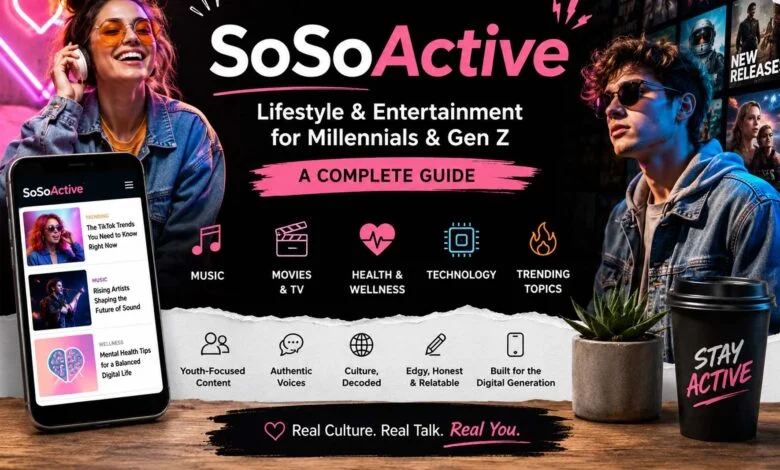
The internet constantly creates new words and concepts that reflect how people live, communicate, work, and spend their free time. Sosoactive is one of those terms that has appeared across online discussions and articles, leaving many people wondering what it actually means.
Unlike established medical or fitness terminology, sosoactive does not have one officially recognized definition. Online sources commonly use it to describe a moderate, balanced, or sustainable approach to being active and engaged. Some discussions connect the idea with physical wellness, while others apply it to social media, digital culture, productivity, and everyday life.
That flexibility is part of what makes the term interesting. Rather than promoting an extreme lifestyle, the concept generally points toward consistency without unnecessary pressure.
This guide explains what sosoactive means, where the idea can be applied, how it differs from inactivity or excessive activity, and how people can use the concept in practical ways.
What Is Sosoactive?
Sosoactive is best understood as an informal concept associated with moderate, intentional, and sustainable activity. It can describe a person who stays engaged with life without feeling the need to be constantly busy or intensely active.
The term has been used online in several different ways. Some sources describe it as a lifestyle philosophy centered on balance, while others connect it with digital participation, social interaction, or wellness.
Because there is no single authoritative definition, readers should pay attention to the context in which the word appears.
A simple way to understand the idea is:
Be active enough to stay engaged, but balanced enough to avoid unnecessary exhaustion.
This could mean taking regular walks instead of forcing yourself through exhausting workouts, maintaining a healthy social media routine instead of constantly scrolling, or building consistent work habits instead of trying to be productive every minute of the day.
Understanding the Meaning of Sosoactive
The word appears to combine the idea of being “so-so,” or moderate, with “active.” Online discussions therefore commonly interpret it as moderate activity or balanced engagement.
However, this should be treated as an informal interpretation rather than an official dictionary, medical, or scientific definition.
The concept can cover several areas:
- Physical movement and exercise
- Personal wellness
- Social interaction
- Digital engagement
- Productivity
- Hobbies and recreation
- Personal development
- Everyday lifestyle choices
For example, someone who takes a daily walk, meets friends occasionally, works consistently, and gives themselves enough time to rest could be described informally as following a sosoactive approach.
Sosoactive and Physical Activity
One of the most practical ways to understand the concept is through movement.
Modern fitness culture can sometimes make people feel that exercise only counts when it is intense. In reality, sustainable physical activity can take many forms.
A balanced activity routine might include:
- Walking for part of the day.
- Stretching after long periods of sitting.
- Taking the stairs when practical.
- Participating in a recreational sport.
- Following a manageable workout routine.
- Taking rest days when needed.
The goal isn’t to turn every day into a demanding training session. Instead, the idea is to make movement a realistic part of everyday life.
For someone who dislikes traditional gym workouts, a walk, cycling session, swimming, dancing, or recreational activity may be easier to maintain.
Consistency Matters
A sustainable routine is often easier to maintain than an extreme one.
For example, a person might begin with 20–30 minutes of comfortable movement several days a week rather than immediately attempting an intense daily workout. The appropriate level depends on the individual’s circumstances, fitness level, and any advice received from a qualified healthcare professional.
Sosoactive in Digital Life
The concept can also be applied to online behavior.
People spend a significant amount of time on social networks, messaging platforms, streaming services, and online communities. Being constantly connected can make it difficult to separate meaningful interaction from endless scrolling.
A sosoactive-style digital routine could involve:
- Posting or participating consistently without feeling pressured to be online constantly.
- Responding to meaningful conversations.
- Taking regular breaks from screens.
- Following accounts that provide genuine value.
- Avoiding compulsive checking of notifications.
- Making time for offline relationships and activities.
The principle is simple: use digital platforms intentionally instead of allowing them to control your attention.
Example of Balanced Social Media Use
Imagine a content creator who checks comments twice a day, publishes according to a realistic schedule, and spends the rest of the day working, exercising, and enjoying offline activities.
That is very different from checking engagement numbers every few minutes.
The first approach emphasizes sustainable participation, while the second can easily become exhausting.
Benefits of a Balanced Approach
Although “sosoactive” itself is not a recognized medical intervention, the broader principle of moderation can be useful when thinking about everyday habits.
Potential advantages include:
Better Sustainability
A manageable routine is easier to continue than one that demands constant effort.
Reduced Pressure
People don’t have to view every day as a competition. A balanced approach can make healthy habits feel more realistic.
Improved Time Management
When activity is planned intentionally, it becomes easier to make room for work, family, hobbies, rest, and social connections.
Greater Awareness
Thinking about how and why you spend your time can help identify habits that are useful and those that simply consume attention.
More Room for Rest
Being active does not mean eliminating downtime. Rest and recovery are important parts of a sustainable lifestyle.
How to Apply Sosoactive Habits
If you like the idea behind sosoactive, you don’t need to completely redesign your life. Start with small changes.
1. Choose Realistic Activities
Pick activities you genuinely enjoy. Walking, gardening, cycling, reading, cooking, sports, or creative hobbies can all add meaningful engagement to your day.
2. Set Manageable Goals
Avoid creating an unrealistic schedule. A small habit that you can repeat is often more useful than an ambitious plan that lasts only a few days.
3. Create Digital Boundaries
Decide when you want to check social platforms, email, or messages. Consider putting your phone away during meals, conversations, or focused work.
4. Make Time for People
Healthy engagement isn’t only digital. Spending time with family, friends, colleagues, or community groups can provide meaningful social connection.
5. Protect Your Downtime
Schedule periods when you don’t need to accomplish anything. Rest is not the opposite of productivity; it can help make a routine sustainable.
6. Review Your Routine
Every few weeks, ask yourself:
- Am I enjoying my routine?
- Is it realistic?
- Am I getting enough rest?
- Which activities genuinely improve my day?
- What could I simplify?
These questions can help you create a lifestyle that feels sustainable rather than overwhelming.
Sosoactive vs. Inactivity and Overactivity
The easiest way to understand the concept is to compare three approaches.
| Approach | General Characteristic | Possible Problem |
| Inactivity | Very little physical or social engagement | May encourage a sedentary routine |
| Sosoactive | Moderate, intentional, sustainable engagement | Requires consistency and balance |
| Excessive activity | Constant or extreme engagement | May contribute to fatigue and burnout |
The middle ground is the main idea. It isn’t about doing as little as possible or being productive every second. It’s about finding a level of activity that fits your life.
Is Sosoactive a Medical or Scientific Term?
No. Sosoactive should not be treated as an established medical diagnosis, treatment, or standardized scientific measurement.
Online sources use the word in different ways, including lifestyle, wellness, digital behavior, and media contexts. Because the terminology is informal, readers should avoid treating claims attached to the word as medical advice.
If an article uses sosoactive to make specific health claims, check whether those claims are supported by credible medical or scientific sources.
For health, exercise, nutrition, or mental-wellness decisions, qualified professionals and established evidence-based guidance should take priority over an emerging internet term.
Key Takeaways
- Sosoactive is an informal and emerging term with no single universally accepted definition.
- It is commonly associated online with moderate, balanced, or sustainable activity.
- The idea can apply to physical movement, digital behavior, social interaction, productivity, and lifestyle.
- A balanced routine focuses on consistency rather than extremes.
- Sosoactive is not a recognized medical treatment, diagnosis, or scientific measurement.
- The most useful application is to build realistic habits that leave room for activity, relationships, productivity, and rest.
FAQs
1. What does sosoactive mean?
Sosoactive is generally used online to describe a moderate or balanced level of activity and engagement. Its exact meaning depends on the context because it is not a standardized scientific term.
2. Is sosoactive a fitness program?
Not necessarily. Some online sources use the term in relation to fitness and wellness, but sosoactive is not a universally recognized fitness program or official exercise method.
3. Can sosoactive apply to social media?
Yes. In informal discussions, it can describe maintaining a consistent but controlled online presence instead of being constantly active or completely disconnected.
4. Is sosoactive a medical term?
No. Sosoactive is not an established medical diagnosis, treatment, or clinical measurement. Health-related decisions should be based on reliable medical guidance rather than the term itself.
5. How can I follow a sosoactive lifestyle?
You can start by combining regular movement, meaningful social interaction, healthy digital boundaries, productive activities, hobbies, and sufficient rest. The focus is on creating habits that are realistic and sustainable.
6. Does sosoactive mean being active all the time?
No. The concept is generally associated with balance rather than constant activity. Rest, recovery, and downtime can be important parts of a sustainable routine.
7. Why is the term becoming popular online?
Interest in terms like sosoactive reflects a broader discussion about balance, digital overload, wellness, productivity, and sustainable lifestyles. People increasingly look for approaches that don’t require extreme routines.
Conclusion
Sosoactive is an emerging online term that can be understood as an informal way of describing balanced, moderate, and sustainable activity. Rather than encouraging people to remain busy every moment, the concept focuses on staying meaningfully engaged while leaving room for rest and personal priorities.
Its applications can range from physical movement and wellness to social media, productivity, hobbies, and relationships. At the same time, it’s important to remember that the word doesn’t have one official definition and isn’t a recognized medical or scientific framework.
Ultimately, the useful idea behind sosoactive is straightforward: choose habits you can realistically maintain, stay engaged with the things that matter, and don’t confuse constant activity with a healthy or productive life.
Learn More About: Seekde
