

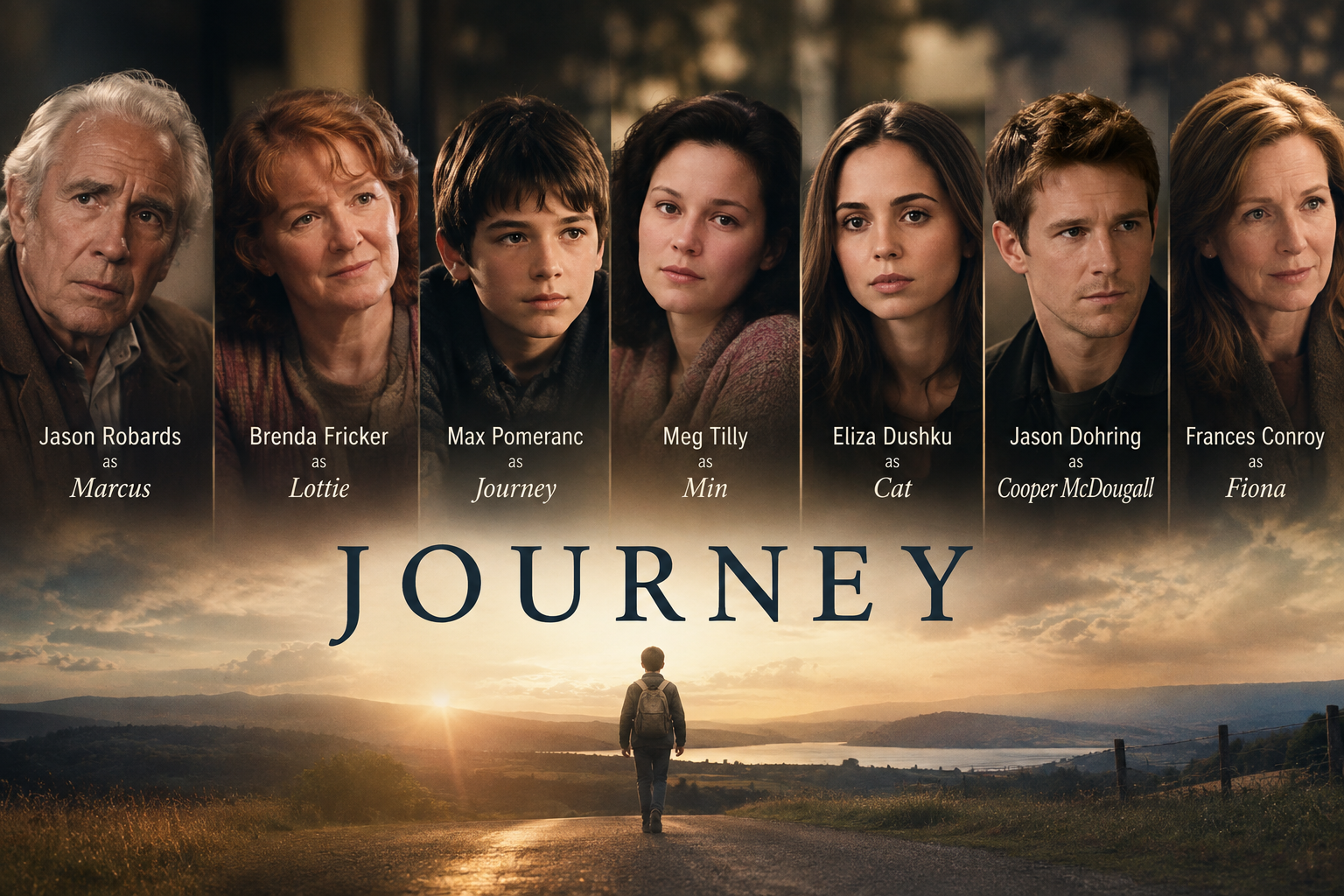
Journey Film is a 1995 American television drama directed by Tom McLoughlin and based on the novel by Patricia MacLachlan. The Journey 1995 film follows an 11-year-old boy named Journey, whose life takes an unexpected turn when his mother leaves him and his sister, Cat, in the care of their grandparents. As Journey moves into a new home, he struggles to understand his mother’s decision and adapt to a completely different family environment. The film presents a touching family drama centered on childhood, separation, and emotional growth.
As the Journey film story develops, Journey gradually forms a close relationship with his grandfather, Marcus, played by Jason Robards. Marcus helps him deal with feelings of loss, confusion, and abandonment while also sharing important memories from the family’s past. Photography becomes an important part of their relationship, allowing Journey to connect with his family history and understand where he comes from. With its focus on family relationships, childhood emotions, memory, and healing, Journey remains a thoughtful American television drama about finding strength and understanding during difficult changes.
What Is the Journey Film About?
Journey is a family drama that focuses on childhood, family relationships, loss, and emotional healing. Released as a television film in 1995, it centers on an 11-year-old boy named Journey, whose life changes after his mother, Min, leaves him and his sister Cat.
The children go to live with their grandparents, Marcus and Lottie, on the family farm. For Journey, change is difficult. He is separated from the life he knows and struggles to understand why his family has changed.
Rather than relying on a complicated plot, the film builds its story around relationships. Journey’s connection with his grandfather gradually becomes an important part of his emotional development. Through patience, memories, photography, and family support, he begins to see his situation differently.
Journey Film Story and Plot
At the beginning of the story, Journey is dealing with confusion and emotional pain. His mother has left, and he must adapt to living with his grandparents alongside his sister.
His grandfather Marcus initially has difficulty reaching him. Journey is a sensitive child, and the changes around him leave him uncertain about the people he loves and the reasons behind their decisions.
Life on the family farm gives Journey a different environment from the one he previously knew. His relationship with Marcus develops slowly rather than changing overnight. This gradual relationship is one of the central elements of the movie.
Photography becomes particularly meaningful in their relationship. Marcus uses photographs and memories to help Journey understand his family’s history and reconnect with his own past.
The journey in the film is therefore both physical and emotional. While the characters move through different places and experiences, Journey is also working through feelings of abandonment, confusion, and loss.
Journey Film Cast and Characters
The movie features a strong ensemble cast, including several well-known performers.
| Actor | Character |
| Jason Robards | Marcus |
| Brenda Fricker | Lottie |
| Max Pomeranc | Journey |
| Meg Tilly | Min |
| Eliza Dushku | Cat |
| Jason Dohring | Cooper McDougall |
| Frances Conroy | Fiona |
Jason Robards plays Marcus, Journey’s grandfather. His character becomes an important source of guidance and stability for the young boy.
Brenda Fricker plays Lottie, Journey’s grandmother. Together, Marcus and Lottie provide Journey with a new family environment after his mother’s departure.
Max Pomeranc portrays the title character. His performance places much of the emotional focus of the story on Journey’s experience as a child trying to make sense of complicated family circumstances.
Meg Tilly plays Min, Journey’s mother, whose decision to leave creates the central conflict that shapes the story.
Who Directed and Wrote a Journey?
Journey was directed by Tom McLoughlin, with the screenplay written by Patricia MacLachlan, whose novel provided the source material for the film.
MacLachlan is also known for Sarah, Plain and Tall, another story centered on family, relationships, and emotional change.
The film was produced as part of the Hallmark Hall of Fame tradition of television dramas. Its focus on family relationships and emotional storytelling fits naturally within that type of television production.
Major Themes in the Film
Family and Separation
One of the strongest themes is the meaning of family when circumstances change. Journey has difficulty accepting his mother’s absence, while his grandparents try to provide him with stability.
The film does not present family as something that is always simple. Instead, it explores how people can hurt one another while still remaining connected.
Loss and Emotional Healing
Journey is dealing with a form of loss that he does not fully understand. His emotional reaction is central to the story.
The film shows that healing does not necessarily happen through one dramatic event. For Journey, it develops through relationships, memories, communication, and time.
Grandparents and Grandchildren
The relationship between Journey and Marcus gives the film much of its emotional weight. The two characters come from different generations and initially struggle to understand one another.
Their connection demonstrates how grandparents can provide guidance while also learning how to communicate with younger family members.
Memory and the Past
Memory plays an important role throughout the story. Journey wants to understand where he belongs, and Marcus helps him look back at family experiences.
The past is not simply presented as something that should be forgotten. Instead, understanding it becomes part of Journey’s ability to move forward.
Journey and the Importance of Photography
Photography is more than a small detail in Journey. It becomes a way for Marcus to communicate with his grandson.
For Journey, photographs offer a visual connection to moments and people that might otherwise feel distant. They also give Marcus a way to help the boy explore his memories without forcing him to immediately explain everything he feels.
This makes photography an effective storytelling device. It connects the film’s personal family drama with the broader idea that pictures can preserve memories and help people understand their own histories.
Why the Family Story Matters
Although Journey was released as a television drama in the 1990s, its central themes remain recognizable. Families can experience separation, misunderstandings, and difficult transitions at any point.
The film is especially focused on the perspective of a child. Adults may understand why certain decisions are made, but children do not always have the information or emotional maturity to process those decisions.
That perspective makes Journey’s experience important to the story. His questions and reactions allow viewers to see family conflict through the eyes of someone who is still trying to understand the world around him.
Is Journey a Family-Friendly Film?
Journey is a drama rather than an action-oriented or suspense-driven movie. Its main focus is family relationships, emotional struggles, and personal growth.
The film carries a PG/TV-PG-style family drama tone, making it more suitable for viewers interested in thoughtful stories about family and childhood than for audiences looking for fast-paced entertainment.
Parents may still want to consider the story’s themes of parental absence, loss, and family separation when deciding whether it is appropriate for younger children.
Frequently Asked Questions
What is the Journey film about?
Journey follows an 11-year-old boy who moves in with his grandparents after his mother leaves him and his sister. The story explores family, loss, memories, and emotional healing.
When was Journey released?
The film was released as a television drama in 1995.
Who directed Journey?
Journey was directed by Tom McLoughlin.
Who wrote Journey?
The film was written by Patricia MacLachlan, based on her novel.
Who plays Journey in the film?
Max Pomeranc plays Journey, the young central character.
Who stars in Journey?
The main cast includes Jason Robards, Brenda Fricker, Max Pomeranc, Meg Tilly, and Eliza Dushku.
What genre is Journey?
Journey is primarily a family drama dealing with relationships, loss, childhood, and personal growth.
Is photography important in Journey?
Yes. Photography becomes an important part of Marcus and Journey’s relationship and helps the young boy connect with memories and his family history.
Final Thoughts
Journey is a character-driven family drama that places emotional relationships at the center of its story. Rather than depending on action or complicated twists, the film explores what happens when a child faces separation and has to build a new sense of security.
The relationship between Journey and his grandfather gives the movie its emotional foundation, while photography provides a meaningful connection between memory and family history. For viewers who enjoy heartfelt television dramas about childhood, family, and personal growth, Journey offers a thoughtful story about finding understanding after difficult changes.
Learn About: The Guilty (Film)
