

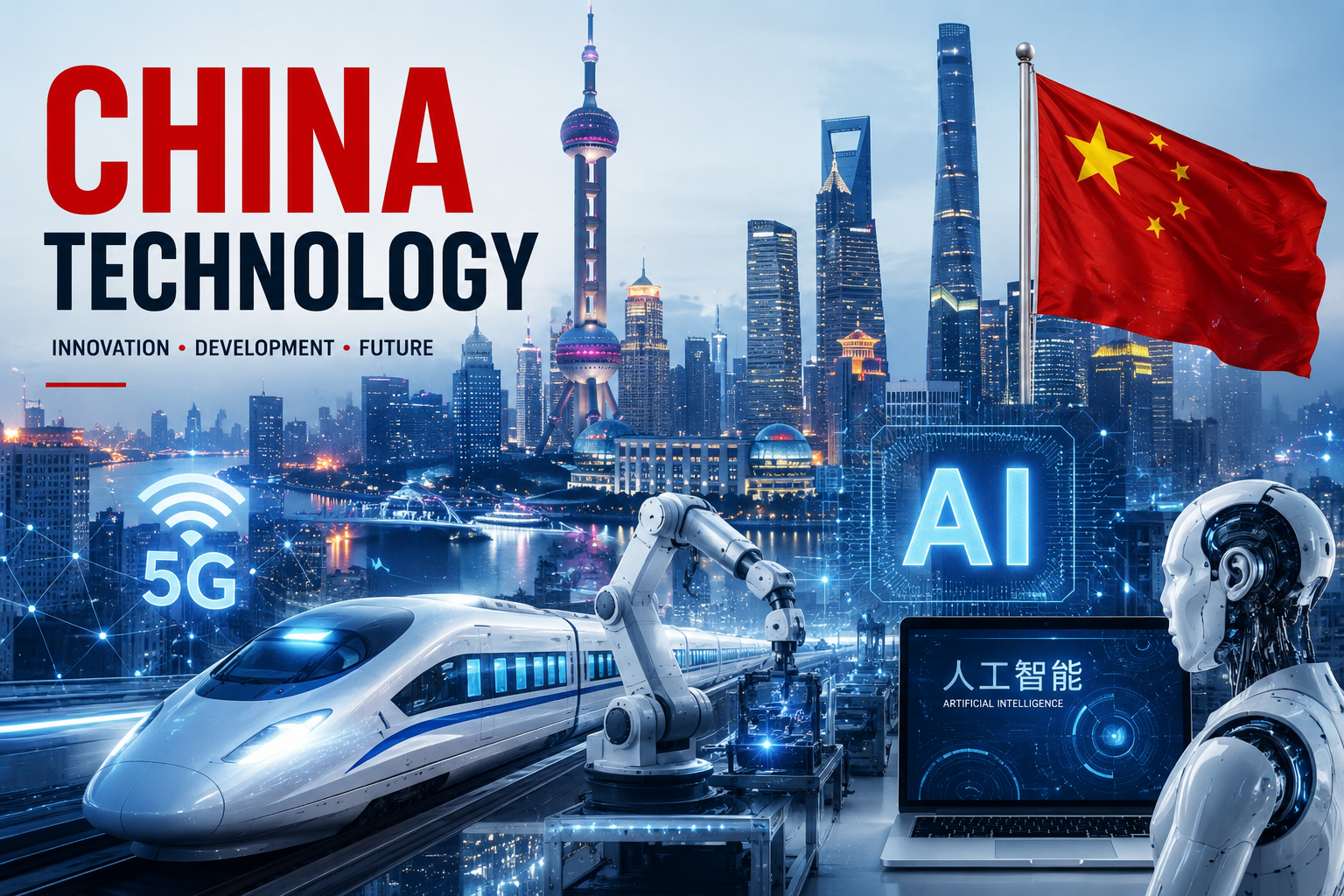
China has become one of the world’s most important technology markets. Over the past two decades, the country has moved from being primarily known for large-scale manufacturing to becoming a major force in artificial intelligence, telecommunications, electric vehicles, robotics, e-commerce, and advanced manufacturing.
The growth of China technology is driven by a combination of strong manufacturing capabilities, a large domestic market, substantial investment in research and development, and a rapidly expanding digital economy. Chinese companies are also competing internationally in areas ranging from smartphones and electric cars to cloud services and artificial intelligence.
For businesses, investors, technology professionals, and everyday consumers, understanding China’s technology sector is increasingly important. Its innovations can influence global supply chains, product prices, business strategies, and future technology trends.
What Is China Technology?
China technology describes the country’s broad technology ecosystem, including hardware manufacturing, software development, artificial intelligence, telecommunications, robotics, digital finance, clean energy, and emerging technologies.
Rather than being concentrated in one industry, China’s technology sector spans many parts of the economy.
Some important areas include:
- Artificial intelligence and machine learning
- 5G and telecommunications
- Electric vehicles and batteries
- Semiconductor research and manufacturing
- Robotics and industrial automation
- E-commerce and digital payments
- Cloud computing
- Renewable energy technology
- Consumer electronics
- Drones and autonomous systems
This wide range gives China a significant role in both domestic and international technology markets.
Why Is China’s Technology Sector Growing?
Several factors have contributed to China’s rapid technological development.
A Large Domestic Market
China’s huge population gives technology companies access to millions of potential users. New products and digital services can therefore be tested and scaled across a large market.
Strong Manufacturing Infrastructure
China has extensive manufacturing networks for electronics, batteries, machinery, vehicles, and other products. This manufacturing base can help companies move from product development to large-scale production relatively quickly.
Investment in Research and Development
Government programs, private companies, universities, and research institutions all contribute to technological research. Major investment has supported areas such as artificial intelligence, advanced manufacturing, telecommunications, and clean energy.
Fast Digital Adoption
Chinese consumers have adopted mobile apps, online shopping, digital payments, and other technology-enabled services at a rapid pace. This creates a strong environment for companies developing new digital products.
Major Areas of China Technology
China’s technology ecosystem covers several industries, but some areas have attracted particularly strong global attention.
| Technology Area | Major Development |
|---|---|
| Artificial Intelligence | AI models, computer vision, automation |
| 5G | High-speed mobile connectivity |
| Electric Vehicles | EVs, batteries, charging infrastructure |
| Semiconductors | Chip design and domestic production |
| Robotics | Industrial and service automation |
| E-commerce | Large-scale online marketplaces |
| Renewable Energy | Solar, batteries, and energy storage |
| Cloud Computing | Enterprise and consumer digital services |
These sectors are interconnected. For example, AI can improve robotics, while advanced chips can support AI systems and electric vehicles.
Artificial Intelligence in China
Artificial intelligence has become one of the most closely watched parts of China’s technology sector.
Chinese technology companies and research institutions are developing applications for AI across industries such as healthcare, manufacturing, finance, education, transportation, and consumer services.
AI can be used for:
- Automated customer support
- Image and video analysis
- Industrial quality control
- Language processing
- Recommendation systems
- Smart transportation
- Predictive maintenance
- Scientific research
China’s AI development is also connected to the growth of its semiconductor and cloud-computing industries. Access to computing infrastructure and advanced chips remains an important factor in the development of increasingly capable AI systems.
For readers who want to explore broader developments in the technology sector, a useful overview of technology trends and emerging innovations can provide additional context.
5G and Telecommunications
China has invested heavily in telecommunications infrastructure and 5G networks.
5G technology offers faster data transmission, lower latency, and greater capacity than previous generations of mobile networks. These capabilities can support applications beyond smartphones, including industrial automation, connected vehicles, smart factories, and Internet of Things devices.
Telecommunications companies have also played an important role in expanding digital connectivity across urban and industrial environments.
The development of 5G demonstrates how infrastructure can influence the wider technology ecosystem. Faster connectivity can make other digital services more practical and scalable.
Electric Vehicles and Smart Mobility
Electric vehicles are another major part of China’s technology story.
China has developed a large EV ecosystem involving vehicle manufacturers, battery producers, component suppliers, charging companies, and technology providers.
Modern electric vehicles increasingly rely on software and digital systems. Features can include:
- Battery management systems
- Driver-assistance technology
- Connected dashboards
- Over-the-air software updates
- Smart navigation
- Energy management
- Vehicle connectivity
Battery technology is particularly important because it affects vehicle range, charging speed, cost, and overall performance.
China’s large manufacturing base has helped it become a major participant in the global electric vehicle supply chain.
Semiconductors and Advanced Manufacturing
Semiconductors are fundamental to modern technology. They power smartphones, computers, vehicles, industrial machines, telecommunications equipment, and AI systems.
China has been working to strengthen its domestic semiconductor capabilities, including chip design, manufacturing equipment, materials, and related supply chains.
The sector faces significant technical and geopolitical challenges, particularly around access to some advanced manufacturing technologies and equipment. Even so, semiconductor development remains a strategic priority because advanced chips are essential for many emerging technologies.
Robotics and Automation
Automation is closely connected to China’s manufacturing strength.
Factories increasingly use industrial robots for repetitive or precision-based tasks. Automation can improve production efficiency, consistency, and workplace safety when implemented appropriately.
Robotics is also expanding into areas such as logistics, warehousing, healthcare, and service industries.
As AI becomes more capable, combining AI software with physical robots could create new applications. This is one reason robotics remains an important area to watch.
China’s Technology Companies
China has produced many influential technology companies across different industries. These companies operate in fields including:
- Internet services
- E-commerce
- Telecommunications
- Consumer electronics
- Electric vehicles
- Artificial intelligence
- Financial technology
- Cloud computing
Large technology companies often have the resources to invest heavily in research, infrastructure, and product development. At the same time, startups continue to contribute new ideas and specialized technologies.
The ecosystem therefore includes both established corporations and younger companies competing in fast-changing markets.
Global Impact of Chinese Technology
The influence of China’s technology sector extends well beyond its domestic market.
Chinese technology affects global industries through:
Consumer Products
Smartphones, electronics, appliances, drones, and other products manufactured or developed in China are sold worldwide.
Electric Vehicles
Chinese EV manufacturers and battery suppliers are becoming increasingly relevant to international automotive markets.
Supply Chains
Global businesses rely on complex manufacturing and component networks connected to China. Changes in Chinese technology production can therefore affect businesses in other countries.
Technology Competition
Competition between major technology economies can influence investment, research priorities, supply-chain decisions, and international technology standards.
Challenges Facing China’s Technology Sector
Despite its rapid progress, China’s technology industry faces several challenges.
Semiconductor Restrictions
Access to some advanced semiconductor technologies and manufacturing equipment can be restricted by international trade policies. This creates difficulties for companies working on cutting-edge computing systems.
Regulatory Changes
Technology companies operate within evolving regulatory environments. Changes in data, cybersecurity, competition, and platform rules can affect business strategies.
Global Competition
Chinese companies compete with technology firms from the United States, Europe, South Korea, Japan, and other regions. Maintaining an advantage requires continuous investment and innovation.
Talent and Research
Advanced technologies require highly skilled engineers, researchers, and scientists. Developing and retaining specialized talent is therefore critical to long-term progress.
Future Trends in China Technology
Several developments could shape the next stage of China’s technology sector.
AI-Powered Products
Artificial intelligence is likely to become increasingly integrated into consumer products, enterprise software, vehicles, and industrial systems.
Smarter Manufacturing
Factories may combine robotics, AI, sensors, and connected systems to improve production and reduce waste.
Next-Generation Batteries
Battery innovation will remain important for electric vehicles, renewable energy storage, and portable electronics.
Autonomous Systems
Drones, robots, connected vehicles, and other autonomous systems could gain wider commercial applications as supporting technologies mature.
Green Technology
Solar power, energy storage, electric transportation, and energy-efficient manufacturing are likely to remain important areas of technological investment.
Key Takeaways
- China technology covers a broad ecosystem rather than a single industry.
- Artificial intelligence, 5G, EVs, semiconductors, and robotics are major areas of development.
- China’s manufacturing infrastructure supports large-scale technology production.
- A large domestic market helps companies test and scale new products.
- Chinese technology has a significant impact on global supply chains and consumer markets.
- Semiconductor access, regulation, international competition, and talent remain important challenges.
- AI, smart manufacturing, batteries, autonomous systems, and green technology are key areas to watch.
FAQs About China Technology
1. What is China technology?
China technology refers to the country’s technology ecosystem, including AI, telecommunications, semiconductors, electric vehicles, robotics, e-commerce, cloud computing, and advanced manufacturing.
2. Why is China important in technology?
China is important because it combines a large technology market, extensive manufacturing infrastructure, significant research investment, and companies operating across many technology industries.
3. What technology is China best known for?
China is particularly prominent in areas such as electric vehicles, batteries, telecommunications equipment, consumer electronics, e-commerce, renewable energy manufacturing, and increasingly artificial intelligence and robotics.
4. Is China a leader in artificial intelligence?
China is one of the world’s major AI development centers. Its companies, universities, and research organizations are actively developing AI models and applications across numerous industries.
5. What are China’s biggest technology challenges?
Major challenges include access to some advanced semiconductor technologies, international competition, changing regulations, supply-chain pressures, and the need for highly specialized technical talent.
6. How does China’s technology affect other countries?
Chinese technology affects other countries through consumer products, electric vehicles, batteries, telecommunications equipment, manufacturing supply chains, and international technology competition.
7. What is the future of China technology?
Future growth is likely to focus on artificial intelligence, advanced manufacturing, robotics, electric mobility, battery technology, renewable energy, semiconductors, and connected digital systems.
Conclusion
China’s technology sector has evolved into a broad and influential ecosystem that reaches far beyond traditional manufacturing. From artificial intelligence and 5G to electric vehicles, robotics, semiconductors, and renewable energy, Chinese companies and researchers are contributing to many of the technologies shaping the modern economy.
The sector still faces challenges, particularly in advanced semiconductors, international competition, regulation, and access to specialized talent. However, its combination of manufacturing capacity, research investment, digital adoption, and a huge domestic market gives it substantial potential for continued development.
For anyone following global innovation, business, or emerging technology, China technology is a field worth watching closely. Its future progress could influence not only China’s economy but also technology markets and supply chains around the world.
