

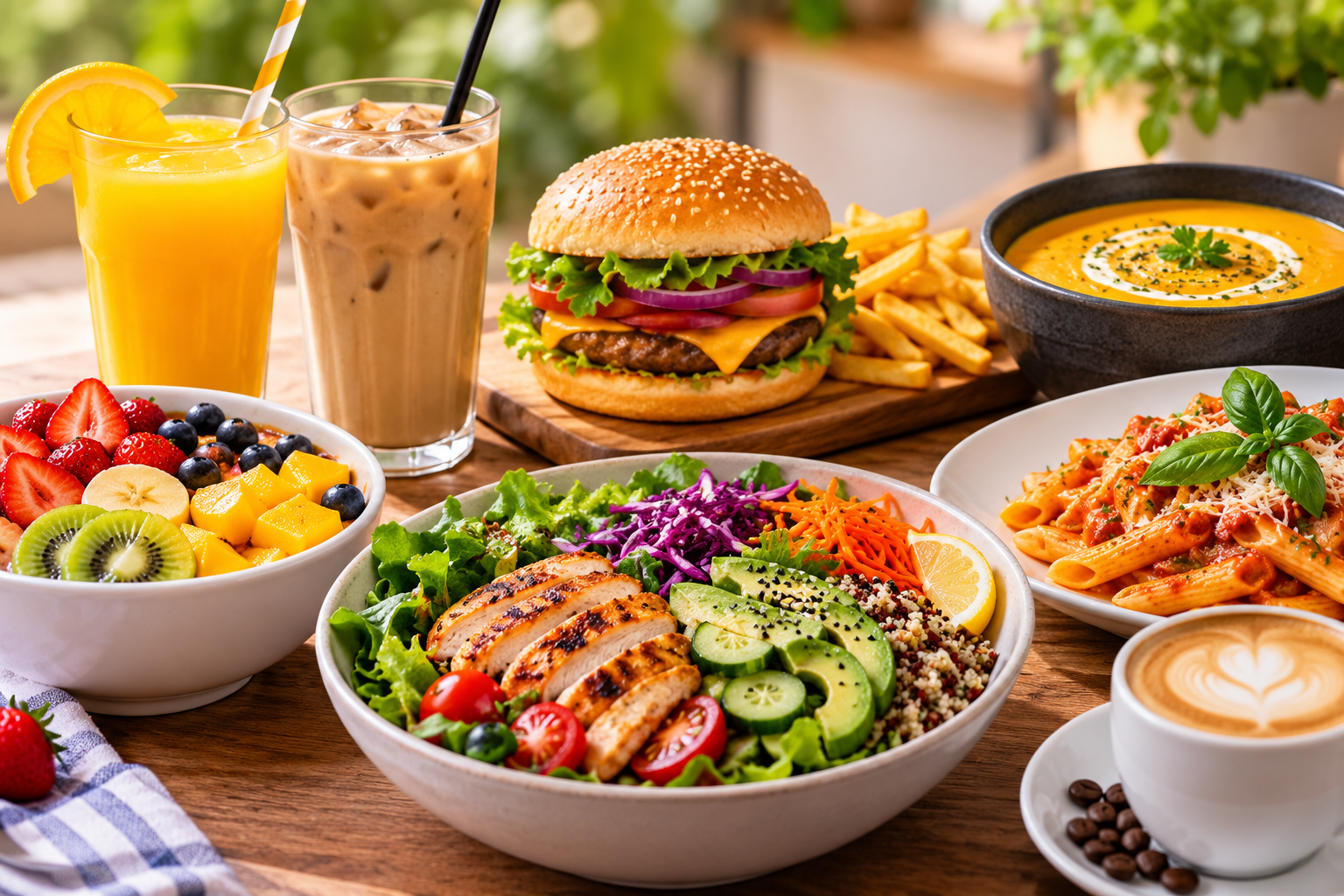
Food and drink are essential parts of everyday life. They provide the energy and nutrients the body needs, support overall health, and bring people together through shared meals and cultural traditions. From fresh fruits and vegetables to homemade meals, refreshing beverages, and occasional treats, the choices people make about what they eat and drink can influence how they feel throughout the day.
Understanding food and drink helps people make informed decisions about their daily meals. A balanced approach includes a variety of nutritious foods, enough fluids, appropriate portion sizes, and eating habits that fit individual needs and preferences. Whether preparing meals at home, choosing drinks at a restaurant, or planning a weekly grocery shop, small, thoughtful decisions can make everyday eating more enjoyable and practical.
What Do Food and Drink Include?
Food and drink cover a wide range of items consumed to satisfy hunger, provide nutrients, maintain hydration, and enjoy different flavors. Food includes fruits, vegetables, grains, dairy products, meat, fish, eggs, legumes, nuts, and prepared dishes. Drinks include water, milk, tea, coffee, fruit juice, smoothies, and other beverages.
These choices serve different purposes. Some foods provide carbohydrates for energy, while others supply protein, healthy fats, vitamins, and minerals. Drinks help maintain hydration, and certain beverages also provide nutrients.
Food and drink preferences vary according to culture, lifestyle, availability, budget, and personal taste. Some people prefer traditional home-cooked meals, while others enjoy exploring international cuisines or trying new beverages.
The key is to understand what different options offer and choose a variety that supports individual nutritional needs.
Why Food and Drink Matter for Health
Eating and drinking well supports several important functions in the body. A varied diet provides nutrients needed for growth, tissue repair, immune function, and normal body processes. Adequate hydration helps regulate body temperature, transport nutrients, and maintain normal physical function.
Energy and daily performance: Carbohydrates, fats, and protein contribute energy to the body. Eating regular, balanced meals can help people meet their energy needs throughout the day.
Growth and repair: Protein supports the growth and maintenance of muscles and other body tissues. Foods such as eggs, fish, beans, lentils, dairy products, and lean meat can contribute to daily protein intake.
Digestive health: Fruits, vegetables, whole grains, and legumes provide dietary fiber, which supports normal digestion and bowel function.
Bone health: Calcium-rich foods, including milk, yogurt, and some fortified alternatives, can support healthy bones. Vitamin D also plays an important role in calcium absorption.
Hydration: Water is essential for normal body function. Fluid requirements vary depending on activity, climate, age, and health, so individual needs may differ.
A balanced eating pattern does not require every meal to contain every nutrient. Variety across the day and week is more important than trying to make each meal perfect.
Main Types of Food and Their Benefits
Different food groups contribute different nutrients. Including a range of foods can help create a balanced and satisfying diet.
Fruits and Vegetables
Fruits and vegetables provide vitamins, minerals, fiber, and other beneficial plant compounds. Apples, bananas, oranges, carrots, spinach, tomatoes, and broccoli are examples of foods that can be included in everyday meals.
Fresh, frozen, and appropriately prepared canned produce can all contribute to a healthy diet. Choosing different colors and varieties throughout the week helps provide a broader range of nutrients.
Whole Grains and Other Carbohydrate Sources
Grains such as oats, brown rice, and whole-wheat bread provide carbohydrates for energy. Whole grains also contain fiber and other nutrients.
Potatoes, corn, and other starchy foods can also form part of balanced meals. The most suitable choices depend on personal preferences, nutritional needs, and the overall eating pattern.
Protein-Rich Foods
Protein helps maintain muscles and supports tissue repair. Useful sources include eggs, fish, chicken, lean meat, beans, lentils, chickpeas, tofu, nuts, and seeds.
People who eat little or no animal-based food can obtain protein from plant sources. Combining different protein-rich foods throughout the day can help meet nutritional needs.
Dairy Products and Alternatives
Milk, yogurt, and cheese provide protein and calcium. Some plant-based alternatives are fortified with calcium and vitamins, although their nutritional content varies.
Checking product labels can help identify options that suit individual dietary requirements.
Healthy Sources of Fat
Fats support cell function and help the body absorb vitamins A, D, E, and K. Sources of unsaturated fats include olive oil, nuts, seeds, avocados, and oily fish.
These foods can be included in moderate amounts as part of a varied diet.
Popular Drinks and Their Role in Daily Life
Beverages contribute to hydration, enjoyment, and social traditions. Their nutritional value depends on the ingredients, preparation method, and serving size.
Water
Water is an essential everyday drink. It supports hydration without adding sugar or calories. Drinking regularly throughout the day and having water available during physical activity can help people maintain fluid intake.
Tea and Coffee
Tea and coffee are popular in many countries. Both contain caffeine, although the amount varies by type and preparation. Unsweetened varieties can fit into a balanced diet, but large amounts of caffeine may affect sleep or cause unwanted effects in some people.
Adding large quantities of sugar, flavored syrups, or cream can substantially change a beverage’s nutritional content.
Milk and Milk Alternatives
Milk provides fluid, protein, and calcium. Fortified alternatives may provide similar amounts of selected nutrients, depending on the product.
People with allergies, intolerances, or specific dietary preferences should check ingredient lists and nutritional information when choosing these drinks.
Fruit Juice and Smoothies
Fruit juice and smoothies can provide vitamins and other nutrients. However, juice generally contains less fiber than whole fruit, and large servings can contribute considerable amounts of sugar.
Whole fruit is often a practical everyday choice. Smoothies made with whole fruits and vegetables can offer variety, particularly when prepared without excessive added sugar.
Sugary Drinks
Soft drinks, sweetened iced teas, energy drinks, and other sugar-sweetened beverages can add substantial amounts of sugar to the diet.
Choosing water or unsweetened beverages more often can help reduce added sugar intake. Energy drinks also require attention to caffeine content, especially for children and adolescents.
How to Build a Balanced Diet
A balanced diet includes a variety of foods in suitable proportions to meet individual nutritional needs. It does not mean avoiding favorite foods or following strict rules.
A practical approach is to include vegetables or fruit regularly, choose whole grains when possible, add a protein source, and include moderate amounts of healthy fats.
For example, a balanced lunch might contain brown rice, grilled chicken or lentils, cooked vegetables, and water. Breakfast could include oatmeal with fruit and yogurt, while dinner might feature whole-wheat bread, beans, salad, and a suitable protein source.
Portion sizes depend on age, activity level, appetite, and health needs. Paying attention to hunger and fullness can help people develop a comfortable eating routine.
It is also useful to consider sodium, added sugars, and saturated fats when choosing packaged foods. Nutrition labels can make it easier to compare similar products and identify options that fit personal goals.
People with medical conditions or specific nutritional requirements may benefit from advice from a qualified healthcare professional or registered dietitian.
Healthy Food and Drink Choices for Everyday Life
Making nutritious choices is easier when meals and groceries are planned in advance. A few practical habits can improve variety without making daily routines complicated.
- Plan meals ahead: Decide on several meals before shopping to reduce unnecessary purchases and make balanced choices easier.
- Keep nutritious foods available: Stock fruits, vegetables, whole grains, beans, eggs, and other convenient ingredients.
- Drink water regularly: Carry a reusable water bottle when practical and choose water with meals.
- Read food labels: Compare sugar, sodium, fiber, and saturated fat content between similar products.
- Prepare meals at home: Cooking allows greater control over ingredients, seasoning, portion sizes, and cooking methods.
- Choose suitable snacks: Fruit, plain yogurt, unsalted nuts, or vegetables with hummus can be convenient options.
- Enjoy favorite foods in moderation: A balanced eating pattern can include desserts and other treats without making them the main part of everyday meals.
Healthy eating should be practical and sustainable. Affordable local produce, seasonal ingredients, and simple home-cooked dishes can all contribute to a nutritious diet.
Food and Drink Across Different Cultures
Food and drink reflect cultural identity, geography, history, and family traditions. Ingredients and cooking methods often develop according to local climates, agricultural practices, and the foods available in a region.
In South Asia, meals may include rice, roti, lentils, vegetables, meat, yogurt, and traditional beverages. Mediterranean cuisines often feature vegetables, legumes, grains, olive oil, and fish. East Asian meals commonly include rice or noodles alongside vegetables, tofu, fish, or meat.
Drinks also have cultural significance. Tea may be served to welcome guests, coffee can accompany social gatherings, and traditional beverages may be associated with celebrations or seasonal occasions.
Exploring different cuisines can introduce people to new ingredients, flavors, and preparation techniques. Traditional recipes can also be adapted to personal preferences by adjusting salt, added sugar, cooking methods, or portion sizes.
Food is therefore more than nourishment. It can connect families, preserve traditions, and create opportunities to share experiences with others.
Tips for Preparing and Storing Food Safely
Food safety helps prevent foodborne illness and reduces unnecessary waste. Safe handling practices are important when preparing meals at home, packing lunches, or storing leftovers.
Wash hands with soap and water before preparing food and after handling raw meat, poultry, seafood, or eggs. Clean kitchen surfaces and utensils, and keep raw foods separate from ready-to-eat items to reduce cross-contamination.
Cook foods thoroughly, following reliable guidance for the specific food. Refrigerate perishable items promptly rather than leaving them at room temperature for extended periods.
Store chilled foods at a safe refrigerator temperature, generally 4°C (40°F) or below, and keep frozen foods properly frozen. Use suitable containers and follow storage instructions on packaged products.
When serving drinks, use clean glasses and safe drinking water. Refrigerate beverages that require chilling and avoid consuming products that show signs of spoilage or have been stored improperly.
These simple precautions make everyday food preparation safer and help preserve the quality of meals and beverages.
Frequently Asked Questions
1. What Does Food and Drink Mean?
Food and drink include the items people consume for nourishment, hydration, energy, and enjoyment, such as meals, snacks, water, and other beverages.
2. What Are the Healthiest Foods to Eat Daily?
A varied selection of fruits, vegetables, whole grains, legumes, protein-rich foods, and suitable sources of healthy fats can support a balanced diet.
3. What Is the Best Drink for Everyday Hydration?
Water is an excellent everyday choice because it supports hydration without added sugar.
4. Are Homemade Meals Healthier Than Restaurant Food?
Homemade meals often allow greater control over ingredients, salt, sugar, and portion sizes. However, nutritious choices are available in many restaurants, too.
5. How Can I Reduce Sugar in My Drinks?
Choose water or unsweetened beverages more often, reduce added sugar gradually, and check labels for added sugars in packaged drinks.
6. How Can I Make My Diet More Balanced?
Include a variety of food groups, eat fruits and vegetables regularly, choose whole grains when possible, and include suitable protein sources.
7. How Should Leftover Food Be Stored?
Refrigerate perishable leftovers promptly in suitable containers and follow recommended storage and reheating guidance.
8. Can Food and Drink Choices Affect Energy Levels?
Yes. Eating enough nutritious food and maintaining adequate hydration help support normal energy levels and daily physical function.
Conclusion
Food and drink play an important role in health, daily routines, and cultural life. Understanding different food groups, choosing suitable beverages, maintaining hydration, and following safe food-handling practices can help people make informed everyday decisions.
A balanced approach focuses on variety, appropriate portions, and habits that fit individual needs. By planning meals, choosing nutritious ingredients, and enjoying different flavors, people can develop a practical and satisfying relationship with food and drink.
Learn More About: Food Types and Lists
