

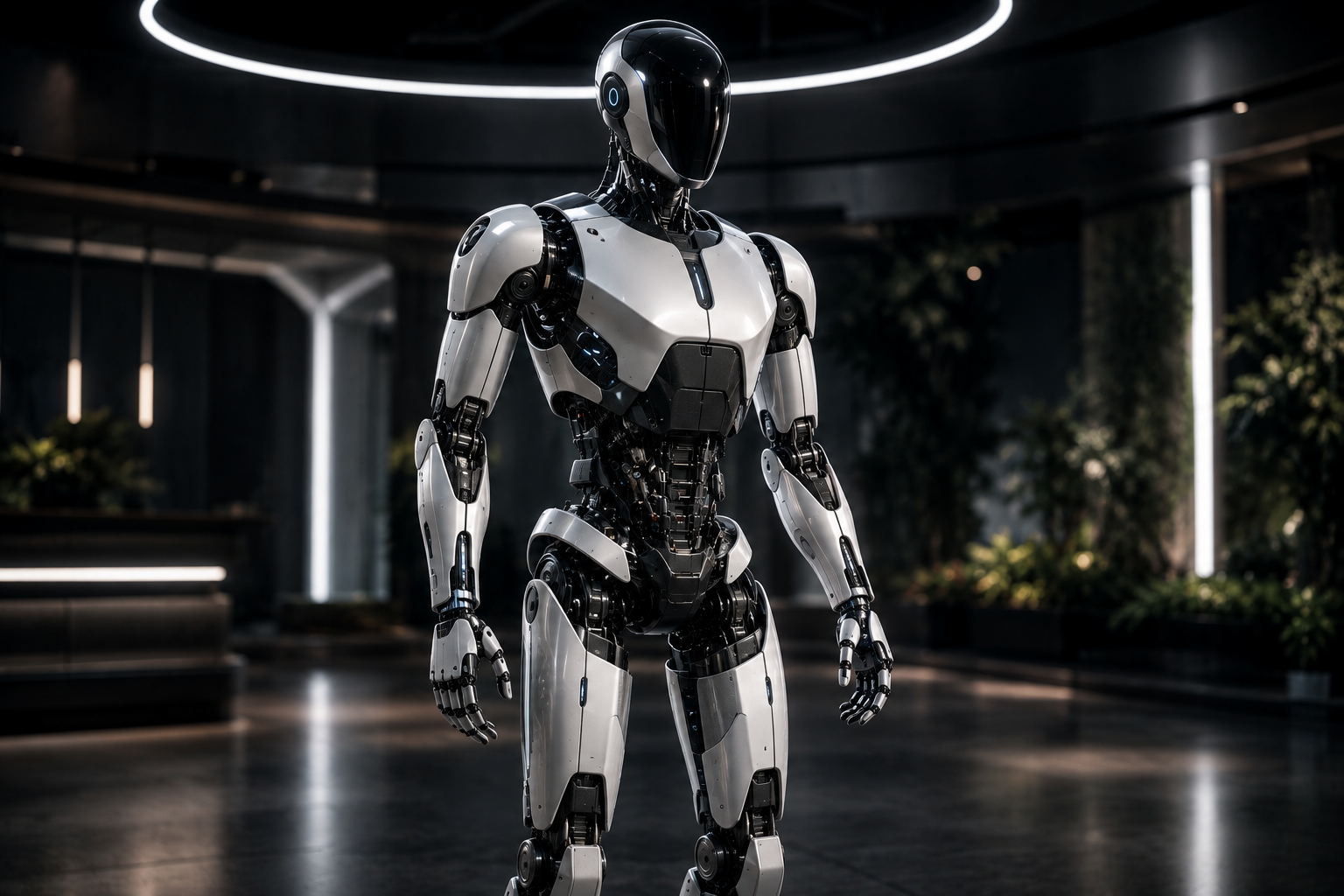
The idea of a Tesla robot has moved from science fiction into a real engineering project. Known officially as Optimus, Tesla’s humanoid robot is part of the company’s broader focus on artificial intelligence, robotics, and autonomous systems.
Unlike a traditional industrial robot that usually stays in one place, Optimus is being designed around a human-like body. That approach could allow it to work in environments already built for people, from factory floors to homes.
Tesla says its long-term goal is to create a general-purpose robot capable of handling unsafe, repetitive, or boring tasks. The company is also developing the AI systems needed for balance, navigation, perception, and interaction with the physical world.
This guide explains what Tesla Optimus is, how it is expected to work, what it may be used for, and what remains uncertain about its future.
What Is the Tesla Robot?
The Tesla robot is Tesla’s humanoid robotics project, officially known as Optimus. It is a bipedal robot designed to operate in environments made for humans and carry out a wide range of physical tasks.
Tesla introduced Optimus as part of its broader AI and robotics strategy. Rather than building a machine for only one task, the company aims to develop a general-purpose system that can learn and perform different activities.
Tesla’s own materials describe Optimus as a general-purpose, bipedal, autonomous humanoid robot. Its intended applications include tasks that people may find dangerous, repetitive, or monotonous.
What Does “Humanoid Robot” Mean?
A humanoid robot has a body structure broadly inspired by humans, typically including:
- Two legs
- Two arms
- Hands
- A torso
- Sensors and cameras
- Computer systems for processing information
The advantage of this design is flexibility. A robot with a human-like form can potentially use existing doors, tools, workstations, shelves, and other spaces without requiring an entirely new environment.
What Is Tesla Optimus Designed to Do?
Tesla is developing Optimus to perform physical tasks with increasing levels of autonomy.
Potential responsibilities include:
- Moving objects
- Handling repetitive factory work
- Performing routine physical tasks
- Assisting with household chores
- Navigating indoor environments
- Manipulating objects with its hands
- Supporting workers with physically demanding activities
Tesla has publicly described Optimus as part of its vision for autonomous systems that can eventually assist people with everyday activities. Its “We, Robot” presentation specifically showed the robot within a broader vision of AI-powered autonomy.
It is important to separate Tesla’s long-term goals from currently demonstrated capabilities. A concept or planned capability does not automatically mean the robot can perform that task reliably today.
How Does the Tesla Robot Work?
The technology behind Optimus combines robotics hardware with artificial intelligence.
Artificial Intelligence
AI is central to Tesla’s approach. The robot needs software that can interpret its surroundings, make decisions, plan movements, and respond to changing conditions.
Tesla says its robotics work involves software for:
- Balance
- Navigation
- Perception
- Motion planning
- Interaction with the physical world
These systems allow a humanoid robot to move beyond simple pre-programmed actions.
Computer Vision
A useful robot needs to understand what is around it.
Computer vision can help a humanoid system identify objects, recognize its surroundings, estimate distances, and respond to changes in its environment.
Tesla’s experience developing AI-based vision systems for vehicles is part of the company’s broader effort to bring AI into physical machines.
Motors, Sensors and Mechanical Systems
AI alone cannot make a robot walk or pick something up. Optimus also requires motors, actuators, sensors, batteries, mechanical joints, and computing hardware.
Tesla has emphasized that technologies developed for its vehicles—including batteries, motors, power electronics, software, and AI computing—can also contribute to its humanoid robotics efforts.
Potential Uses of the Tesla Robot
The most interesting part of Optimus is its potential range of applications.
| Area | Possible Use |
| Manufacturing | Repetitive assembly and material handling |
| Warehousing | Moving and organizing items |
| Dangerous work | Handling tasks that may expose people to risk |
| Household assistance | Routine chores and physical tasks |
| Logistics | Transporting objects within facilities |
| Business operations | Supporting repetitive physical workflows |
Factory Work
Factories are one of the most logical environments for humanoid robots because many tasks are repetitive and structured.
A robot could potentially move parts, transport materials, or perform routine operations while humans focus on supervision, problem-solving, and more complex work.
Tesla has positioned Optimus within its broader manufacturing and AI strategy, including efforts to develop a production-ready design.
Home Assistance
Tesla has also presented a longer-term vision in which Optimus could help with daily tasks around the home. The company’s public material describes examples such as household chores and errands.
However, homes are much less predictable than factories. Children, pets, stairs, clutter, fragile objects, and constantly changing environments make household robotics particularly challenging.
Tesla Robot vs. Traditional Robots
Traditional industrial robots are often extremely capable, but many are designed for specific jobs and controlled environments.
The Tesla robot takes a different approach.
Traditional Industrial Robot
- Usually designed for specific tasks
- Often fixed in one location
- Works in controlled environments
- May require specialized equipment or programming
Humanoid Robot
- Designed for greater flexibility
- Can potentially move around different environments
- Has a human-like physical structure
- Could perform multiple types of tasks
The goal isn’t necessarily to replace every traditional robot. Instead, humanoid machines could fill tasks where flexibility and mobility matter more.
What Makes Optimus Important to Tesla?
Optimus represents more than another product concept for Tesla. It fits into the company’s larger move toward AI, autonomy, and what Tesla describes as a physical-AI business.
Tesla’s recent corporate filings have described the company as continuing its transition toward a physical AI company and specifically mentioned advancing Optimus toward production.
Tesla also sees connections between its vehicle AI technology and robotics. The company’s approach is built around using AI to help machines understand and act in the real world.
That makes Optimus strategically interesting because success in humanoid robotics could create opportunities beyond the automotive market.
Challenges Facing Tesla Optimus
Despite the excitement surrounding the Tesla robot, developing a reliable humanoid robot is extremely difficult.
Reliable Movement
Walking on two legs is harder than it looks. A robot needs to maintain balance while dealing with uneven surfaces, obstacles, and unexpected movements.
Manipulating Objects
Picking up an object is one thing. Reliably handling thousands of different objects is much harder.
A useful household or workplace robot needs to understand size, weight, shape, texture, and position.
Safety
A robot operating around people must respond safely to unexpected situations. This becomes especially important in homes, hospitals, stores, and public spaces.
Cost and Manufacturing
Even if a robot works well technically, producing it at large scale at an affordable cost is another challenge.
Tesla’s ability to manufacture batteries, motors, electronics, and software at scale could potentially help, but mass production of humanoid robots remains a major engineering challenge.
Is the Tesla Robot Available to Buy?
There is currently no broadly available consumer Tesla Optimus product that people can simply order like a Tesla vehicle.
Tesla continues to develop the robot and has described its Optimus design as moving toward production.
That means claims about a final consumer price, exact release date, or complete feature set should be treated carefully unless Tesla officially confirms them.
For anyone following the Tesla robot, the safest approach is to distinguish between:
- Official Tesla announcements
- Demonstrated prototypes
- Company projections
- Third-party speculation
This distinction helps prevent unrealistic expectations.
What Could the Future Look Like?
If Tesla succeeds in making Optimus reliable, affordable, and safe, humanoid robots could become useful across many industries.
Businesses could use robots for repetitive physical work, while households might eventually use them for selected chores and assistance.
The larger idea is not simply creating a robot that looks human. The real challenge is creating a machine that can understand its surroundings, make appropriate decisions, and safely perform useful tasks.
Tesla’s broader autonomy strategy already connects vehicles, AI computing, and robotics. Its public materials describe Optimus as part of a future involving autonomous systems and AI operating in the physical world.
Key Takeaways
- Tesla Optimus is Tesla’s humanoid robot project.
- It is designed as a general-purpose, bipedal robotic system.
- Tesla aims for Optimus to perform unsafe, repetitive, and boring tasks.
- AI, computer vision, motion planning, sensors, motors, and computing hardware are central to its operation.
- Potential applications include factories, warehouses, businesses, and eventually homes.
- Tesla is still developing the robot, so future capabilities, pricing, and availability should not be treated as confirmed unless officially announced.
- Optimus is an important part of Tesla’s broader focus on AI, autonomy, and physical robotics.
FAQs
1. What is the Tesla robot called?
The Tesla robot is officially called Optimus.
2. What can the Tesla robot do?
Optimus is being developed to perform physical tasks such as repetitive, unsafe, and routine work.
3. Is Tesla Optimus available to the public?
No. Optimus is still under development and is not broadly available as a consumer product.
4. Is the Tesla robot fully autonomous?
Tesla’s long-term goal is an autonomous humanoid robot, but development and testing are ongoing.
5. Can Optimus work in a home?
Tesla has presented household assistance as a potential future use, but widespread home deployment depends on further development.
6. Will the Tesla robot replace human workers?
It may automate some repetitive physical tasks, but its overall impact on employment will depend on its capabilities, cost, adoption, and how businesses use the technology.
Conclusion
The Tesla robot, known as Optimus, is one of Tesla’s most ambitious projects beyond electric vehicles. It aims to perform useful physical tasks in factories, workplaces, logistics, and eventually homes. However, challenges such as safety, reliable movement, autonomy, manufacturing, and cost still remain. For now, Optimus is best viewed as a developing humanoid robotics platform with strong long-term potential. Its success will depend on Tesla’s ability to turn its AI and robotics vision into a reliable, practical, and scalable machine.
Learn About: Machine Learning and Artificial Intelligence
