

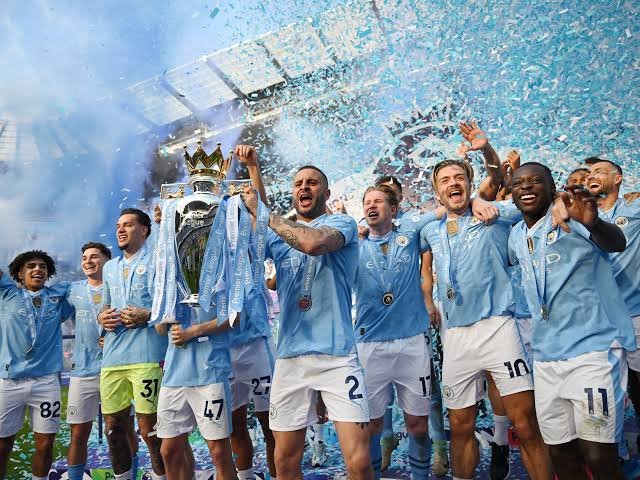
The English Premier League is one of the most recognized football competitions in the world. Every season, millions of supporters follow its clubs, players, managers, fixtures, results, transfer news, and league table.
The competition combines traditional English football rivalries with huge international audiences, elite players, modern stadiums, and intense competition at both ends of the table. The battle is not only for the title. Clubs also compete for European qualification, while teams near the bottom fight to avoid relegation.
The Premier League began in 1992 after England’s top-flight clubs separated from the Football League to create a competition with greater commercial independence. The first season featured 22 clubs. The league later moved to its current 20-team format.
This guide explains how the league works, its history, the 2026/27 season, promotion and relegation, European qualification, and what makes the competition so popular.
What Is the English Premier League?
The Premier League is the highest level of men’s professional football in England. It sits at the top of the English football pyramid, above the EFL Championship.
There are 20 clubs in the competition. Each club plays every other club twice:
- One home match
- One away match
- 38 league matches per club
- 380 matches across the complete season
The team that finishes with the most points is crowned English champion.
Although the Premier League is an English domestic competition, its audience is global. The official league describes it as the most-watched league in the world, with matches broadcast into hundreds of millions of homes internationally.
How Does the Premier League Work?
The league operates on a straightforward points-based system.
Points System
| Result | Points |
| Win | 3 |
| Draw | 1 |
| Loss | 0 |
For example, if Arsenal beats Chelsea, Arsenal receives three points while Chelsea receives none. If the match finishes level, both clubs receive one point.
At the end of the season, the points accumulated across 38 matches determine the league standings.
What Happens If Teams Finish Level?
Points are not always enough to separate clubs. When teams finish level on points, goal difference is used first, followed by goals scored and additional head-to-head criteria under the competition’s rules. A one-off playoff can be used in an extremely unusual situation if relevant teams remain inseparable after the applicable tiebreakers.
This is why goals scored and goals conceded can become extremely important during the final weeks of a season.
2026/27 English Premier League Season
The 2026/27 campaign brings another new chapter to the competition.
The Premier League’s 2026/27 season is scheduled to begin on 21 August 2026, with the final round taking place on 30 May 2027. All matches on the final day are scheduled to kick off simultaneously.
The 2026/27 season includes 33 weekends and five midweek match rounds. The calendar has also been designed around the increasingly crowded international and European football schedule.
Promoted and Relegated Clubs
Promotion and relegation keep the English football pyramid competitive.
At the end of the 2025/26 season, Wolverhampton Wanderers, Burnley and West Ham United were relegated from the Premier League. They were replaced by promoted Championship clubs Coventry City, Ipswich Town and Hull City for 2026/27.
This annual movement gives Championship clubs a route into the country’s top division while creating enormous pressure for Premier League teams fighting to stay up.
Premier League Clubs and Promotion
Three Championship clubs are promoted into the Premier League each season.
The first two places in the Championship earn automatic promotion. The remaining promotion place is decided through the Championship playoffs.
Likewise, the three Premier League clubs finishing in positions 18, 19 and 20 are relegated to the Championship.
This system creates two major races:
- The battle at the top for the Premier League title and European places.
- The battle at the bottom to avoid relegation.
For many clubs, avoiding relegation can be almost as important financially and competitively as winning the championship.
History of the English Premier League
The Premier League officially emerged in the early 1990s following efforts by leading English clubs to restructure the top level of the game.
The Founder Members Agreement was signed in July 1991. In February 1992, the 22 First Division clubs resigned from the Football League, and the new Premier League was formally established as a limited company later that year.
The inaugural season began on 15 August 1992, with 22 teams competing. Sheffield United’s Brian Deane scored the first Premier League goal.
The league eventually reduced its membership from 22 to 20 clubs after the 1994/95 season. That 20-team structure remains in place today.
Premier League Champions
Several clubs have dominated different periods of Premier League history.
Manchester United enjoyed extraordinary success during the competition’s early decades, while Arsenal, Chelsea, Manchester City and Liverpool have also produced title-winning eras.
The 2015/16 season produced one of football’s biggest modern surprises when Leicester City won the championship.
According to the official Premier League record, Arsenal won the 2025/26 Premier League title, while Liverpool had won the previous campaign in 2024/25.
European Qualification
Finishing near the top of the English Premier League can provide access to UEFA competitions.
Depending on the season and UEFA’s qualification rules, Premier League clubs can qualify for:
- UEFA Champions League
- UEFA Europa League
- UEFA Conference League
European qualification is highly valuable because it provides clubs with the opportunity to compete against leading teams from other countries.
For the 2026/27 campaign, Arsenal, Manchester City, Manchester United, Aston Villa and Liverpool qualified for the Champions League, while Bournemouth and Sunderland qualified for the Europa League. Brighton & Hove Albion qualified for the Conference League.
The exact distribution of European places can change depending on domestic cup winners and UEFA qualification rules.
Why Is the Premier League So Popular?
The competition’s popularity comes from several factors.
Historic Rivalries
Matches between clubs such as Manchester United and Manchester City, Liverpool and Everton, Arsenal and Tottenham Hotspur, and Chelsea and other London rivals generate enormous interest.
Competitive Matches
A major strength of the league is that even teams outside the title race can cause problems for the biggest clubs. A match between a top-four contender and a relegation-threatened side can completely change the league table.
Global Players
The Premier League attracts players and managers from around the world. This international talent has helped make the competition a global sporting product.
Unpredictable Storylines
Every season produces unexpected results, breakthrough players, managerial changes, title races, European battles and relegation dramas.
What to Follow During a Premier League Season
If you are new to the competition, these areas are worth following:
- League table: Shows every club’s position, points and goal difference.
- Fixtures: Helps you see upcoming matches and difficult stretches.
- Results: Useful for tracking form.
- Top scorers: Shows which forwards and attacking players are producing consistently.
- Assists: Highlights players creating goals.
- Injuries and suspensions: Can significantly affect team selection.
- Transfer news: New players can change a club’s strength.
- European qualification: Important for clubs competing near the top.
- Relegation battle: Often becomes increasingly intense late in the season.
Why Fixtures Matter
Premier League fixtures are more complicated than simply assigning matches to weekends. The schedule must accommodate domestic cups, UEFA competitions and international football.
For 2026/27, the league worked around a wider calendar involving the FA Cup, EFL Cup, UEFA competitions and FIFA international dates.
That is why fixtures can sometimes be moved after their initial release.
Key Takeaways
- The English Premier League is England’s top football division.
- It contains 20 clubs.
- Each club plays 38 matches.
- There are 380 matches in a full league season.
- A win earns three points and a draw earns one.
- The club with the most points wins the title.
- The bottom three clubs are relegated.
- Three Championship clubs replace the relegated teams.
- Top-performing clubs can qualify for UEFA competitions.
- The 2026/27 season is scheduled to begin on 21 August 2026 and finish on 30 May 2027.
FAQs
1. What is the English Premier League?
The English Premier League is the highest division of professional men’s football in England. It consists of 20 clubs competing for the league championship and European qualification.
2. How many teams play in the Premier League?
There are 20 teams in the Premier League. Each club plays 38 matches during a season, producing 380 matches in total.
3. How many points do you get for winning a Premier League match?
A team receives three points for a win, one point for a draw and zero points for a defeat.
4. How many teams are relegated from the Premier League?
Three clubs are relegated every season. The teams finishing 18th, 19th and 20th move down to the EFL Championship.
5. When does the 2026/27 Premier League season start?
The 2026/27 season is scheduled to start on 21 August 2026, with the final match round scheduled for 30 May 2027.
6. Who won the 2025/26 Premier League?
Arsenal won the 2025/26 Premier League title, according to the official Premier League record.
7. How many matches does each Premier League club play?
Each club plays 38 league matches: 19 against the other clubs at home and 19 away.
Conclusion
The English Premier League is much more than a competition for the championship trophy. Its format creates meaningful battles throughout the table, from title contenders and European hopefuls to clubs fighting against relegation.
Since its launch in 1992, the league has developed into a major global football competition while retaining the traditional rivalries and competitive character of English football. Its 20-team structure, promotion and relegation system, demanding fixture schedule and pathway to European football ensure that every season brings something different.
For fans following the 2026/27 campaign, the league offers another full season of fixtures, rivalries, tactical battles and competition for points. Whether you follow one club or the entire division, understanding the format and history makes every match more meaningful.
Laern About: Arizona Cardinals
