

Have you noticed how phones don’t feel as exciting as they used to? A few years ago, every new release brought something that genuinely surprised us. These days, most upgrades are small—better cameras, brighter displays, and a little more speed. It makes you wonder what’s coming next.
That question is exactly why tech giants envision future beyond smartphones. Companies are investing heavily in devices that blend naturally into everyday life instead of demanding constant attention. The goal isn’t simply to replace smartphones overnight. It’s to create experiences that feel easier, smarter, and far more connected.
Why Smartphones May Have Reached Their Peak
For nearly two decades, smartphones have transformed the way we communicate
, work, shop, and entertain ourselves. Yet many users are beginning to feel that modern phones have matured.
Most flagship models now share similar features. Faster processors, improved cameras, and larger batteries are useful, but they rarely change how people actually use their devices.
This slowdown has encouraged technology companies to search for the next breakthrough. Instead of asking how to build a better phone, they’re asking a much bigger question: What if the phone doesn’t need to be the center of our digital lives anymore?
The Search for the Next Computing Platform
Technology has always moved in cycles.
Desktop computers led to laptops.
Laptops made room for smartphones.
Now researchers and engineers believe wearable technology, artificial intelligence, and immersive digital experiences could become the next major platform.
That’s one reason tech giants envision a future beyond smartphones as a long-term strategy rather than a short-term experiment.
The transition won’t happen overnight. Most people will continue using smartphones for years, but the role of the device may slowly become less important.
Smart Glasses Could Replace Constant Screen Time
H3: Information Right in Front of You
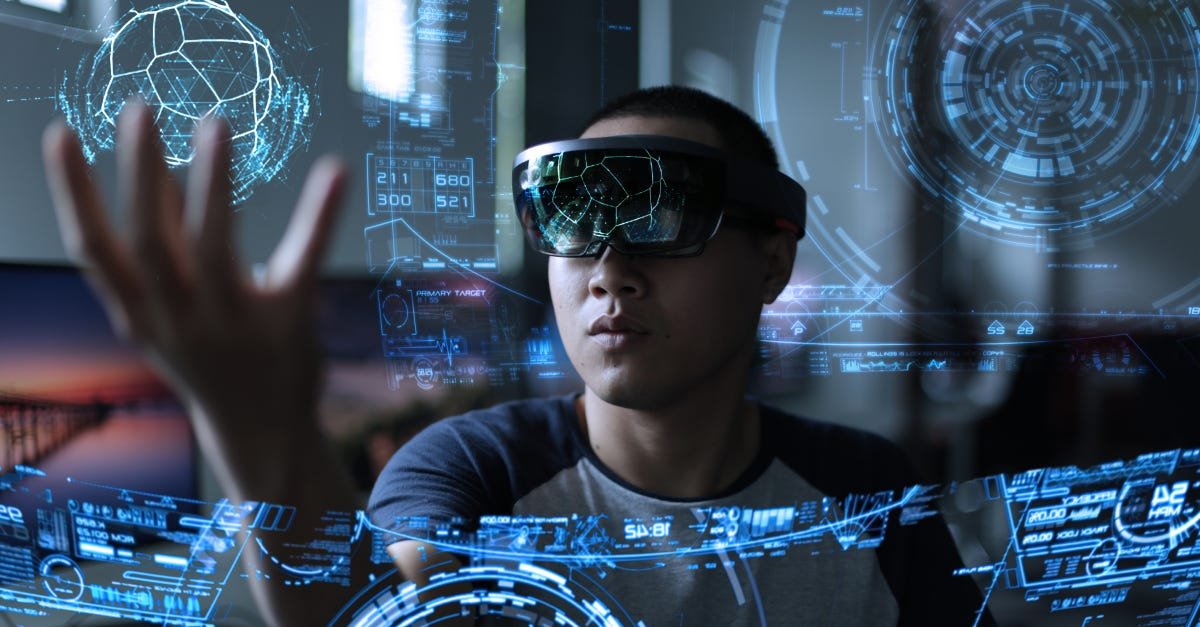
Imagine walking through an unfamiliar city while directions quietly appear inside your glasses instead of forcing you to check your phone every few minutes.
That idea has been around for years, but recent advances in lightweight displays, voice control, and artificial intelligence are making it more realistic.
Smart glasses could display messages, translate conversations, provide navigation, or identify landmarks without interrupting daily activities.
For people who dislike staring at screens all day, this sounds surprisingly refreshing.
A More Natural Way to Interact
Instead of tapping and swiping, future devices may respond to voice commands, eye movements, or simple hand gestures.
The technology almost disappears into the background, letting people focus on what they’re doing instead of constantly unlocking a screen.
Artificial Intelligence Is Becoming the Real Interface
AI assistants are evolving quickly.
Rather than opening several apps to complete one task, users may simply ask an assistant to handle everything.
Picture planning a weekend trip.
Instead of searching flights, comparing hotels, checking weather forecasts, and organizing your calendar separately, one intelligent assistant could manage the entire process within seconds.
That feels less like using software and more like having a helpful digital partner.
H2: Wearables Are Growing Smarter Every Year
Smartwatches already track health, fitness, sleep, and notifications.
Future wearable devices could monitor hydration, stress levels, blood pressure, posture, and even detect early signs of illness before symptoms become obvious.
Many people already rely on wearable technology during workouts. I have friends who check their smartwatch before they even look at their phone in the morning. Small habits like that hint at how user behavior is slowly changing.
Mixed Reality Could Change Daily Work
Virtual reality and augmented reality aren’t only for gaming anymore.
Businesses are testing immersive environments for employee training, remote collaboration, product design, education, and healthcare.
Instead of joining a video call through a phone or laptop, coworkers might eventually meet inside a shared virtual workspace that feels almost physical.
It sounds futuristic, yet several industries are already experimenting with these possibilities.
Smarter Homes Without Constant Phone Use
Smart homes continue to become more intelligent.
Lights, security cameras, thermostats, appliances, and entertainment systems already communicate with one another.
The next step is making those systems proactive.
Imagine walking into your home after work. The lights adjust automatically, your favorite playlist begins softly, dinner instructions appear on a nearby display, and the temperature changes without touching a single device.
That kind of convenience reduces the need to reach for a smartphone every few minutes.
H2: Challenges That Still Need Solving
Exciting ideas don’t guarantee immediate success.
Several obstacles remain before smartphones become less important.
H3: Battery Technology
Smaller wearable devices require batteries that last all day without becoming bulky or uncomfortable.
H3: Privacy Concerns
Devices collecting voice, location, and environmental data raise understandable concerns about personal privacy and security.
People will expect companies to provide stronger protection for sensitive information.
H3: Affordable Pricing
Many next-generation devices remain expensive.
Until prices become accessible for average consumers, smartphones will continue dominating everyday life.
What This Means for Everyday Users
You probably won’t wake up one morning and throw your phone away.
Instead, smartphones may gradually become background devices while wearables, AI assistants, and smart environments handle everyday tasks more naturally.
That’s exactly why tech giants envision future beyond smartphones. They’re preparing for a world where technology fits around people instead of forcing people to adapt to technology.
It’s a subtle shift, but it could completely change how we interact with digital devices over the next decade.
Final Thoughts
Technology rarely stands still. Every generation believes its favorite device will remain the standard forever, yet history usually proves otherwise.
Smartphones aren’t disappearing anytime soon. They’re simply becoming one part of a much larger connected ecosystem. Smart glasses, wearable devices, artificial intelligence, mixed reality, and intelligent homes all point toward a future where screens become less central and experiences become more seamless.
Whether that future arrives in five years or fifteen, one thing feels certain: the next chapter of personal technology is already being written.
FAQs
Will smartphones completely disappear?
Probably not. Smartphones will likely remain useful for many years, but their role may become smaller as wearable technology and AI-powered devices take over everyday tasks.
What technologies could replace smartphones?
Smart glasses, wearable devices, augmented reality, virtual reality, AI assistants, and voice-controlled computing are considered the strongest candidates.
Why are technology companies investing in wearable devices?
Wearables offer hands-free access to information, health monitoring, communication, and digital services while reducing dependence on traditional smartphone screens.
Are smart glasses ready for everyday use?
Some models are already available, but the technology is still developing. Better battery life, lighter designs, and more useful software are expected before widespread adoption.
How will artificial intelligence shape future devices?
AI will make technology more conversational and proactive by handling complex tasks, managing schedules, providing recommendations, and connecting multiple devices through simple voice interactions.
Read More Informative Blogs: Here
