

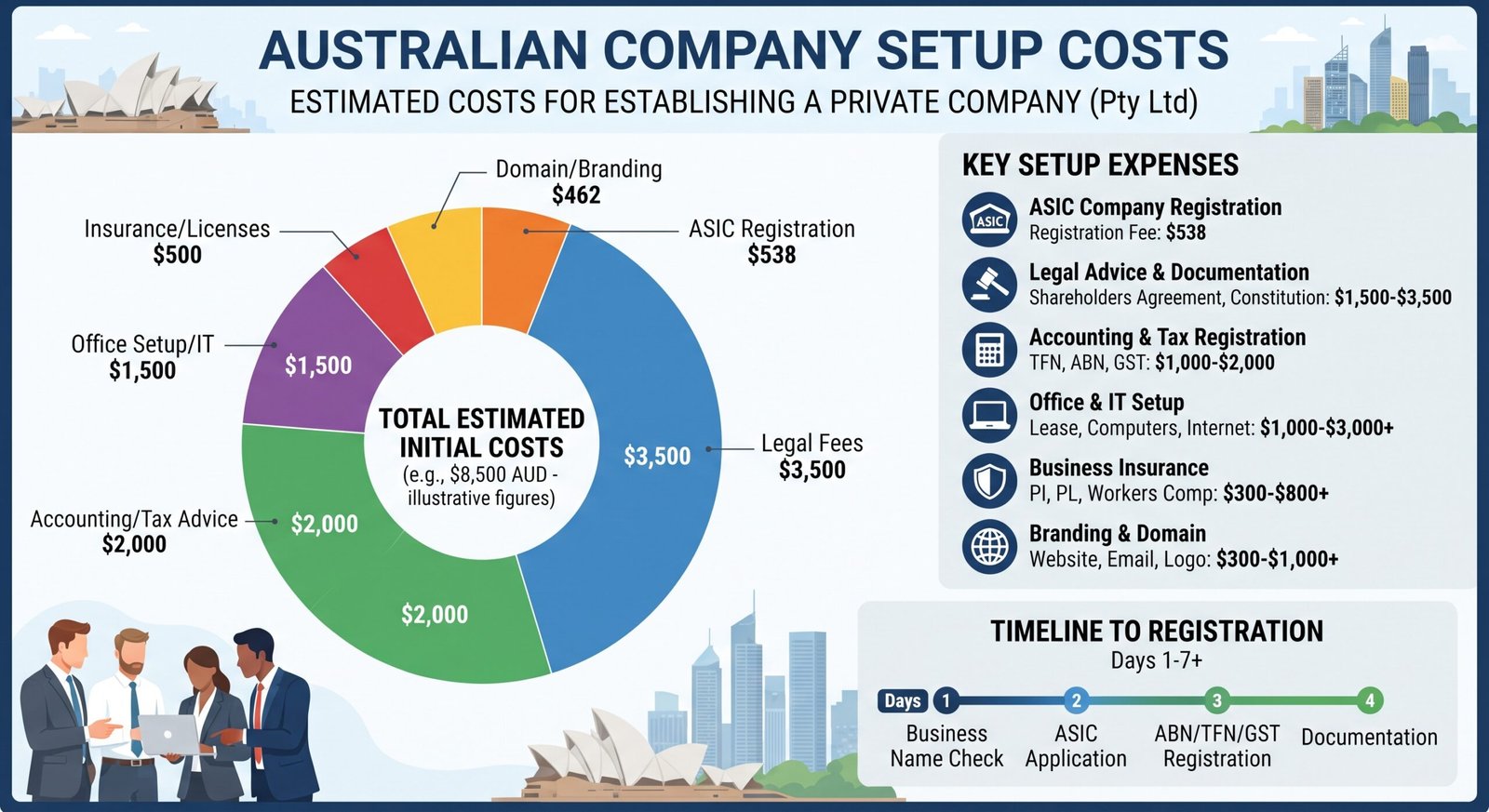
Starting a company in Australia involves more than paying a registration fee. While the initial ASIC fee is an important part of your budget, the total Australian company setup costs can vary significantly depending on your business structure, industry, location and operating requirements.
A small online consultancy, for example, may be able to start with relatively modest expenses beyond company registration. A restaurant, retail store or construction business may need substantially more money for premises, equipment, insurance, licences and staff.
Understanding these costs before registering your company helps you create a realistic startup budget and avoid unexpected expenses.
This guide explains the major costs involved in setting up an Australian company in 2026, including ASIC registration, business name registration, tax registrations, professional services and Victoria-specific expenses.
How Much Does It Cost to Set Up a Company in Australia?
The cost depends on what type of company you establish and what your business needs.
For a standard proprietary limited company, the Australian Government’s Business Registration Service currently lists the registration cost at $636. The fee increased from $611 on 1 July 2026.
However, $636 should not be viewed as the complete cost of launching a business.
Your total budget may also include:
- Business name registration
- Accounting and bookkeeping
- Legal advice
- Insurance
- Business licences and permits
- Website and domain costs
- Accounting software
- Office or retail premises
- Equipment and inventory
- Marketing
- Employee-related expenses
- Working capital
Business Victoria recommends separating one-off setup expenses, equipment costs and working capital when calculating the amount needed to start a business.
Australian Company Registration Costs in 2026
ASIC Company Registration Fee
The main government expense when establishing a proprietary limited company is the ASIC registration fee.
From 1 July 2026, registering a company costs $636 for a standard proprietary limited company. The company registration process creates a separate legal entity and provides the company with an Australian Company Number (ACN).
You can register directly through the Australian Government’s Business Registration Service.
The registration process itself can be relatively quick when you have all the required information ready. The government states that online registration takes around 15 minutes, although preparation and approval times can vary.
Annual ASIC Review Fee
Company registration is not a one-time financial commitment.
Companies have ongoing obligations with ASIC, including an annual review process. From 1 July 2026, the annual review fee for a proprietary company is $342.
Therefore, your business plan should include this recurring cost rather than treating the $636 registration fee as your only government expense.
You should also keep company details up to date and meet the company’s legal and reporting obligations.
ABN Registration Cost
An Australian Business Number, or ABN, is an important business identifier.
The good news is that applying for an ABN is free through the Australian Government’s registration system. The Business Registration Service also allows eligible businesses to apply for several registrations in one place.
Do not confuse the free ABN application with company registration. An ABN identifies your business for government and commercial purposes, while company registration creates the company as a legal entity.
Business Name Registration Costs
Your company name and business name are not necessarily the same thing.
If your company trades under a name different from its registered company name, you may need to register that business name.
As of 1 July 2026, the business name registration fees are:
| Registration | Cost |
|---|---|
| 1 year | $47 |
| 3 years | $108 |
These fees apply to business name registration or renewal.
It’s also important to understand that registering a business name does not give you exclusive trademark rights. If you want stronger protection for your brand, consider whether registering a trade mark is appropriate.
Other Australian Company Setup Costs
Government registration fees are only part of the overall startup budget.
Accounting Costs
Many new company owners work with an accountant during the setup process.
Professional accounting services may cover:
- Company tax advice
- Business structure advice
- Tax registrations
- Bookkeeping setup
- BAS preparation
- Payroll
- Annual tax returns
- Financial reporting
The price depends on the complexity of your company and how much work you outsource.
A simple service business may have relatively straightforward accounting requirements, while a company with employees, inventory and multiple transactions may need more extensive support.
Legal Costs
Legal advice is another potential expense.
You may need professional help with:
- Shareholder agreements
- Employment contracts
- Commercial contracts
- Intellectual property
- Terms and conditions
- Privacy documents
- Company structure
- Business acquisitions
Not every new company needs extensive legal work, but getting advice before signing an important contract can prevent much more expensive problems later.
Insurance
Insurance costs depend heavily on the industry and level of risk.
Depending on your business, you may need:
- Public liability insurance
- Professional indemnity insurance
- Product liability insurance
- Workers compensation insurance
- Commercial property insurance
- Cyber insurance
Business Victoria identifies insurance as one of the common startup costs businesses should consider when preparing their budget.
Website and Digital Expenses
Most modern businesses also need some form of digital infrastructure.
Potential expenses include:
- Domain registration
- Business email
- Website hosting
- Website design
- E-commerce software
- Accounting software
- Customer relationship management tools
- Logo and branding
These costs are not part of the ASIC company registration fee, but they can be essential to getting the business operational.
Company Name Search Before Registration
Choosing a company name should happen before you spend money on branding, signage or marketing.
You should check whether your preferred name is available and investigate existing companies or businesses with similar names. Business Victoria also recommends checking relevant intellectual property considerations before registering a company name.
For additional research, you can use this company registration and search guide to learn more about searching company registration information and researching existing Australian businesses.
This step is particularly useful if you have several potential names and want to conduct preliminary research before making a final choice.
Australian Company Setup Costs in Victoria
The basic ASIC company registration fee applies nationally, so registering a company in Victoria does not automatically mean paying a higher ASIC registration fee.
However, the total cost of starting a business in Victoria can vary depending on your industry, premises and local requirements.
For example, a home-based consultant may have relatively low startup costs. A Melbourne restaurant could face considerably higher expenses because of premises, fit-out, equipment, insurance, food-related requirements and other approvals.
Business Victoria highlights premises, equipment, licensing, insurance, marketing, professional services and working capital as common startup expenses.
For entrepreneurs specifically researching the Victorian business environment, this Business Victoria resource can provide additional information to consider when planning a business in the state.
Licences and Permits in Victoria
Not every company needs the same licences.
Your requirements depend on what your business does and where it operates.
Business Victoria recommends using the Australian Business Licence and Information Service (ABLIS) to identify relevant local, state and federal licences, registrations and permits.
Businesses operating from commercial premises may also need to consider planning, building or signage approvals. Requirements can vary between Victorian councils.
For this reason, you should investigate permits before signing a lease or committing to major fit-out work.
How to Budget for Your New Company
A practical startup budget should divide expenses into three categories.
1. One-Off Setup Costs
These could include:
- ASIC registration
- Business name registration
- Legal setup
- Initial accounting work
- Website development
- Branding
- Licences
- Initial insurance
2. Equipment and Assets
Depending on the business, you may need:
- Computers
- Vehicles
- Machinery
- Furniture
- Tools
- Stock
- Point-of-sale equipment
3. Working Capital
Working capital covers the money required to operate while the business is building revenue.
This could include:
- Rent
- Wages
- Utilities
- Software subscriptions
- Inventory
- Marketing
- Insurance
- Loan repayments
Business Victoria specifically recommends allowing for running costs during the period before a new business becomes profitable.
Step-by-Step Australian Company Setup Checklist
Step 1: Choose Your Business Structure
Consider whether a company is the right structure for your circumstances. A company is a separate legal entity, but it also comes with additional compliance responsibilities.
Step 2: Choose a Company Name
Check name availability and consider whether your proposed name could conflict with an existing trade mark.
Step 3: Prepare Company Information
Prepare details about directors, shareholders, registered addresses and the proposed share structure.
Step 4: Register the Company
Use the Australian Government Business Registration Service and pay the applicable ASIC registration fee.
Step 5: Apply for Relevant Registrations
Depending on your circumstances, you may need an ABN, TFN, GST or PAYG withholding registration.
GST registration is generally required when business turnover reaches $75,000 or more, subject to the applicable rules and exceptions.
Step 6: Arrange Insurance and Professional Services
Set up the insurance, accounting, legal and bookkeeping systems your business needs.
Step 7: Check Licences and Permits
Use ABLIS and relevant state or local authorities to identify industry-specific requirements.
Key Takeaways
- The Australian company setup costs for a standard proprietary limited company start with a $636 ASIC registration fee from 1 July 2026.
- The proprietary company annual review fee is $342 from 1 July 2026.
- An ABN application is free.
- A business name costs $47 for one year or $108 for three years.
- Accounting, legal advice, insurance, licences and technology can increase your overall startup budget.
- Victorian businesses may have additional premises, council, licensing and permit costs.
- A realistic budget should include both setup expenses and several months of working capital.
- Check your company and business name before investing heavily in branding.
FAQs
How much does it cost to register a company in Australia in 2026?
A standard proprietary limited company costs $636 to register from 1 July 2026. Additional professional and operating costs are separate.
Is an ABN free in Australia?
Yes. Eligible businesses can apply for an ABN through the Australian Government’s registration system without paying an application fee.
What is the annual cost of an Australian company?
The ASIC annual review fee for a proprietary company is $342 from 1 July 2026. Your actual annual business expenses will be higher because you may also have accounting, insurance, software, licence and operating costs.
Do I need a business name if I register a company?
Not necessarily. If you trade using your registered company name, a separate business name may not be required. If you trade under another name, you generally need to register that business name.
How much does it cost to start a company in Victoria?
There is no single total because the cost depends on the business. The ASIC registration fee is national, while expenses such as premises, equipment, licences, insurance and council requirements can vary.
Can I register an Australian company myself?
Yes. You can register through the Australian Government’s Business Registration Service. Professional assistance is optional but may be useful for complex structures, tax matters or legal arrangements.
Are company registration and business name registration the same?
No. Company registration creates a legal company entity. A business name is the name under which a person or entity trades when that name differs from the relevant registered name.
Conclusion
Understanding Australian company setup costs is important before you commit to launching a new business. Although the initial ASIC registration fee for a proprietary company is $636 from 1 July 2026, the true cost of starting a business depends on much more than company registration.
You may also need to budget for business name registration, accounting, legal services, insurance, technology, licences, premises, equipment and working capital.
If you are setting up in Victoria, investigate local requirements before signing a lease or beginning major renovations. Different industries and councils can have different requirements, so checking permits and registrations early can help prevent unexpected costs and delays.
Most importantly, create a complete startup budget that separates mandatory registration fees from optional professional services and ongoing operating expenses. With careful planning, you can understand your financial commitments before registration and give your new Australian company a stronger foundation for sustainable growth.
