

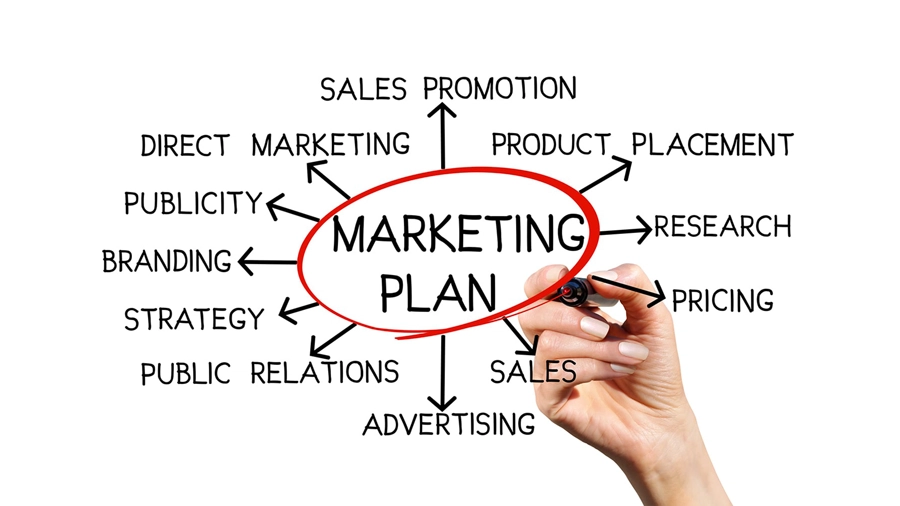
Marketing rarely works well when every campaign is created at the last minute. Businesses need a clear direction that connects their goals with the needs of their customers. This is where a strong marketing strategy and plans become important.
A marketing strategy provides the overall direction, while marketing plans turn that direction into specific actions. Together, they help businesses decide who they want to reach, what they want to communicate, which channels they should use, and how they will measure results.
Whether you’re running a small local business, an online store, a startup, or an established company, a structured approach can make marketing more focused and easier to manage.
What Is a Marketing Strategy?
A marketing strategy is a long-term approach that explains how a business intends to reach its ideal customers and achieve its marketing and business objectives.
It focuses on the bigger picture. Instead of simply deciding to publish social media posts or run advertisements, a strategy asks important questions:
- Who are our ideal customers?
- What problems do they have?
- What makes our business different?
- Why should customers choose us?
- Where can we reach them?
- What business results do we want to achieve?
For example, a software company targeting small businesses might build a strategy around educational content, search engine optimization, email marketing, and product demonstrations.
The strategy provides the direction behind individual campaigns.
What Are Marketing Plans?
Marketing plans are practical documents that explain how a marketing strategy will be executed during a specific period.
A plan may cover a month, quarter, or year. It normally includes campaigns, marketing channels, responsibilities, budgets, deadlines, and performance targets.
For example, a quarterly marketing plan could include:
| ctivity | Goal | Channel | Timeframe | KPI |
| Blog content | Increase organic traffic | SEO | 3 months | Organic visits |
| Email campaign | Generate leads | Monthly | Leads | |
| Product ads | Increase sales | Paid search | 6 weeks | Conversions |
| Social content | Build awareness | Social media | Weekly | Engagement |
This makes marketing activities easier to organize and evaluate.
Marketing Strategy vs. Marketing Plan
Although the terms are often used together, they have different purposes.
Marketing strategy: Explains what direction the business should take and why.
Marketing plan: Explains what actions will be taken, when they will happen, and who will handle them.
Think of the strategy as the destination and the plan as the route.
A business may have an excellent strategy but poor execution. Similarly, it can have a detailed marketing calendar without a clear strategy. The strongest marketing programs connect both.
Why Businesses Need a Marketing Strategy
A well-defined strategy can help businesses avoid random marketing decisions and focus resources on activities that support meaningful objectives.
1. It Defines the Target Audience
Trying to market to everyone often makes messaging too general. Identifying an ideal customer allows a business to create content and offers that address specific needs.
2. It Creates Consistent Messaging
A strategy establishes the brand’s core message. This can make communication more consistent across websites, advertisements, social media, email, and other channels.
3. It Improves Resource Allocation
Marketing budgets and employee time are limited. A strategy helps businesses prioritize channels and campaigns instead of spending money everywhere.
4. It Makes Results Easier to Measure
When goals are defined before campaigns begin, businesses can select relevant key performance indicators (KPIs) and determine what is working.
5. It Supports Long-Term Growth
Marketing should not only focus on immediate sales. Building brand awareness, customer relationships, organic visibility, and customer loyalty can support sustainable growth.
Key Elements of an Effective Marketing Strategy
A strong strategy usually combines several important components.
Market Research
Start by understanding the market, competitors, customer expectations, and current trends. Look for gaps that your business can realistically address.
Useful research may include:
- Customer interviews
- Surveys
- Competitor analysis
- Keyword research
- Website analytics
- Industry reports
- Customer reviews
Target Audience and Buyer Personas
Define the people most likely to purchase your product or service.
Consider factors such as:
- Needs and pain points
- Purchasing behavior
- Budget
- Preferred communication channels
- Buying motivations
- Common objections
The goal is not to create fictional customers with unnecessary details. Instead, use real evidence to understand your audience.
Value Proposition
Your value proposition should clearly explain the benefit customers receive and why your offer is worth considering.
For example, rather than saying, “We provide digital marketing services,” a company could communicate a more specific benefit such as helping small businesses increase qualified website traffic through search-focused content.
Marketing Goals
Set goals that are specific and measurable.
Instead of saying, “Increase website traffic,” consider:
Increase qualified organic website traffic by 25% over the next six months.
Clear goals make performance easier to evaluate.
Marketing Channels
Choose channels based on where your audience actually spends time.
Potential channels include:
- SEO
- Content marketing
- Email marketing
- Social media
- Paid advertising
- Influencer marketing
- Events
- Partnerships
- Referral marketing
Using every channel isn’t necessary. A focused approach is often easier to manage and optimize.
How to Create a Marketing Plan Step by Step
Step 1: Review Your Current Position
Analyze existing marketing performance before creating new campaigns.
Look at website traffic, conversion rates, customer acquisition costs, sales sources, email performance, and other relevant data.
Step 2: Define Your Marketing Objectives
Choose a small number of priorities. Common objectives include increasing leads, improving sales, launching a product, expanding into a new market, or increasing customer retention.
Step 3: Identify Your Audience
Use customer data and research to determine which audience segments offer the strongest opportunity.
Step 4: Select Your Marketing Tactics
Connect each objective with practical activities.
For example:
Goal: Generate more qualified leads.
Tactics:
- Publish problem-solving blog content.
- Create downloadable resources.
- Improve landing pages.
- Run targeted search campaigns.
- Build an email nurturing sequence.
Step 5: Create a Content Plan
Content should answer customer questions and help people make informed decisions.
A useful content mix might include:
- Educational blog posts
- Case studies
- Tutorials
- Product comparisons
- Videos
- Customer stories
- FAQs
- Email newsletters
Quality matters more than publishing large amounts of content.
Step 6: Set a Budget
Estimate spending for advertising, software, content production, design, freelancers, agencies, and other marketing activities.
Your budget should reflect business priorities and expected returns rather than simply copying what competitors spend.
Step 7: Establish a Timeline
Assign deadlines to major activities. A simple calendar can prevent campaigns from becoming inconsistent or forgotten.
Step 8: Track and Improve
Review performance regularly. If a channel consistently fails to produce useful results, investigate why before continuing to spend resources on it.
Common Marketing Strategies
Businesses can combine different approaches depending on their goals and audience.
Content Marketing
Content marketing attracts potential customers by providing useful information. It can support SEO, brand credibility, and customer education.
Search Engine Optimization
SEO helps businesses improve their visibility when people search for relevant products, services, or information. Effective SEO focuses on useful content, technical quality, search intent, and a good user experience.
Social Media Marketing
Social platforms can help businesses build awareness, communicate with customers, distribute content, and strengthen relationships.
Email Marketing
Email remains useful for nurturing prospects, sharing valuable content, promoting products, and retaining customers.
Paid Advertising
Search, social, and display advertising can provide faster exposure, but campaigns should be monitored closely because costs can increase without producing profitable results.
Example of a Simple Marketing Plan
Imagine a local home-improvement company wants to increase qualified leads.
Its plan could look like this:
Goal: Generate 100 qualified leads in three months.
Audience: Homeowners looking for renovation services.
Strategy: Become a trusted local source for renovation advice while promoting consultation services.
Activities:
- Publish two useful local SEO articles each month.
- Create before-and-after project case studies.
- Optimize service pages.
- Collect genuine customer reviews.
- Run targeted paid search campaigns.
- Send a monthly email newsletter.
KPIs:
- Qualified leads
- Website conversions
- Organic traffic
- Cost per lead
- Consultation bookings
This example shows how strategy connects business objectives with measurable marketing activities.
How to Measure Marketing Performance
Tracking the right metrics is essential. The best KPI depends on the goal.
| Marketing Goal | Useful Metrics |
| Brand awareness | Reach, impressions, branded searches |
| Website growth | Organic traffic, engaged sessions |
| Lead generation | Qualified leads, conversion rate |
| Sales | Revenue, conversion rate, customer acquisition cost |
| Email marketing | Open rate, click rate, conversions |
| Customer retention | Repeat purchases, retention rate |
Avoid judging a campaign using vanity metrics alone. For example, thousands of social media impressions may look impressive, but they don’t necessarily mean the campaign generated valuable customers.
Key Takeaways
- A marketing strategy provides overall direction.
- Marketing plans turn strategy into measurable actions.
- Start with customer research rather than assumptions.
- Set specific, measurable marketing goals.
- Select channels based on audience behavior and business objectives.
- Create useful content that addresses genuine customer needs.
- Set realistic budgets and timelines.
- Track meaningful KPIs instead of relying only on vanity metrics.
- Review performance regularly and improve the plan based on evidence.
FAQs
1. What is a marketing strategy and plans?
A marketing strategy defines the overall direction, while marketing plans describe the specific activities, timelines, budgets, and metrics used to execute it.
2. What are the main parts of a marketing plan?
The main parts usually include goals, target audience, positioning, channels, tactics, budget, timeline, and KPIs.
3. Why is a marketing strategy important?
It helps businesses focus their resources, communicate consistently, reach the right customers, and measure progress toward business goals.
4. How often should a marketing plan be reviewed?
Businesses should monitor important metrics regularly and conduct a more detailed review at least quarterly.
5. What is the difference between marketing goals and objectives?
Goals describe the desired outcome, while objectives make that outcome more specific and measurable.
6. Which marketing strategy is best for a small business?
There is no single best strategy. SEO, local marketing, content, referrals, email, and social media can work well when matched to the business and its audience.
Conclusion
Effective marketing isn’t about being present on every channel or constantly launching new campaigns. It’s about understanding customers, setting clear objectives, communicating a meaningful value proposition, and consistently measuring what happens next.
A thoughtful marketing strategy and plans give businesses a practical framework for making those decisions. Start with research, choose realistic goals, focus on the channels that matter most, and use performance data to improve over time..
Learn More About: Company Registration and Search
