

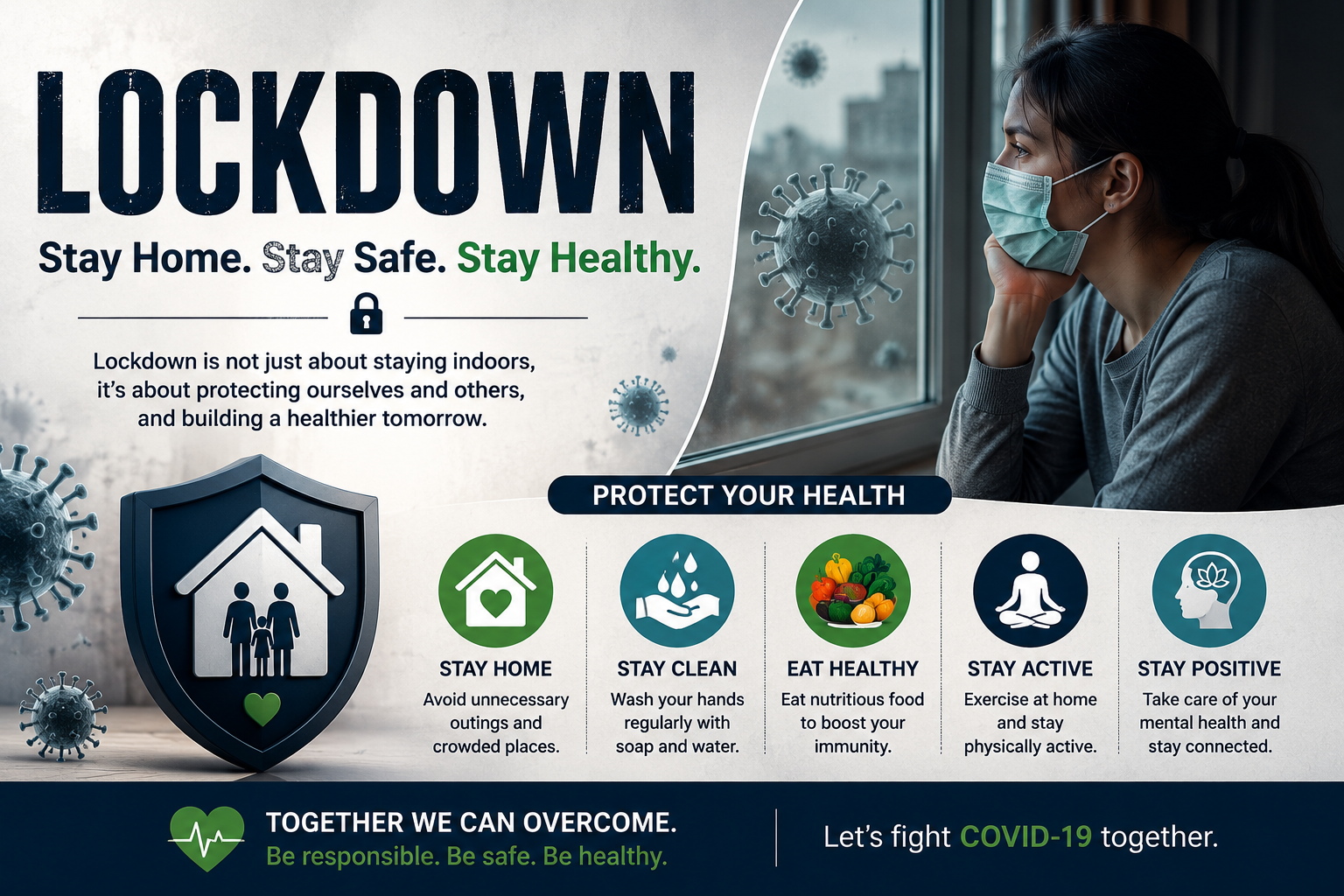
The word lockdown became part of everyday language during the COVID-19 pandemic. For millions of people, it meant staying home, working remotely, attending classes online, avoiding large gatherings, and adjusting to temporary restrictions on normal activities.
However, a lockdown isn’t a single standardized policy. Governments and public authorities can introduce different restrictions depending on the type of emergency, its severity, and local conditions. Some lockdowns are designed for public health, while others may be used during security emergencies or natural disasters.
Understanding what a lockdown means, why authorities use one, and how restrictions affect communities can help put these measures into perspective. This article explains the concept, common types, benefits, challenges, and lessons learned from large-scale COVID-19 restrictions.
What Is a Lockdown?
A lockdown is a temporary set of restrictions intended to limit movement, access, contact, or certain activities during an emergency.
The exact rules depend on the situation. A public-health lockdown may ask people to remain at home except for essential activities. Other restrictions can limit travel, close particular businesses, suspend public events, or restrict access to specific areas.
The goal is generally to reduce a particular risk while authorities manage the emergency.
Lockdown vs. Stay-at-Home Order
These terms are sometimes used interchangeably, but they don’t always mean exactly the same thing.
A stay-at-home order usually focuses specifically on people’s movement and encourages or requires residents to remain at home except for permitted reasons. A lockdown is a broader term that can describe a combination of movement, business, travel, gathering, or access restrictions.
The meaning therefore depends on the policy and location.
Why Are Lockdowns Used?
Lockdowns are generally considered when authorities believe normal activities could significantly increase an emergency’s impact.
During an infectious disease outbreak, reducing close contact between people can help slow transmission. This can give healthcare services more time to treat patients and give authorities time to expand testing, vaccination, treatment, or other public-health measures.
Common objectives may include:
- Reducing person-to-person contact
- Slowing disease transmission
- Protecting healthcare capacity
- Buying time for emergency preparations
- Protecting vulnerable populations
- Managing movement during an immediate security threat
- Reducing exposure to dangerous areas
A lockdown is therefore not usually an end goal. It is a temporary intervention intended to manage a specific risk.
Types of Lockdowns
The term can describe several different situations.
1. Public Health Lockdown
A public-health lockdown restricts movement or activities during an infectious disease outbreak. COVID-19 produced the most widely recognized examples in recent history.
2. Security Lockdown
A security lockdown can be declared when authorities face an immediate threat, such as an active security incident. People may be instructed to remain indoors while authorities respond.
3. Local or Regional Lockdown
Restrictions don’t always apply to an entire country. Authorities may impose them in a city, district, neighborhood, or other defined area where risks are concentrated.
4. Partial Lockdown
A partial lockdown applies selected restrictions rather than stopping most normal activities. For example, authorities might restrict large gatherings or nighttime movement while allowing many workplaces and essential services to continue.
Lockdowns During COVID-19
COVID-19 transformed the public understanding of lockdowns.
Beginning in early 2020, countries and regions introduced different combinations of restrictions as the virus spread. Measures included stay-at-home orders, limits on gatherings, school closures, travel restrictions, workplace changes, and temporary closures of some businesses.
The policies were not identical everywhere. Some governments introduced strict restrictions, while others relied more heavily on targeted measures and voluntary behavior changes.
Why Were COVID-19 Lockdowns Introduced?
COVID-19 spread through close contact between people, particularly before vaccines were widely available. Reducing opportunities for close contact was one way authorities attempted to slow transmission.
The broader strategy often involved several measures working together, including:
- Reducing unnecessary contact.
- Improving testing and case identification.
- Supporting isolation of infected people.
- Protecting healthcare workers and facilities.
- Increasing public awareness.
- Developing and distributing vaccines.
Lockdowns were therefore one part of a much larger pandemic response.
How Lockdowns Affected Daily Life
The effects of lockdowns extended far beyond healthcare.
Work and Business
Many employees moved from offices to remote work. Businesses that depended on physical customers, tourism, transportation, hospitality, and entertainment faced major disruptions.
At the same time, demand increased for certain digital services, delivery platforms, online communication tools, and e-commerce.
Education
Schools and universities in many places temporarily moved classes online or introduced other forms of distance learning.
This created new opportunities for digital education but also exposed problems involving internet access, devices, learning environments, and unequal educational support.
Travel
International and domestic travel faced significant restrictions in many regions. Airports, hotels, tourism businesses, and airlines experienced major changes in demand.
Social Life
People had fewer opportunities to meet friends and relatives in person. Weddings, festivals, sporting events, concerts, and other gatherings were postponed, canceled, or moved to alternative formats.
Potential Benefits of Lockdowns
The effectiveness of a lockdown depends heavily on its design, timing, compliance, duration, local circumstances, and the other measures used alongside it.
Potential benefits during a severe infectious disease emergency can include:
- Reducing opportunities for transmission
- Slowing rapid increases in cases
- Protecting healthcare capacity
- Giving authorities additional preparation time
- Reducing pressure on emergency services
Importantly, restrictions can also carry substantial costs. Public-health decisions therefore require balancing potential benefits against economic, educational, social, and other consequences.
Challenges and Negative Effects
Lockdowns can affect society in complicated ways.
Economic Disruption
Businesses that rely on customers visiting physical locations can lose revenue quickly. Workers in affected industries may also experience reduced hours or unemployment.
Small businesses can be particularly vulnerable when they have limited financial reserves.
Education Disruption
Extended school closures can interrupt learning and create difficulties for students, parents, and teachers. Access to reliable technology can also determine how effectively students participate in remote education.
Social Isolation
Reduced face-to-face interaction can make everyday life more difficult for people who depend on family, friends, community activities, or social services.
Unequal Impact
The burden of restrictions isn’t always shared equally. Someone who can work remotely may experience lockdown differently from a worker whose income depends on physical attendance.
This is why emergency policies often need additional support for vulnerable households, workers, businesses, and communities.
What Makes a Lockdown Effective?
There is no universal lockdown formula. A successful emergency response depends on the specific circumstances.
Important considerations include:
| Factor | Why It Matters |
| Timing | Early action may reduce rapid spread during an outbreak |
| Clear communication | People need to understand what restrictions mean |
| Enforcement | Rules must be practical and consistently applied |
| Public cooperation | Restrictions work differently when compliance is low |
| Healthcare capacity | Hospitals need resources and staff |
| Economic support | Affected workers and businesses may need assistance |
| Duration | Restrictions should be reviewed as conditions change |
| Complementary measures | Testing, vaccination, treatment, and other interventions can matter |
Clear communication is especially important. Confusing or frequently changing rules can make it difficult for people and businesses to understand what is expected of them.
Lessons Learned From Lockdowns
The COVID-19 experience highlighted several important lessons for future emergencies.
First, governments need strong emergency planning before a crisis begins. Public-health systems, hospitals, supply chains, communication networks, and local authorities all play important roles.
Second, restrictions can have consequences beyond the original emergency. Policymakers need to consider education, employment, mental well-being, household finances, and access to essential services.
Third, communication matters. People are more likely to follow difficult rules when authorities explain what is happening, why a measure is being introduced, how long it may last, and what evidence is guiding decisions.
Finally, flexibility is essential. Emergency policies should be reviewed as new evidence becomes available rather than treated as permanent solutions.
Key Takeaways
- A lockdown is a temporary restriction used to manage an emergency.
- Public-health lockdowns aim to reduce contact and slow infectious disease transmission.
- Lockdowns can be national, regional, local, partial, or targeted.
- COVID-19 lockdowns affected work, education, travel, businesses, and social life.
- Restrictions can provide benefits but also create significant economic and social costs.
- Clear communication, healthcare capacity, public cooperation, and targeted support are important.
- Future emergency planning should consider both health risks and wider social consequences.
FAQs
What does lockdown mean?
A lockdown is a temporary restriction on movement, activities, or access during an emergency.
Why was there a lockdown during COVID-19?
Many authorities used restrictions to reduce social contact and slow the spread of COVID-19.
Are all lockdowns the same?
No. Restrictions vary by country, region, emergency, and public policy.
How long can a lockdown last?
There is no universal duration. Authorities determine its length according to the emergency and changing conditions.
Can a lockdown affect the economy?
Yes. Restrictions can reduce business activity, employment opportunities, travel, and consumer spending.
What is a partial lockdown?
A partial lockdown limits selected activities while allowing other parts of everyday life to continue.
What can people learn from lockdowns?
Lockdowns demonstrated the importance of emergency planning, clear communication, flexible policies, and support for affected communities.
Conclusion
The concept of lockdown is broader than simply telling people to stay at home. It refers to a range of temporary restrictions that can be introduced during serious emergencies.
The COVID-19 pandemic showed both the potential value and the substantial costs of such measures. Restrictions can help authorities manage an immediate crisis, but they can also disrupt businesses, education, travel, and social life.
The most important lesson is that emergency measures need to be carefully designed, clearly communicated, regularly reviewed, and supported by broader strategies.
Learn About: Aetna CVS Health
